Sign in. It’s quick, free and it’s up to you.
An account is an optional way to support the work we do. Find out more.
Sign in. It’s quick, free and it’s up to you.
An account is an optional way to support the work we do. Find out more.
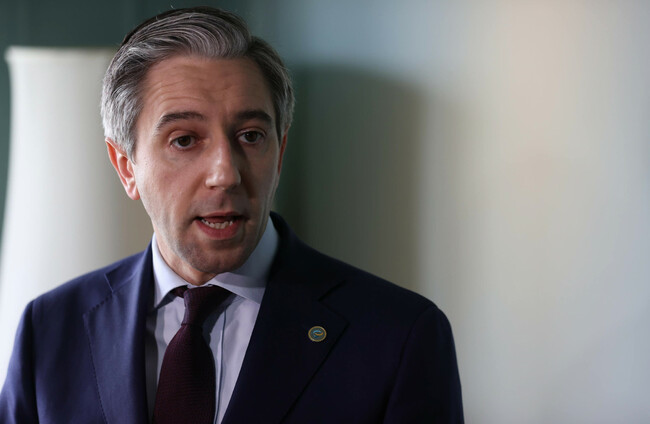
THE IRISH AND UK governments are “close to announcing a framework” on legacy issues in Northern Ireland, Tánaiste Simon Harris is expected to tell a conference today.
Harris, who is also the Minister for Foreign Affairs, is expected to insist that all reformed legacy mechanisms must be compliant with the European Convention on Human Rights as he delivers remarks at the British-Irish Association (BIA) conference in Oxford today.
Unionists have reacted negatively to the UK Government’s dealings with Ireland on the Legacy Act and the Independent Commission for Reconciliation and Information Recovery.
While Keir Starmer’s Labour Government has committed to repealing parts of the Act, which has faced opposition from political parties in Northern Ireland and victims’ organisations, it has decided to retain and reform the Commission.
Over the past year, the Irish and UK governments have engaged in “root and branch” reform of the Act and the Independent Commission.
Harris, who has hailed a “reset” in relations between the UK and Irish Governments, will tell conference attendees that the new era of collaboration will be meaningful only if it includes and delivers for the people of Northern Ireland.
He will say that any agreement will be based on promoting reconciliation, upholding the rule of law, addressing the suffering of victims and survivors, and facilitating the pursuit of justice and information recovery.
The European Convention on Human Rights, upon which Harris wants to underpin the legislation, has come under fire across political parties in the UK.
Conservative leader Kemi Badenoch has ordered a review into whether the UK should quit the convention, while Reform UK leader Nigel Farage has long supported leaving it.
Jack Straw, the former Labour Home Secretary under Tony Blair, has also recently criticised the convention, although his criticisms were directed at how it impedes the UK government’s plan to ramp up deportations of people in the UK.
It is the Irish Government’s position that guarantees under the European Convention on Human Rights cannot be negotiated.
Harris is also expected to outline victims’ calls for effective representation, maximum disclosure arrangements and independent oversight in legacy bodies.
He will also address calls for public hearings with next-of-kin participation and the need for a separate cross-border information retrieval body.
Unionist politicians have been critical of any move to allow the Irish Government to have influence of the Independent Commission, while stating that Dublin has not done enough to address legacy itself.
On this matter, it is anticipated that Harris will say that the Irish Government will do “more” in relation to its own obligations on addressing legacy in its jurisdiction.
With reporting by PA

To embed this post, copy the code below on your site















have your say