Sign in. It’s quick, free and it’s up to you.
An account is an optional way to support the work we do. Find out more.

Sign in. It’s quick, free and it’s up to you.
An account is an optional way to support the work we do. Find out more.

“EVERY TIME I drive past a petrol station now, I think, thank God I haven’t to be calling there anymore.”
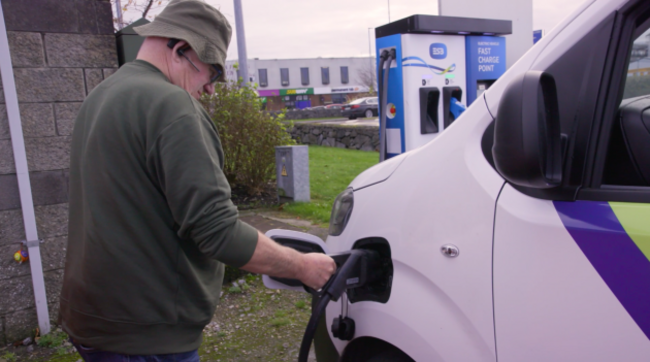
Taxi driver Leo Monaghan lives in Headford, Co Galway, and works mostly in Galway city. This year, he decided to make a change to the way he works - investing in a wheelchair-accessible electric taxi van.
“I took up taxi driving three or four years ago,” he says. “I had a diesel for the first couple of years. Then, three or four months ago I went fully electric.”
The decision, he says, is already paying off. “I’m gone down from €45 a day on fuel, to around €10 a day. I’m saving a good amount every day, and it’s paying for the vehicle itself. So really in truth I’ve a free vehicle!” And demand for zero-emission taxis in the city is growing, he adds. “When hotels ring up for a taxi, they’re beginning to ask have you anything with zero emissions.”
So what pushed him to make the change? “The viability of the business,” he says. “With the price of fuel and everything, it makes sense to go electric.
The Department of Transport, through the National Transport Authority, offers grants for taxi drivers like Leo who want to switch to an electric vehicle, with details for the 2022 scheme to be announced soon. These grants help with the purchase price of a new EV, with further support available for home chargers.
And it’s not just taxi drivers who are likely to see their everyday costs come down. EVs are more than 70% cheaper to run than a diesel or petrol car; battery EV drivers enjoy a 50% reduction in road tolls; and all battery EVs qualify for the lowest motor tax band.
Private buyers who want to compare EVs on the market, get guidance on switching and find out about available grant supports can consult the Sustainable Energy Authority of Ireland website.
Transport accounts for approximately 20% of Ireland’s greenhouse gas emissions, and road transport is responsible for 96% of those. Promoting cleaner, safer and more sustainable mobility is a critical part of the Government’s Climate Action Plan, which outlines measures for a significant reduction in transport emissions by 2030. These measures include a major increase in the number of electric vehicles on Irish roads.
The Climate Action Plan aims to meet the needs of growing urban centres like Galway, as well as connecting Ireland’s rural, suburban and urban communities. Alongside measures to promote the use of EVs, the Plan will also enable 500,000 daily sustainable travel journeys by 2030 through major public transport projects such as BusConnects and Connecting Ireland. Bus and rail fleets are also due to be electrified, with more than 1,500 electric buses due to be on the road in the next decade.
Minister for Transport Eamon Ryan believes these changes will have powerful consequences:
The Climate Action Plan will transform how we travel, cutting emissions, improving air quality, and making our communities more accessible… building a transport system that works for everyone – and the environment.
For Leo, as well as the cost savings, moving to zero emissions is about giving back to the city he loves. “It’s a beautiful city and we’d like to leave it that way,” he says. “Hopefully in the next couple of years we’ll have all gone this way.”
To learn more about how one Galway taxi driver is taking a big step towards a sustainable future, watch the video here. And to find out more about the key actions for transport set out in the Climate Action Plan, click here.
To embed this post, copy the code below on your site













have your say