Sign in. It’s quick, free and it’s up to you.
An account is an optional way to support the work we do. Find out more.
Sign in. It’s quick, free and it’s up to you.
An account is an optional way to support the work we do. Find out more.
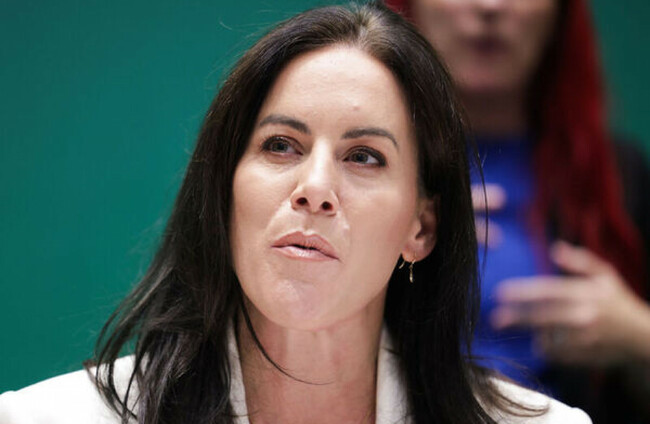
A NEW UNIT with 96 inpatient beds has been opened today at University Hospital Limerick by the Minister for Health Jennifer Carroll MacNeill.
It’s the largest capital project to be delivered by the HSE to date this year, with a cost of €105 million.
It’s hoped that increased bed capacity will go some way to alleviating the overcrowding issues that have plagued University Hospital Limerick in recent years.
It comes as a recently released HIQA report set out three options for increasing bed capacity in HSE Mid-West.
These include expanding the existing campus in Dooradoyle, expanding at a new site, or building a new hospital.
Health Minister Jennifer Carroll MacNeill, speaking at the opening of the facility today, said that she is not ruling out any of the options put forward by the public body.
MacNeill acknowledged that the beds opened today are “very much needed” and important for the entire Mid-West region.
She said that 572 beds need to be delivered in the Mid-West by 2031.
“We will continue to invest in this hospital to ensure patients receive safe, high-quality care. This new facility is a testament to our shared commitment to delivering better healthcare for all,” she said.
The building project took almost one million hours of work, and it faced several obstacles during the Covid-19 pandemic, including having to switch suppliers.
Sinn Féin’s spokesperson on health, TD David Cullinane, welcomed the opening of the new unit, but said that it “only scratches the surface of what is required to meet the growing healthcare needs of people across Limerick, Clare and North Tipperary.
“This announcement only goes part of the way to addressing a crisis that has been years in the making. The reality is that government has consistently failed to plan ahead for population growth and healthcare demand in the Mid-West. They are constantly playing catch-up rather than getting ahead of the problem,” Cullinane said.
He went on to say that UHL cannot continue to operate as the only model 4 facility in the region, and that the Health Minister needs to commit to building a second hospital.
Meanwhile eight members of the Oireachtas have given their backing to a three-tiered plan designed to address the hospital overcrowding crisis in the Mid-West.
At a meeting today, which was attended by Ministers Patrick O’Donovan and Timmy Dooley, Government party politicians heard from Dr Terry Hennessy, the HSE’s Regional Clinical Lead for Strategy and Development on the long-term plan for healthcare in the region.
These Fine Gael and Fianna Fáil politicians, as well as Independent Martin Conway, have jointly backed a plan that would see investment focused on expanding bed capacity at the current site, and the establishment of a second UHL campus that would be comprised of an outpatients department, diagnostics services and an adult mental health.
They are advocating also for moving the maternity hospital and other services including a new ED at the site.
That would be a slower approach than what Sinn Féin is calling for, but the group says that it would deliver on all three of the suggestions made in the HIQA report.
In the report, HIQA found that as well as a long-term plan, short-term solutions to addressing overcrowding in the Mid-West are needed to address the “immediate risk to patient safety”.
The authority found that the pattern of urgent and emergency care service usage is different in the region, and that there is a continuous use of surge capacity in the hospital, which sees patients oftentimes treated on trolleys in different parts of the hospital.
To embed this post, copy the code below on your site













have your say