Sign in. It’s quick, free and it’s up to you.
An account is an optional way to support the work we do. Find out more.
Sign in. It’s quick, free and it’s up to you.
An account is an optional way to support the work we do. Find out more.
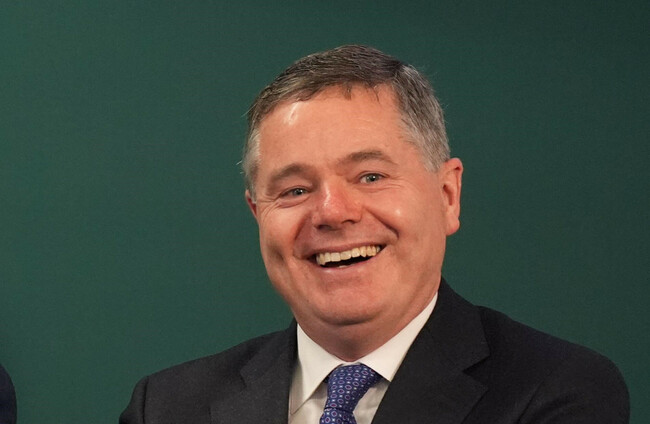
FINANCE MINISTER PASCHAL Donohoe will seek Cabinet approval to amend the charging mechanism for Local Property Tax today.
The changes will seek to ensure that seven in ten properties do not move up to a higher rate later this year, which would significantly increase the amount of tax they pay.
The Local Property Tax is an annual charge on all residential properties in the State which came into effect in 2013. Essentially, if you own a residential property you must pay the tax.
The amount you pay is based on the value of your property, which is self-assessed. There are 19 different bands to cover increasing property values.
Legislation underpinning the tax provides for a revaluation every four years.
In a memo in February, Donohoe indicated the next valuation date for the tax is due to take place on 1 November.
According to the CSO, property prices increased by a national average of 23% between November 2021 to December 2024.
Donohoe will tell Cabinet that if revaluation of properties were to go ahead in November without any amendments to the bands or rates, around 70% of properties would move up at least one band, which would result in a significant increase in Local Property Tax due for most homeowners.
He will say that with the amendments he is seeking, 97% of properties are predicted to stay within the same band, with 3% predicted to move up one band.
For the majority of homeowners, their new annual charge will be between €5 and €25 higher, depending on their property’s value.
The Programme for Government contains a commitment to “ensure fairness and stability in Local Property Tax payments and continue to retain revenue collected locally in the same local authority.”
Donohoe will also seek Cabinet approval for a six-month extension for the 9% VAT rate on gas and electricity.
The 9% rate is set to revert to 13.5% on 1 May, but Donohoe is proposing to bring a financial resolution to the Dáil on 2 April to extend the current rate until 31 October.
It’s understood that any further extension of the 9% VAT rate will be considered in the normal Budget process.
Meanwhile, Health Minister Jennifer Carroll MacNeill is set to bring three memos to Cabinet.
The first relates to the Productivity and Savings Taskforce, which was set up to drive savings across the HSE. The taskforce is set to publish its action plan for this year.
Some of these measures outlined in the action plan will include improving and standardising the running of outpatient departments to deliver more appointments, reducing unnecessary referrals to hospital and changes to rostering to increase evening and weekend activity and deliver more services over seven days.
Carroll MacNeill will tell Cabinet that the HSE saved €251 million in savings across a number of areas, with the taskforce setting a target of a further €382 million in savings for this year.
The Health Minister will also inform the Government of the situation with urgent and emergency care across the country for the month of March.
She is expected to tell Cabinet that the impact on patients and their families from the very high level of hospital congestion experienced in early February is too great to remain unresolved, and that in order to deliver services over seven days, all staff – including consultants – need to be rostered over seven days.
Changes to consultant rosters are being implemented to ensure a more even distribution of consultants over seven days and in the evenings.
Carroll MacNeill requested the HSE provide an analysis of the consultants rostered over the St Brigid’s weekend and to increase the numbers rostered for the St Patricks’ bank holiday weekend.
She will inform Cabinet that the increased presence of consultants over the St Patrick’s bank holiday weekend was a significant factor in the 70% reduction of trolley numbers when compared to St Brigid’s weekend.
She will say that the Tuesday morning after the bank holiday saw 63% fewer patients waiting on trolleys at 8am than the post-St Brigid’s Tuesday, with zero trolleys reported over the three days at Beaumont, Connolly, Mater, Mullingar, Navan, Tullamore, Kilkenny, and UH Waterford.

To embed this post, copy the code below on your site













have your say