Sign in. It’s quick, free and it’s up to you.
An account is an optional way to support the work we do. Find out more.
Sign in. It’s quick, free and it’s up to you.
An account is an optional way to support the work we do. Find out more.
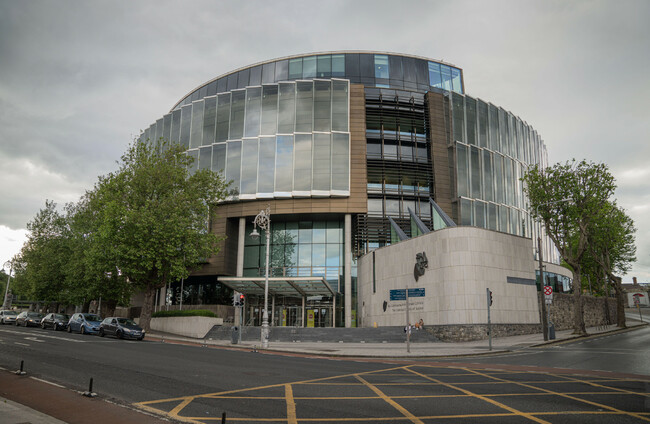
THE LIFE OF a 43-year-old man has been placed under threat after he allegedly used a weapon during an assault at a popular Dublin restaurant last week.
Stringent reporting restrictions were imposed when he appeared at Dublin District Court today, preventing the news media from revealing his name.
It follows an alleged incident on 14 August, at Joels restaurant, Naas Road, Clondalkin, Dublin 22.
According to his charge sheet, while carrying out an offence at the restaurant, assault causing harm, in the course of a dispute, he produced an article, an offensive weapon, capable of inflicting serious injury.
Garda Kevin Coller told Judge Peter White that the accused made no reply when charged at Clondalkin station on Friday night.
He was released on €200 bail with a range of conditions pending directions from the Director of Public Prosecutions, and will face his next hearing in October.
Defence solicitor Donal Quigley asked the judge to impose reporting restrictions concerning the media publishing his client’s name. “It is a matter where his life would be in danger if identified”, he submitted.
Judge White queried whether he had that jurisdiction. The solicitor emphasised that the court could make the order, adding there was a threat to the man arising from these proceedings. Asked to assert the authority or statute for the restriction, Mr Quigley submitted that the court had wide discretion to do that, “to safeguard the life and liberty of the gentleman concerned”.
However, he conceded that case law could be against him, and there was no statutory framework for the application.
He added that the State also had concerns. At that point, the judge canvassed more information from Garda Coller, who testified that there had been some inaccurate stories in the media since the incident. Due to that, the officer believed there was a threat against the man.
The court rose before the case stood adjourned briefly for the judge to consider the issue.
On resumption, he again asked the garda if it was his evidence that there was a threat to the life of the accused.
“That would be correct,” Garda Coller replied.
Judge White deemed that the relevant legal authority was the Supreme Court’s 2017 ruling in Gilchrist V Sunday Newspapers Ltd. That case considered the constitutional right for justice to be administered in public and also exceptions where limitations are placed on media coverage in certain situations.
“Having regard to the evidence, there is a threat here to the individual of a serious nature, significant nature to warrant this,” he stated.
Acceding to the application, he imposed a restriction which he specified prohibited the identification of the accused.
Legal aid was granted to the man, who remained silent and has still to enter a plea; the court heard he worked and earned about €20,000 per annum.
There was no objection to bail with conditions to furnish a new confirmed address, stay out of parts of Dublin, and sign on three days a week at a Garda station.
To embed this post, copy the code below on your site













have your say