Sign in. It’s quick, free and it’s up to you.
An account is an optional way to support the work we do. Find out more.
Sign in. It’s quick, free and it’s up to you.
An account is an optional way to support the work we do. Find out more.
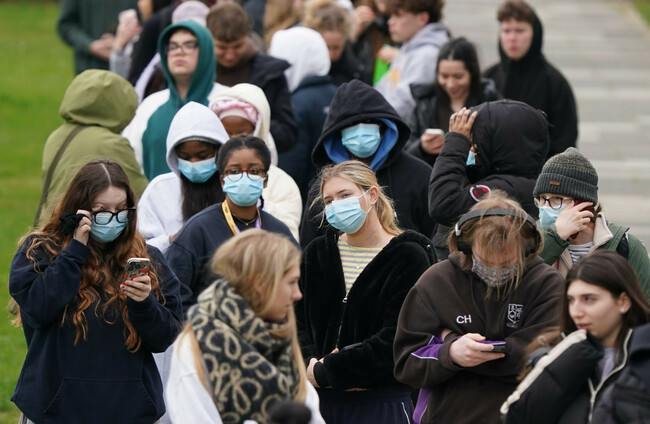
FIVE NEW CASES of meningitis have been reported in Kent, England.
The UK Health Security Agency said that, as of 5pm yesterday, some 20 cases of meningitis had been reported to it, up from 15 previously, with nine of these confirmed in the lab.
Two students have died during the outbreak, including 18-year-old Juliette Kenny.
Six of the latest confirmed cases have been confirmed as the meningitis B strain.
The outbreak is being viewed by experts as unprecedented owing to the high number of cases appearing in such a short space of time and about 5,000 students in university halls in Kent are to be offered the meningitis B vaccine in coming days.
The UK Health Security Agency chief executive Susan Hopkins said yesterday that the “explosive nature” of the spread is “unprecedented”.
“I can say that in my 35 years working in medicine, in healthcare and hospitals, this is the most cases I’ve seen in a single weekend with this type of infection,” said Hopkins.
Meanwhile, health officials in Northern Ireland are investigating a probable case of meningococcal disease in a 16-year-old pupil at a Belfast school.
The case is not linked to the ongoing meningitis outbreak in England.
Parents of children at Bloomfield Collegiate School in the east of the city have been contacted by health officials.
Meningitis is an infection of the protective membranes that surround the brain and spinal cord.
It is usually caused by a bacterial or viral infection. Bacterial meningitis is rarer but more serious than viral meningitis.
There have been five notified cases of bacterial meningitis in Ireland in the past 12 weeks, and 43 cases of viral meningitis over the same period.
It can affect anyone but is more common in babies, children, teenagers and young adults.
Meningitis can be very serious if not treated quickly and can lead to life-threatening sepsis and permanent damage to the brain or nerves.
One of the bacteria which causes meningitis is called meningococcus, which can live harmlessly in people’s throats but can cause serious illness if it gets into the blood or spinal fluid.
There are different types of this bacteria and the most common is known as type B – what is often referred to as meningitis B, or MenB.
Symptoms of meningitis and sepsis can include a high temperature; cold hands and feet; vomiting; confusion; muscle and joint pain; pale, mottled or blotchy skin; spots or a rash; a headache; a stiff neck; aversion to bright lights; being very sleep; and seizures.
Symptoms can appear in any order and some may not appear at all.
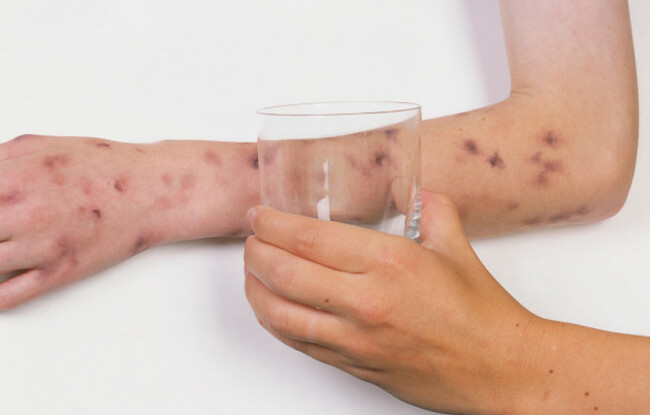
The glass test is a quick way of determining wheter a rash is caused by meningitis.
Press the side of a clear drinking glass firmly against the rash so you can see if the rash fades and loses colour under pressure.
If it doesn’t change colour, contact your doctor immediately.
On dark skin, check inside the eyelids or roof of the mouth where the spots maybe more visible.
But while the most well-known symptom is a rash, symptoms can appear in any order and the HSE advises not to wait for a rash to appear before seeking medical help.
Yes, there are several vaccines available for meningitis, with different vaccines targeting different types of meningitis.
MenB is the most common form of meningitis in Ireland.
When talking about vaccines it is important to remember that there are several different types of Neisseria meningitidis bacteria, including groups A, B, C, W135 and Y with groups B being the most common in Ireland.
However, the majority of young people born before 2016 are not protected against meningitis B unless they have had the jab privately.
The MenB vaccine was introduced in Ireland for all children born on or after 1 October 2016 – children under one year are at the highest risk of meningococcal B disease.
All children are now offered MenB vaccine at 2 and 4 months of age, with a booster dose of MenB vaccine given at 12 months.
Other routine childhood jabs, including the 6-in-1 and pneumococcal vaccines, can protect against meningitis.
Meanwhile, the MenACWY (meningococcal ACWY) vaccine protects against 4 types of bacteria that can cause meningitis – meningococcal groups A, C, W and Y.
Teenagers are offered this vaccine in the first year of secondary school.
According to Meningitis Now, one in four 15 to 19-year-olds in the UK carry meningococcal bacteria in the back of their throats, compared with one in 10 of the UK population.
People can carry this harmlessly without becoming unwell but it can be passed from person to person by coughing, sneezing and kissing.
Increased social interaction in this age group means the bacteria can be passed on more easily.
In universities, students can be more vulnerable because of living in more “cramped” housing or halls of residence. Young people also come together from all over the world to live, study and socialise.
Hospital treatment is recommended for all cases of bacterial meningitis.
Tests will be carried out in hospital and treatment with antibiotics will usually start before the diagnosis is confirmed.
If someone has meningitis, they will most likely feel very unwell and will need to stay in hospital and treatment can last for several weeks.
The HSE advises that even after going home, it will be a while before patients feel completely back to normal.
Treatments include antibiotics and fluids administered directly into a vein, oxygen if there are breathing difficulties, and in some cases steroid medication to prevent swelling around the brain.
In cases of mild meningitis, patients may be sent home if tests confirm it is viral, which usually gets better on its own. Most patients start to feel better within seven to 10 days.
But severe viral meningitis may also be treated in hospital.
The risk of you spreading the infection to others is generally low.
If you are in close contact with someone at high risk of infection, they may be given a dose of antibiotics as a precautionary measure.
If you have only had brief contact with someone who developed meningitis, you do not usually need to take antibiotics.
-With additional reporting from Diarmuid Pepper
Have you seen fake stories about healthcare online recently? Our FactCheck Knowledge Bank provides tools for spotting false news and finding good information.

To embed this post, copy the code below on your site
















have your say