Sign in. It’s quick, free and it’s up to you.
An account is an optional way to support the work we do. Find out more.
Sign in. It’s quick, free and it’s up to you.
An account is an optional way to support the work we do. Find out more.
LAST UPDATE | 19 Mar
THE HSE HAS said there is no increase of meningitis cases in Ireland following an outbreak in southern England.
The health service said its national public health team has been communicating with the UK Health Security Agency (UKHSA), which says the situation is evolving and further cases are possible.
There have now been 27 cases of meningitis linked to the outbreak in Kent and two young people have died.
The UKHSA said that as of 5pm yesterday, 15 cases had been confirmed and a further 12 were under investigation.
All confirmed cases are in young adults and nine cases are confirmed to be meningitis B.
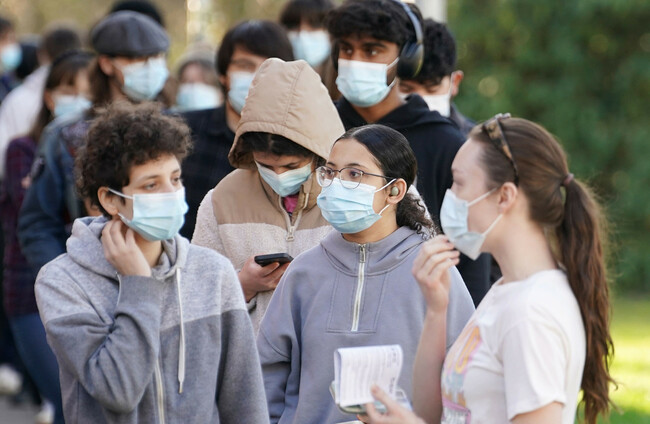
Thousands of doses of antibiotics have been handed out to students at the University of Kent, in Canterbury, where the outbreak is concentrated.
Around 5,000 students have also been invited for a menB vaccine.
HSE national director for public health Dr John Cuddihy said there is “no evidence of an increase in invasive meningococcal disease activity in Ireland beyond expected seasonal and background levels” and that there is “currently no indication of links between any cases in Ireland and the outbreak reported in Kent”.
He said there have been 12 cases of meningococcal disease reported in Ireland so far this year, with no deaths.
Meningococcal disease can cause a number of serious illnesses including meningitis, inflammation of the lining of the brain, and septicaemia – blood poisoning.
There are vaccines against types A, B, C, W and Y.
Cuddihy said: “Routine surveillance in Ireland continues to show that meningococcal disease remains a rare but serious infection, with sporadic cases occurring each year.”
The HSE has warned symptoms include fever, severe headache, vomiting, rapid breathing, cold hands and feet, drowsiness, or a rash that does not fade under pressure.
But said: “Do not wait for a rash. If someone is ill and getting worse, get medical help immediately.
“Call 112 or 999 for an ambulance immediately or go to your nearest emergency department.”
He added it can affect people of any age but is most common in babies, young children, and to a lesser extent teenagers and young adults, and that it is more common in winter and early spring.

To embed this post, copy the code below on your site












have your say