Sign in. It’s quick, free and it’s up to you.
An account is an optional way to support the work we do. Find out more.
Sign in. It’s quick, free and it’s up to you.
An account is an optional way to support the work we do. Find out more.
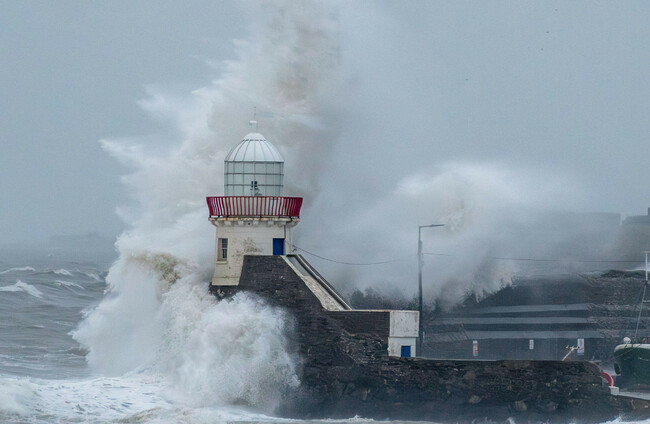
FORECASTERS AT MET Éireann were briefed on how climate change was “adding fuel” to storms that hit Irish shores.
A guidance document on how to discuss the impact of global warming said there was high confidence that maximum rainfall rates will rise here.
It said there was still uncertainty over wind speed increases but that storms were likely to become “much more powerful, larger, and more destructive” in a warmer world.
The guidance – updated in March of this year – explained how 2024 was the hottest year on record globally and how Ireland’s temperature has increased by nearly 1.1 degrees Celsius since 1900.
It said: “Climate change is adding fuel to storms due to warmer waters and more moisture in the atmosphere.”
The document added that sea level rise was expected to increase surges during periods of severe weather and increase the risk of coastal flooding.
The guidance said: “Rainfall associated with the 2023/24 storm season was about 20 percent more intense and ten times more likely to occur in today’s warmer climate.”
An earlier bulletin on Storm Éowyn, which caused widespread damage and chaos in January, said records for wind gust and mean wind speeds had been provisionally broken.
However, forecasters were advised to be cautious about making a direct link with climate change for particular events.
A ‘key climate message’ from Storm Éowyn said: “Climate change has increased the frequency and intensity of extreme weather events.
“Unlike temperature and rainfall, it is not as clear how the frequency and intensity of storms impacting Ireland will change into the future.”
The update said what was clear was that there was a greater risk of “compound climate events” with severe weather exacerbated by rising sea levels.
The main guidance also detailed the growing risk of heavy rainfall events.
It said a wet period from October 2023 to March 2024 was made four times more likely and about 15% wetter due to climate change.
The document added: “Heavy rainfall associated with Storm Babet in 2023 was made twice as likely and 13% more intense due to climate change.”
An increase in the length of the growing season in Ireland was noted at most of the country’s weather stations.
Looking at climate trends going back to 1940, the growing season had lengthened by fourteen days at Belmullet, Co Mayo, and sixteen days at the Phoenix Park in Dublin.
It added: “Sunshine duration has increased by approximately 5 percent when compared to the 1961 to 1990 period.”
Asked about the records, a Met Éireann spokeswoman said an important part of their role was the communication of information on current weather and climate and also broader historical and future insights.
She said: “We utilise multiple communications channels such as our website and app, social media channels, direct engagement, media and public awareness activities to ensure that we are providing scientific weather and climate-related information in a proactive, consistent and clear manner for all.”

To embed this post, copy the code below on your site













have your say