Sign in. It’s quick, free and it’s up to you.
An account is an optional way to support the work we do. Find out more.
Sign in. It’s quick, free and it’s up to you.
An account is an optional way to support the work we do. Find out more.

MISCALCULATIONS AND MISCOMMUNICATION can lead to some horrible results — especially in the field of science.
These eight classic examples may make you laugh, cry, or just shake your head in disbelief.
A simple problem with a measurement conversion, or a misunderstood word can stand in the way of a successful mission. Here are some historical examples where a small misstep changed everything.
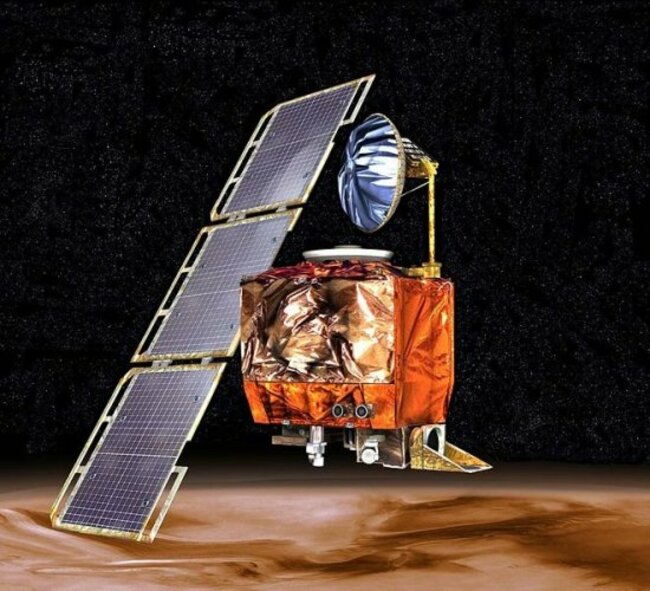
The Mars Climate Orbiter launched in 1998 to study Martian climate and atmosphere composition. However, the NASA team on the ground lost the communication signal with the craft soon after it launched.
The problem was that the computer software on the ground was using the standard system of pound-seconds, while the actual spacecraft was using the metric system of Newton-seconds.
The spacecraft entered the Martian atmosphere too low and disintegrated.
The Mars Climate Orbiter. (Image Credit: NASA)
Two Boeing 747 planes crashed on the runway of Los Rodeos Airport, killing 583 people, all because of a simple miscommunication between the pilots.
The fog was so thick that day that neither aircraft could see the other. A misunderstanding between the captain of the KLM plane and the air traffic control tower led the KLM captain to believe he had clearance to take off.
The KLM plane crashed into the Pan Am flight that was still sitting on the runway.
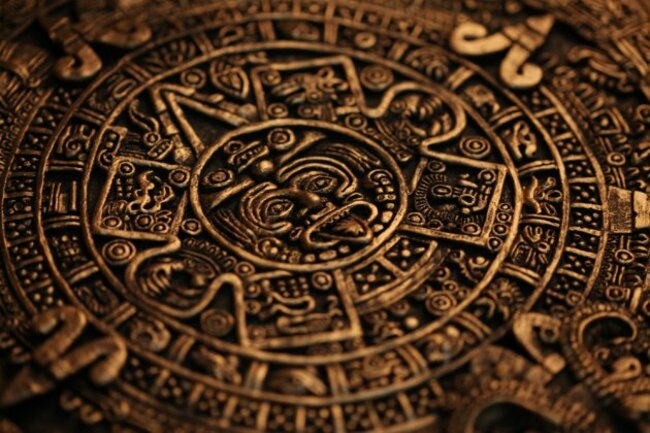
The misinterpretation and resulting miscommunication of the Mayan calendar convinced quite a few people the world would end in December 2012.
The explanation for this seems to be that the date actually marked the end of a completely regular year on the Mayan calendar, and just signalled the start of a new year — it’s the equivalent of our December 31st.
A Mayan calender. (Image Credit: Shutterstock)
In the 1800s he was the first person to use geology and physics to try and calculate the age of the Earth.
Thomson used the heating and cooling of Earth to predict its age and ultimately decided it must be between 20 and 40 million years old. The actual age is about 4.5 billion years. The problem was that Thomson assumed that conditions were stable on Earth as soon as it started cooling off from its molten birth.
The actual temperature history of Earth is far more complicated. While Thomson gravely underestimated Earth’s age, the ideas behind his calculations were a breakthrough, and definitely an improvement from previous estimates that put Earth at only a few thousand years old.
Columbus actually made a whole series of calculation mistakes. First, he underestimated the actual distance one degree of latitude represented on a map.
Second, he thought he was getting this underestimated measure in Roman miles, but they were actually given to him in the much larger Arabic mile. Third, he placed Japan about 8,000 miles closer than it actually was.
(Image Credit: Wikimedia Commons)
Needless to say, the family members and friends of these 12 men were sent on an emotional rollercoaster. They celebrated for almost three hours before the mistake was corrected. It seems the miscommunication happened because the person relaying the information was down in the collapsed mine shaft wearing a mask that made it difficult to understand the person’s speech.
MacKenzie Briant underwent a heart transplant shortly after she was born, so there were certain medications she would need to avoid the rest of her life to avoid any health complications.
Briant caught a cold when she was 8 years old, and her current doctor consulted her transplant cardiologist on what prescriptions would be okay for Briant to take. Either the two doctors miscommunicated or the doctor who gave Briant’s mother the list of approved drugs forgot to take Afrin off the list.
Briant used Afrin and now can no longer swallow, speak, or walk. The miscommunication about the drug left her permanently brain damaged.
Afrin nasal spray. (Image Credit: Wikimedia Commons)
He used what is called the cosmological constant in many of his equations to account for his mistaken idea that the universe was stable — not shrinking or expanding.
Eventually, it was discovered that the universe is expanding, and Einstein removed the constant from his equations. But, it turns out the universe is expanding and at a rate that is constantly increasing, so some version of a cosmological constant is needed, and scientists have been reintroducing the constant into Einstein’s general relativity equations.

To embed this post, copy the code below on your site



















have your say