Sign in. It’s quick, free and it’s up to you.
An account is an optional way to support the work we do. Find out more.
Sign in. It’s quick, free and it’s up to you.
An account is an optional way to support the work we do. Find out more.
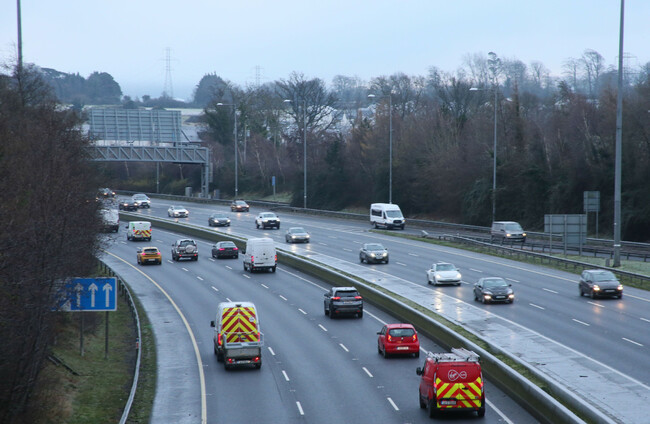
MOTORWAY DRIVING COULD become part of the driving test curriculum within three years, the head of testing and licensing at the Road Safety Authority has said.
The curriculum must also be updated to take account of new technology such as automatic braking systems in modern vehicles, according to Brendan Walsh, chief operations officer at the RSA.
Walsh told The Journal he lived in Germany for many years and road behaviour on the country’s autobahn network was “far better” than Irish motorway driving “because they are taught how to drive on a motorway”.
“I believe motorway driving should be part of the curriculum,” he said.
He said that if motorway driving did not become part of the legislative curriculum to acquire a driving licence, a structure needed to be put in place whereby people who would need to drive on motorways could learn to do so and could gain an understanding of proper motorway etiquette.
Work on the issue is already underway within the RSA.
“Over the next couple of years we will ask for new legislation to be brought in. I would like to see meaningful change made in how we learn to drive, how we interact with young drivers, within three years,” Walsh said.
Learner drivers cannot legally drive on the Irish motorway network, which expanded significantly in the early 2000s.
Walsh added that the RSA’s recent recruitment drive will allow it to engage more with already licensed drivers.
This could mean using a driving simulator to see if there are any driving behaviours that could be improved, he suggested.
This could help older drivers, given cars and roads will have changed since they learned to drive decades ago, he said.
“As we get older, all our reactions slow down. Maybe we’ve had a heart attack, maybe you’ve had a stroke, and you get a medical certificate saying you’re competent to drive. What we want to do is to introduce a mechanism to support people to see and assess what areas of their driving need to be developed as they’ve got older,” Walsh said.
Asked about the fact that younger drivers, rather than older drivers, are far more likely to cause a serious road accident, Walsh said he wasn’t “targeting” older drivers but simply proposing “a facility we could make available to them”.
“It’s to give the opportunity to people who [already] have tests to maybe do a recalibration of how they drive,” Walsh said.
He added that he recently used a driving simulator to check his driving and was “delighted” with the feedback he received, which drew his attention to some habits he had developed that he needed to work on.

To embed this post, copy the code below on your site

















have your say