Sign in. It’s quick, free and it’s up to you.
An account is an optional way to support the work we do. Find out more.
Sign in. It’s quick, free and it’s up to you.
An account is an optional way to support the work we do. Find out more.
LAST UPDATE | 24 Aug
A LEADING DUTCH public broadcaster will not participate in next year’s Eurovision Song Contest.
AVROTROS said in a statement today that the event can “no longer be considered neutral” given divisions over the Gaza war.
The Netherlands, Iceland, Spain, Ireland and Slovenia all pulled out of this year’s Eurovision, with the latter three refusing to broadcast the show at all.
Despite the Dutch boycott, the Song Contest was aired in the Netherlands by both NOS and NTR, two separate public broadcasters.
AVROTROS had aired the Eurovision from 2014 to 2025.
The decision by AVROTROS does not necessarily mean that the Netherlands will not be participating in next year’s Eurovision.
The NPO (Netherlands Public Broadcasting) is the coordinating body of the Dutch public broadcasting system and has 13 members.
The director of the Eurovision said he will “continue dialogue with NPO regarding the opportunities for another broadcaster to participate”.
The Eurovision Song Contest is organised by the European Broadcasting Union (EBU), which is an alliance of public service media organisations whose countries are within the European Broadcasting Area.
Dutch broadcaster AVROTROS today said it will not participate in next year’s Song Contest as “one of the participating countries is still involved in a large-scale military conflict”.
It added that “geopolitical tensions in the Middle East are having too much of an impact on the Song Contest and have led to major divisions”.
Earlier this month, organisers announced they were excluding any country involved in an armed conflict from hosting the competition.
However, AVROTROS said this “offers insufficient confidence that the independent and neutral character of the Song Contest can be restored”.
It noted that five countries, including Ireland, decided not to participate in this year’s Song Contest and that former winners, including Charlie McGettigan, have handed back their trophies.
It also pointed to an open letter signed by over 1,000 musicians, including Kneecap and The Mary Wallopers, calling for a complete boycott of Eurovision.
AVROTROS said this “underscores the need for a clear assessment framework for countries involved in a military conflict”.
The CEO of AVROTROS, Taco Zimmerman, remarked that Eurovision was “originally founded to connect people and countries”.
He added: “But you cannot deny that an international conflict is increasingly permeating the event, causing it to lose its neutral character”.
He said this has resulted in the Song Contest becoming a “stage of division” and that the broadcaster must “let go of an event that is close to our hearts”.
In a statement issued today, the director of Eurovision said that while he “regrets” the decision taken by AVROTROS, he “understands their choice and respects the views of our member broadcasters”.
Martin Green said he will “continue our dialogue with NPO, the umbrella organisation for Dutch public service media, regarding the opportunities for another broadcaster to participate”.
“We very much hope that audiences and artists in the Netherlands can continue to be represented in the Eurovision Song Contest,” he added.
In May, RTÉ Director General Kevin Bakhurst said there was “no reason at the moment” to change that position, but remarked that it would be reviewed in the coming months.
In a statement to The Journal, a spokesperson said “RTÉ will be making a decision regarding its participation in the 2027 Eurovision Song Contest in due course”.
The 2026 competition was watched by 131 million viewers, down 35 million on the year before.
Israel came close to winning the competition in both 2025 and 2026, ultimately finishing second on each occasion.
Next year’s event, the world’s biggest live televised music event, will take place on 15 May in Bulgaria’s Black Sea city of Burgas.
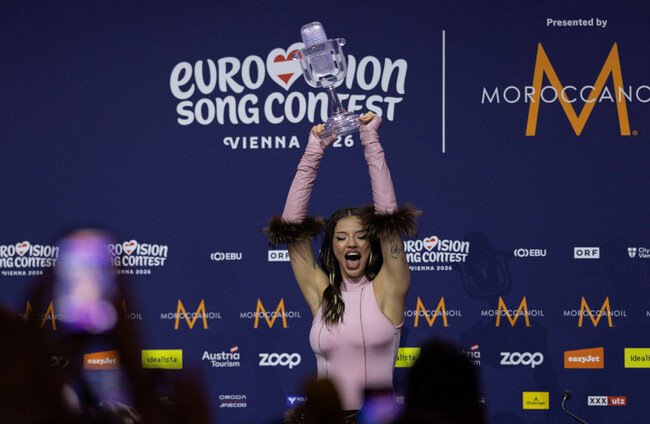
It will be the first time that the Balkan nation hosts the contest, coming after Bulgarian singer Darina Yotova, known as Dara, won this year’s contest in the Austrian capital Vienna with the catchy floor-filler Bangaranga.

To embed this post, copy the code below on your site













have your say