Sign in. It’s quick, free and it’s up to you.
An account is an optional way to support the work we do. Find out more.
Sign in. It’s quick, free and it’s up to you.
An account is an optional way to support the work we do. Find out more.
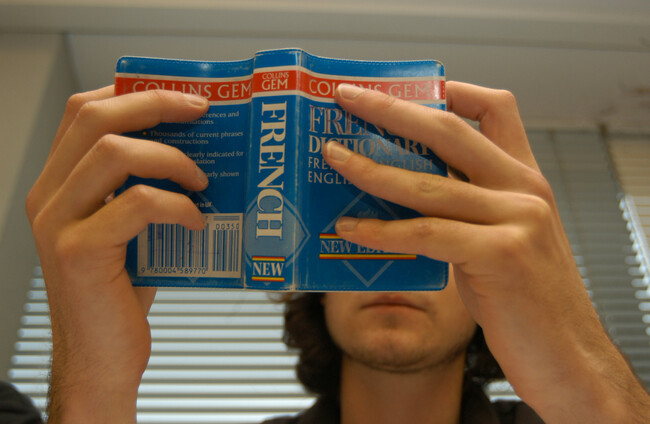
A LEADING EU academic has highlighted that Ireland has made “no progress” on its promises to increase the number of third-level students learning a European language, and that it won’t meet its targets.
Professor Joachim Fischer, a retired Jean Monnet Chair, said despite huge changes in Ireland’s relationship with the EU since Brexit, the country has not fulfilled any of its goals to teach students more than two languages.
Speaking at a joint event between The Journal and the University of Limerick on Monday, the university professor said that language in the EU “is often overlooked”.
The vast majority of the EU population are non-native English speakers, despite it emerging as the leading language of the bloc in recent years.
Fischer highlighted that it was up to the State to ensure that students in Ireland had a second language, in case the arrangement changed.
He claimed that a 2017 education plan, named Languages Connect, has made no progress. The Department of Education’s strategy aimed to increase the number of third-level students learning a second language from 4% to 20% by 2026.
According to Fischer, the figure remains at 4%. (An interim report for Language Connects says the figure is not available but that there should be a mechanism for tracking participation in language courses in Higher Education in order to measure outcomes of the awareness raising campaign.)
“We have made no progress,” Fischer said.
In two years times, we’re supposed to be at 20%. Now, I am not sure that that is going to work”.
The academic said that learning other European languages can help students “make sense of the EU” while getting “a better insight into how other member states think”.
He later added that the State is currently struggling to fill roles in the EU, despite jobs in Brussels being “top jobs” for newly graduated workers when Ireland first joined the EU, and suggested that increasing the teaching of second languages would help to fill those roles.
The professor also discussed the notable information deficit in Ireland surrounding the EU, stating that “there are serious misunderstandings [surrounding] what the EU can do and what it cannot do”.
Fischer suggested that revamping the European studies course in school would help to tackle this information gap, particularly after Brexit.
He added: “I remember the wonderful programme, the European Studies project for secondary schools in the early 2000s.
That has gone and it hasn’t been replaced by anything. In other words, the European dimension has not increased at least in the language area, we’re maintaining the status quo.”
The retired Jean Monnet Chair stated that the only way for Europe to achieve a positive future is through “younger people [getting] involved in making this future happen”.
Fischer, a German native, has encouraged citizens to educate themselves about the EU, “we also have a responsibility and there is the internet that allows us to inform ourselves”.
***
This work is co-funded by Journal Media and a grant programme from the European Parliament. Any opinions or conclusions expressed in this work are the author’s own. The European Parliament has no involvement in nor responsibility for the editorial content published by the project. For more information, see here.

To embed this post, copy the code below on your site












have your say