We need your help now

Support from readers like you keeps The Journal open.

You are visiting us because we have something you value. Independent, unbiased news that tells the truth. Advertising revenue goes some way to support our mission, but this year it has not been enough.

If you've seen value in our reporting, please contribute what you can, so we can continue to produce accurate and meaningful journalism. For everyone who needs it.

Hollymount, Co Mayo Iseult Mangan

Photos: Northern lights visible across Ireland as a powerful solar storm hits Earth

The northern lights can generally only be seen in Ireland during storms like this on camera, but sometimes a faint glow is visible to the naked eye.

LAST UPDATE | 20 Jan

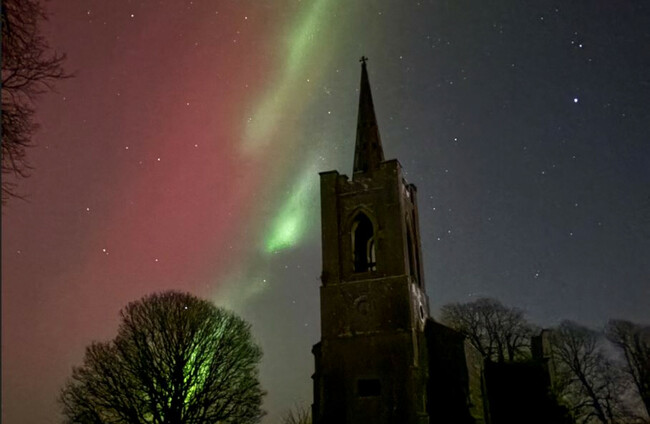
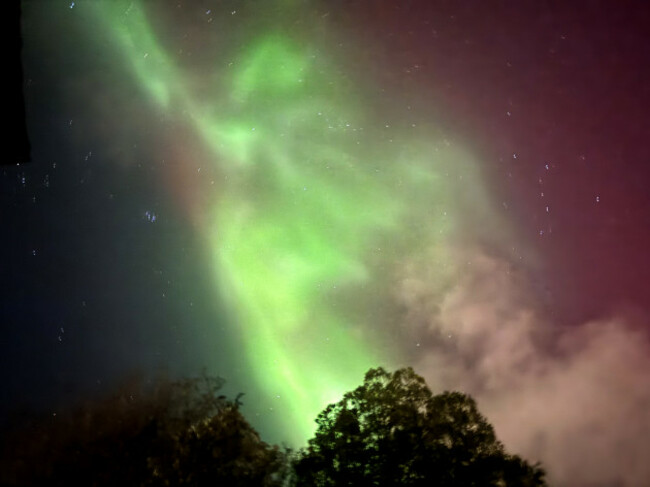
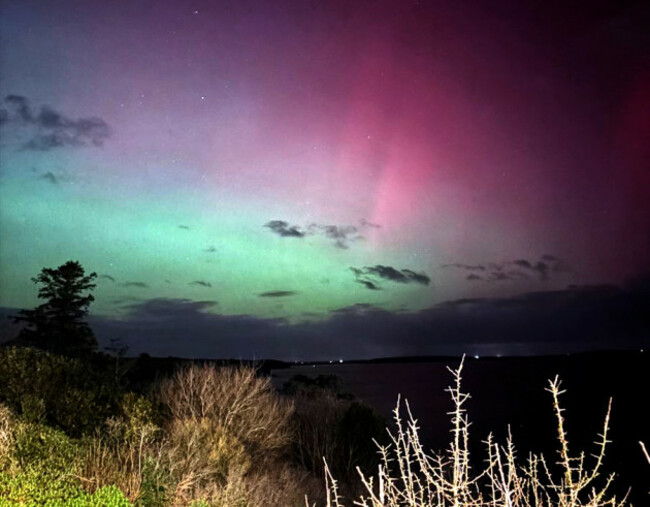
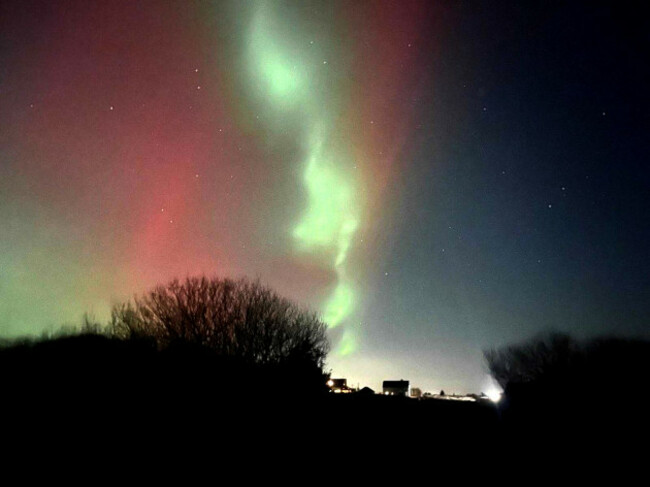
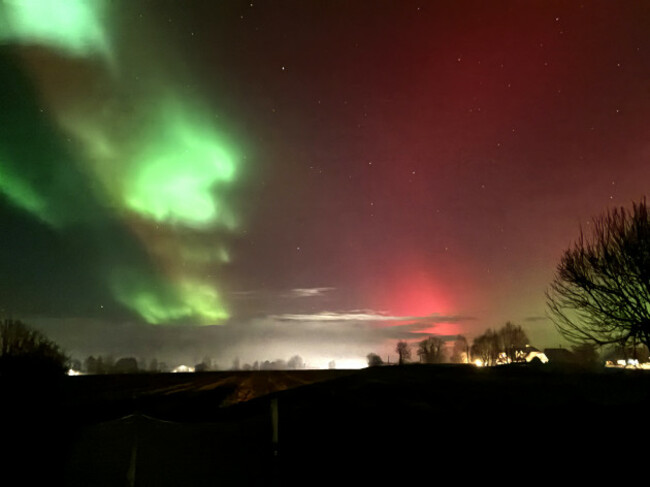
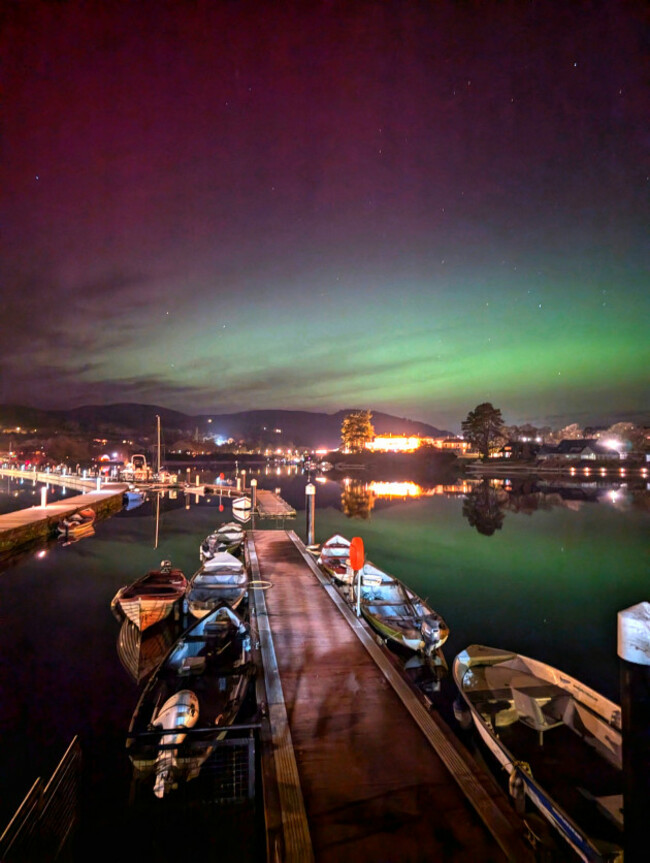
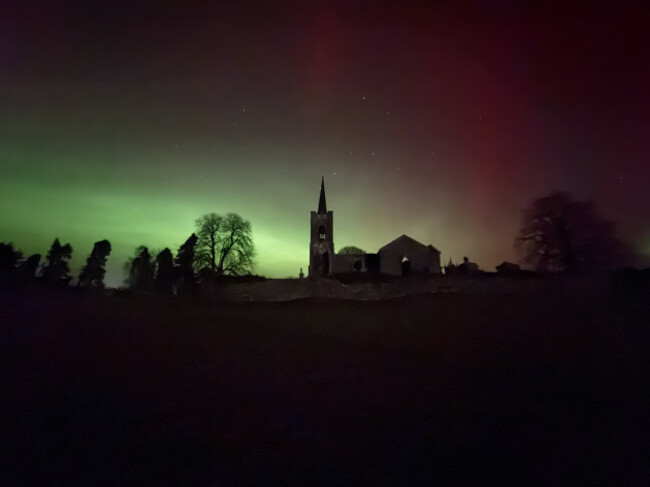
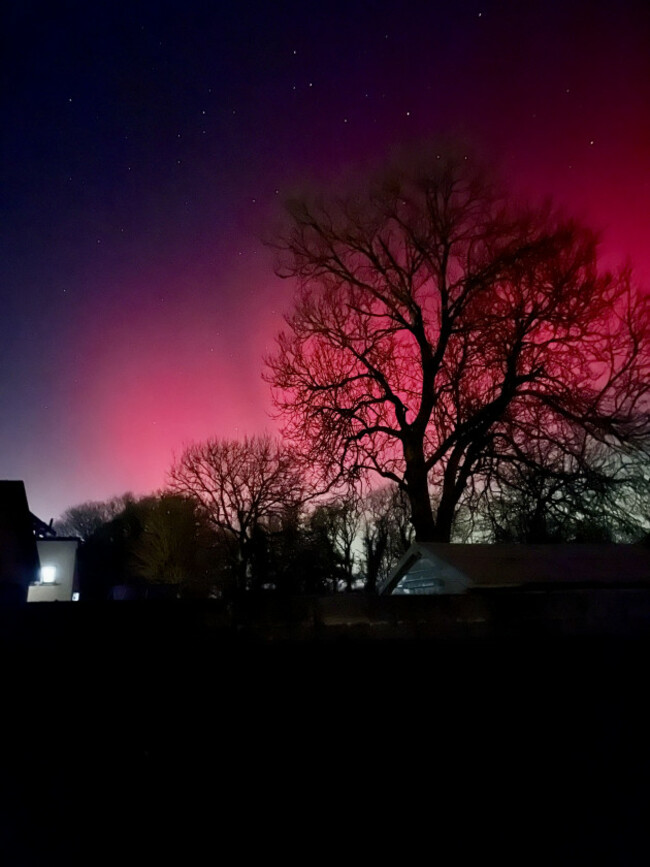
THE NORTHERN LIGHTS were strikingly visible across Ireland last night, with photographs across the country capturing their beauty. 

Early indicators suggested that the timing would favour North America rather than Europe. However, conditions developed earlier than forecast, meaning the lights could be seen throughout Ireland. 

Cloud cover in Ireland can hinder visibility, but clear spells last night made it easier for people to see them. 

Image 0709 from The Journal Northern lights over Delgany, Co. Wicklow tonight. Conor Steenson Conor Steenson

Many readers of The Journal sent in photographs showing the lights.

A strong solar flare on Sunday was followed by the launch of a large, fast cloud of plasma – known as a coronal mass ejection (CME) – almost directly at Earth.

Aurora 2 Dunmore East Harbour, Co Wexford Raymond Kinsella Raymond Kinsella

Plasma clouds like this can disturb Earth’s magnetic field, sending charged particles into the upper atmosphere. This makes gases like oxygen and nitrogen glow, producing the vibrant colours associated with auroral displays.

The UK Met Office predicted that a strong geomagnetic storm would likely follow, with ‘a chance’ it will reach severe G4 levels at times.

NOAA’s Space Weather Prediction Center also issued a rare ‘G4 watch’.

Although, on paper, this is equivalent to the G-scale strength of displays seen by many across Ireland and other parts of the world in October 2024, January 2025, and November 2025, it was more fleeting than those events.

Image Jan 19 2026 Northern lights pictured over Connemara. Lúc Ó Riada Lúc Ó Riada

Initial forecasts modelled the arrival time of the CME at Earth as early as 1am or as late as 11.30am Irish time, but real-time satellite data suggested it could arrive ahead of schedule – and from shortly after 9pm, the display was visible across parts of Ireland.

Conditions can change rapidly, and it can sometimes take several hours for activity to build enough for the northern lights to be seen at lower latitudes.

Image from The Journal Northern lights in Gowran, Co. Kilkenny. Barry Foley Barry Foley

The northern lights can generally only be seen in Ireland during storms like this on camera, but sometimes a faint glow is visible to the naked eye.

There are myriad factors that dictate how the storm will develop.

Killaloe Killaloe, Co Clare Nial Brew Nial Brew

Although the CME will likely hit Earth, it can sometimes miss, or the exact makeup of the plasma cloud might not lend itself to “charging up” the atmosphere in the right way.

Experts advise finding a dark location, free of light pollution, with a clear view of the northern horizon to be in with the best chance of snapping it.

Sightings of the northern lights have become more frequent in recent years as the Sun reached the peak of a roughly 11-year activity cycle.

IMG_9494 Northern Lights in Hollymount, Co Mayo tonight. Iseult Mangan Iseult Mangan

Access to real-time space weather data and aurora forecasts is now widely available, making it easier for people to time their attempts.

Smartphone cameras have also improved significantly, so many more people can capture aurora displays that would once have required professional equipment.

image1 (1) Craughwell, Co Galway Shane Raferty Shane Raferty

Minor storms caused by CMEs or coronal holes are not uncommon, but the ensuing aurora is usually not widely visible except by more dedicated aurora chasers. 

Additional reporting by Sophie Finn and David Mac Redmond

If you saw the northern lights in Ireland and would like to share your photographs with The Journal, you can email the images to pictures@thejournal.ie with your location and whether you would like your name to be credited. Thanks to everyone who has sent in pics! 

Readers like you are keeping these stories free for everyone...
A mix of advertising and supporting contributions helps keep paywalls away from valuable information like this article. Over 5,000 readers like you have already stepped up and support us with a monthly payment or a once-off donation.

Close
44 Comments
This is YOUR comments community. Stay civil, stay constructive, stay on topic. Please familiarise yourself with our comments policy here before taking part.
Leave a Comment
    Submit a report
    Please help us understand how this comment violates our community guidelines.
    Thank you for the feedback
    Your feedback has been sent to our team for review.

    Leave a commentcancel

     
    JournalTv
    News in 60 seconds