Sign in. It’s quick, free and it’s up to you.
An account is an optional way to support the work we do. Find out more.
Sign in. It’s quick, free and it’s up to you.
An account is an optional way to support the work we do. Find out more.
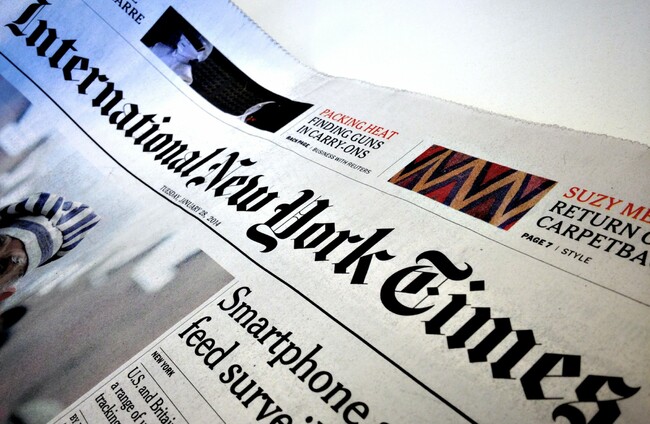
AN OPINION PIECE published in the International New York Times which criticised the powerful Pakistani army was replaced with a blank page when the newspaper went on sale in Pakistan on Friday.
The online version of the piece by Mohammed Hanif, a high-profile satirist and novelist whose critiques of Pakistani society regularly appear in the New York Times, was trending on Pakistani social media on Friday.
In Pakistan it can be considered dangerous to speak out against the military establishment.
In the article, entitled Pakistan’s Triangle of Hate, Hanif savaged the military for parading a former Pakistani Taliban spokesman before television cameras to claim that the militants are bankrolled by Islamabad’s arch-nemesis India.
“With his appearance, the Pakistani Army seemed to be sending this message: You can kill thousands of Pakistanis, but if you later testify that you hate India as much as we do, everything will be forgiven,” Hanif wrote.
Do we really need to enlist our children’s killers in our campaign against India?
A note on the blank page clarified the decision to censor the article was taken in Pakistan, and the newspaper “had no role in its removal”.
“While we understand that our publishing partners are sometimes faced with local pressures, we regret and condemn any censorship of our journalism,” a spokeswoman for the New York Times said.
The former Taliban spokesman, Ehsanullah Ehsan, is the man who claimed responsibility on behalf of the Taliban for shooting schoolgirl Malala Yousafzai in the head in Swat Valley in 2012.
He also spoke for the group in claiming responsibility for Pakistan’s deadliest ever extremist attack, in which gunmen stormed a school in northwestern Peshawar and killed more than 150 people, most of them children.
Friday’s censorship marked the second day in a row that a piece in the New York Times was censored in Pakistan.
On Thursday, it removed a piece on an anti-gay crackdown in Chechnya entitled “Chechnya’s anti-gay pogrom”.
In 2016, it censored a Times image of a man in China giving his boyfriend a kiss on the cheek. Later that year it blocked an article in the paper entitled “Sex Talk for Muslim Women”.

To embed this post, copy the code below on your site









have your say