Sign in. It’s quick, free and it’s up to you.
An account is an optional way to support the work we do. Find out more.
Sign in. It’s quick, free and it’s up to you.
An account is an optional way to support the work we do. Find out more.
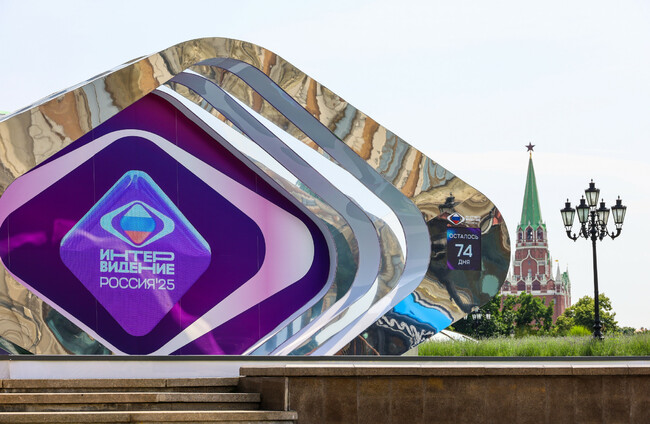
THE SOVIET ERA cousin of Eurovision, once thought long-buried in the archives of Cold War kitsch, is being resurrected tonight in Moscow, courtesy of Vladimir Putin.
The Intervision Song Contest, a relic from the 1970s and 80s, is now back, rebranded as a “festival of friendship and culture” by the Kremlin.
Putin has cast it as a rival to Eurovision, which banned Russia in 2022 after the invasion of Ukraine.
In Moscow’s telling, this is the “de-politicised” alternative: a glittering showcase of music rooted in “traditional values” rather than what officials sneer at as Western decadence.

It’s Eurovision in a hall of mirrors; Pyrotechnics and national pride, but none of the chaos or camp that Eurovision is renowned for.
Instead, the rules are strict: no political themes, no rainbow flags, no sly satire. Songs must align with “family values”.
“Participants of the Intervision will sing about love, understanding, and their homeland,” the competition’s website proudly claims.
The show will be fronted by Chinese entertainer Lay (Meng Lei) and Indian actress Stefy Patel, billed as the contest’s international hosts.
23 countries are expected to perform, including Russia’s closest allies such as Belarus, Kazakhstan and Cuba, alongside BRICS partners China, India, Brazil and South Africa.
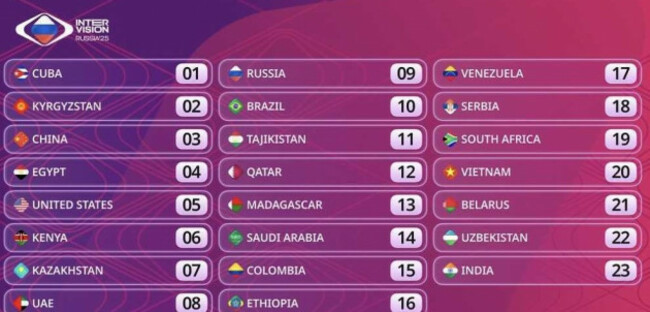
Surprisingly, the US will be represented too.
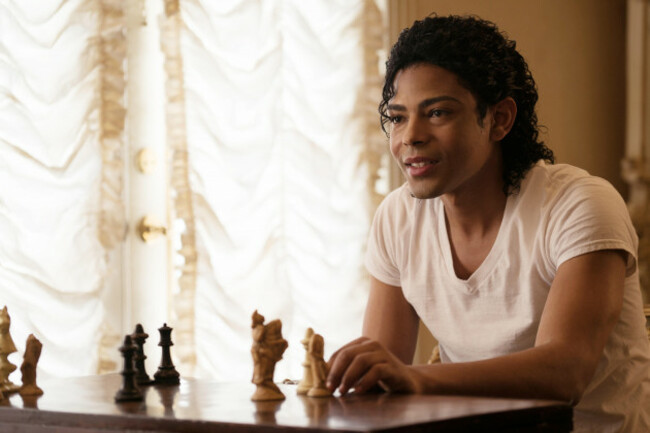
Los Angeles singer B. Howard, once oddly hyped in tabloids as Michael Jackson’s possible son, was slated to appear before suddenly pulling out this week, an embarrassment for organisers.
Now, a singer called Vassy (real name Vasiliki Karagiorgos) has stepped in at the last minute to fly the flag for the US.
Born in Australia to Greek parents, Vassy obtained US citizenship during the COVID pandemic.
Russia’s own entry is predictably political.
Yaroslav Dronov, better known by his stage name Shaman, will take the stage with his booming patriotic ballad Straight to the Heart.
His breakout hit, I Am Russian, has become an anthem of Moscow’s pro-war rallies.
The Journal asked Intervision’s press service on Wednesday whether any approach had been made with a view to adding an Irish act to the lineup.
We didn’t get a response.
The Intervision brand was first launched in the 1960s in Czechoslovakia and became a fixture of the Eastern bloc’s cultural calendar through the late 70s.

Back then, it was a curious hybrid of competition, propaganda and gimmicks, with acts ranged from Cuban crooners to Finnish balladeers.
Putin’s revival, announced by presidential decree earlier this year, has remade the contest as a political tool.
Where Eurovision has traditionally celebrated LGBTQ+ acts and campness, Intervision promises to scrub all that away.
Instead, officials boast it will showcase “spiritual traditions”.
Former Communist Party secretary Gennady Zyuganov said this month he was glad to turn away from Eurovision’s “perversions” and predicted Intervision would eclipse it in popularity.
That prediction looks shaky. Eurovision draws more than 160 million viewers each year and commands a vast online following.
Intervision, despite heavy promotion, has only tens of thousands of followers across Russian and global social media platforms.
🎤 The stage is set — #Intervision grand finals to take place on September 20!
— Russia 🇷🇺 (@Russia) September 14, 2025
Choose you favourite song! Hits from 20+ nations:
🔊 https://t.co/o8aeuonwG1 pic.twitter.com/Y9hPeQI38S
The timing of Intervision’s relaunch is notable. Eurovision itself is facing deep divisions over geopolitics, with RTÉ confirming this month that Ireland will withdraw from next year’s contest in Vienna if Israel is allowed to take part.
Othee European broadcasters have issued similar warnings.
Those threats follow two years of mass protests and attempted disruptions of Israeli performances, as Israel continues to commit genocide in Gaza, according to the UN and genocide experts.
Eurovision organisers now face an unenviable choice: risk further boycotts, or ban Israel and ignite another political storm.
In that context, Intervision is being pitched by Moscow as a safe haven, a glossy alternative uncontaminated by what it brands as “political chaos”.
Whether that framing convinces audiences beyond Russia’s borders is another matter entirely.

To embed this post, copy the code below on your site















have your say