Sign in. It’s quick, free and it’s up to you.
An account is an optional way to support the work we do. Find out more.
Sign in. It’s quick, free and it’s up to you.
An account is an optional way to support the work we do. Find out more.
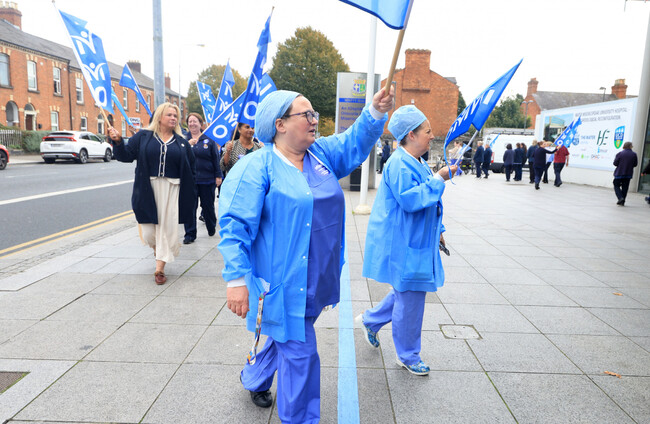
PUBLIC SECTOR WORKERS earning less than €60,000 would receive a €1,200 increase in their annual basic salary this year under the first phase of the agreement reached overnight.
Those earning above that threshold would receive a 2% increase.
The proposed agreement was reached following talks at the Workplace Relations Commission, with tomorrow’s planned strike suspended to allow unions to consider the deal and ballot members.
It provides for pay increases totalling 10.75% over its lifetime, running until March 2029.
The first adjustment would be backdated to 1 September 2026.
The €1,200 is an increase in the annual salary rate, equivalent to €100 a month before deductions for a full-time worker. It’s also important to clarify that it’s not a one-off bonus, it is a permanent salary increase.
Workers would also receive arrears covering the period since September.
For example, someone earning €40,000 would receive the €1,200 increase because it is greater than 2% of their salary, bringing their annual pay to €41,200.
The examples below show only the first increase in the pay deal, excluding overtime, allowances, tax and pension deductions, and any separate increase from progressing up a salary scale.
For clerical, executive and administrative officers, we have used points one, five and seven to show the pay for entry-level workers and those who are approximately three and five years in the grade.
Qualifying staff recruited since 2011 skip point four, meaning someone completing three years would move to point five rather than point four.
For higher executive officers, we’ve used points one, four and six. Actual progression depends on the rules applying to each employee and any recognised previous service.
We’re also including the highest point on the pay scale for each position (not including long service increments).
Clerical officers’ pay scales are published as weekly rates, as they are paid every Friday. The €1,200 annual increase would mean roughly €23.08 extra per week.
Each of these annual salaries would also increase by €1,200.
All three examples are above €60,000, meaning the 2% increase would apply.
For most of these annual salaries it would be an increase of €1,200, but for more experienced AOs, a 2% pay rise would kick in.
For primary teachers on the post-2011 scale, the first increase would mean:
Point 10 is the first point on this scale where the 2% increase would exceed €1,200.
A teacher starting on point one would normally reach it after seven completed years of service, as eligible teachers skip points four and eight.
For nurses and midwives, a similar pay increase of €1,200 would come into effect for entry level and some senior workers.
Some senior positions, including clinical instructors, nurse/midwife tutors and public health nurses, who all earn more than €60,000, would receive pay increases of 2%.
General nurse/midwife
Clinical nurse/midwife manager 1
Nurse/midwife tutor
Public health nurse
Further increases will follow in later phases of the proposed agreement.

To embed this post, copy the code below on your site









have your say