Sign in. It’s quick, free and it’s up to you.
An account is an optional way to support the work we do. Find out more.
Sign in. It’s quick, free and it’s up to you.
An account is an optional way to support the work we do. Find out more.
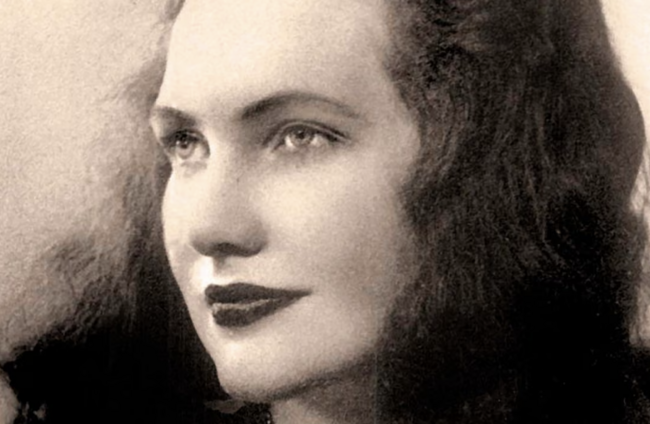

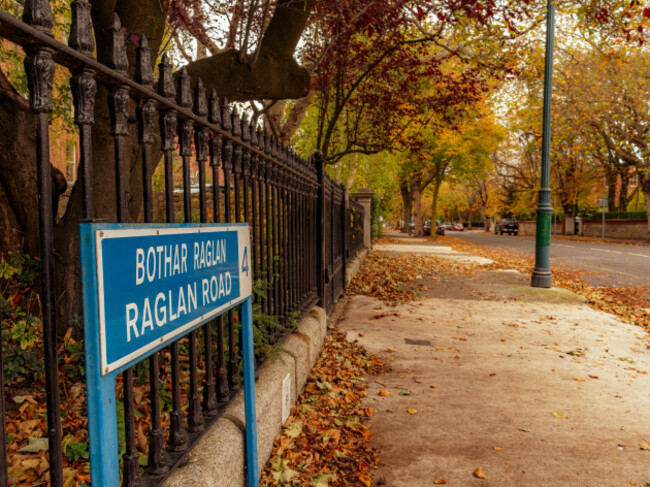
EIGHTY YEARS AGO this Saturday, on 3 October 1946, a poem was published in the Irish Press newspaper under the title ‘Dark Haired Miriam Ran Away’ to no acclaim at all. It was a love poem, an elegiac contemplation of unrequited love sparked by a raven-haired beauty whom the poet had met and befriended two years previously on a picturesque Dublin road lined by elegant red-bricked Victorian houses and graceful trees ablaze with the greens, golds and russets of autumn.
However, it languished unpublished for almost two decades until it reappeared, slightly reworked and with a new title in Collected Poems in 1964. Moreover, it was printed as a song lyric with the title followed by the tune: ‘On Raglan Road (Air: The Dawning of the Day’).
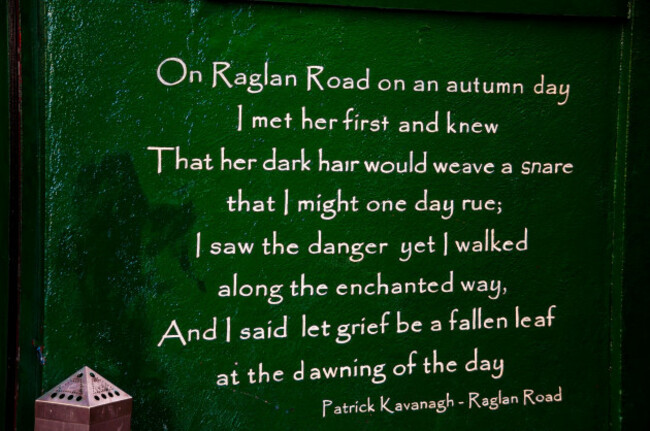
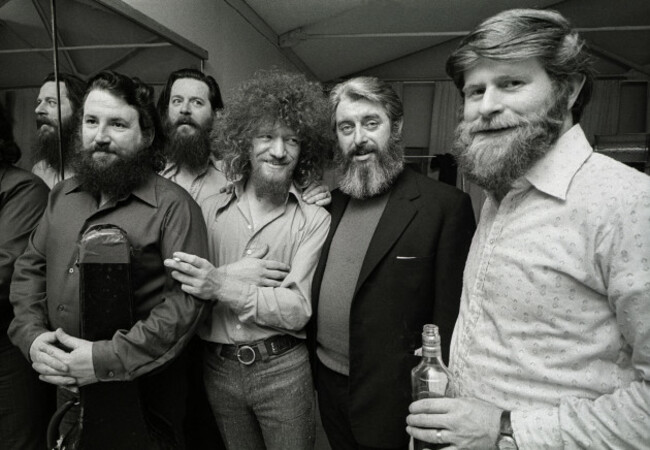
Shortly afterwards, its author Patrick Kavanagh approached Luke Kelly of the Dubliners in the Bailey pub – a famous city centre literary haunt – and gifted him the song.
And the rest is Irish music history. ‘Raglan Road’ (the ‘On’ is optional) may have been made famous by The Dubliners, but it’s been covered by multiple artists – some are obvious, such as Sinéad O’Connor, Van Morrison and The Chieftains, Glen Hansard and Damien Dempsey. But it’s also been given a whirl by more unlikely names, including Dire Straits’ Mark Knopfler and Billy Joel.
And of course the song has long become a staple of every half-decent session in any public or private house across the land. It’s scientifically impossible to spill a pint in a bar during a sing-song and not hit someone giving it soulful welly, with their eyes tightly shut, and a hand held aloft, asking for a bit of ciúnas.
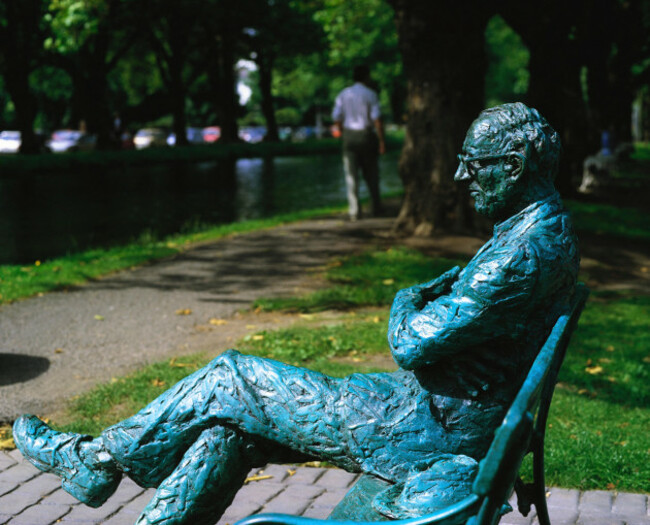
Chances are also that when strollers pass by the life-size bronze statue of Kavanagh on the banks of Dublin’s Grand Canal, it’s often ‘Raglan Road’ which springs to mind, rather than the more pertinent reference to his famous poem ‘Canal Bank Walk’.
It’s a really lovely piece of work; the artist sits on a bench, arms folded and legs crossed, perhaps contemplating the green waters, or maybe simply meditating on the ever-parlous state of his personal finances.
The only thing which could enhance the tableau would be the presence of another sculpted figure at the other end of the bench – that of Hilda Moriarty.
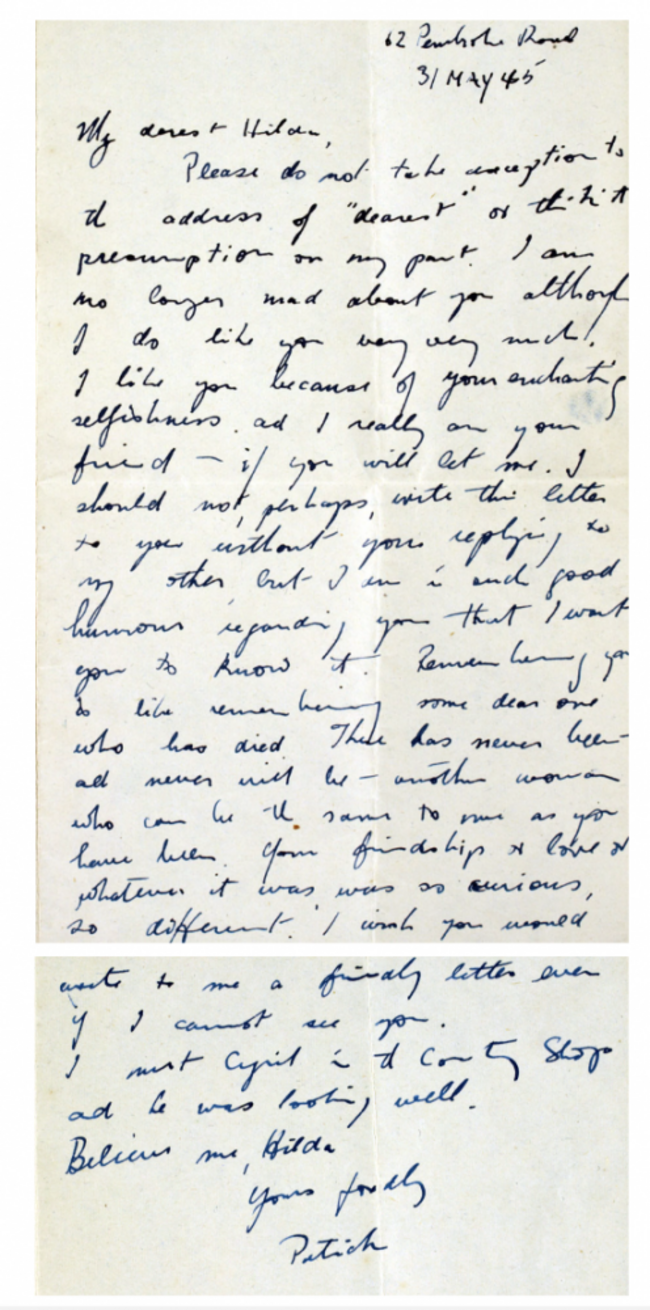
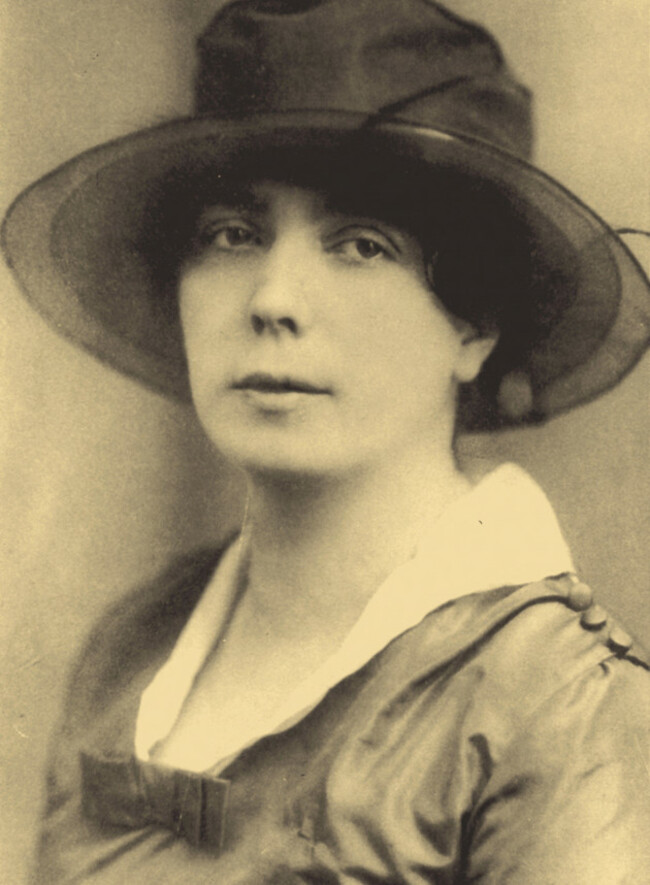
Her name will be familiar to some, but by no means all, the people who know off-by-heart the words/lyrics of ‘Raglan Road’. For she was Kavanagh’s raven-haired muse who inspired this poem and others, her name changed to ‘Miriam’ in the original version to disguise the identity of his subject.
It was a classic mismatch; she was a clever and strikingly beautiful young woman from an affluent background who was interested in Kavanagh the writer, not the lover. He was an impecunious poet 20 years older who became love struck to the point of stalker-ish obsession, and who was devastated when she married, pouring his grief into verse.
But here’s the thing about Hilda Moriarty – she was a creative muse, but she was much more besides. When she and Kavanagh met, she was a medical student in UCD; she was also an aspiring actress and went to auditions including a screen test in Hollywood, losing out to Maureen O’Hara. She was a glamorous influencer – boutiques would send her clothes and jewellery in the hopes that her photograph in the papers would garner publicity for them.
She broke Kavanagh’s heart by marrying charismatic Limerickman Donogh O’Malley in 1947, who would become one of the most well known ministers in the Irish government in the late 1960s. She was an active political spouse; when as Education Minister her husband introduced free school education – a massively consequential move which opened opportunities to generations of Ireland’s young people – Hilda O’Malley’s progressivism and views on social equality were widely viewed as an important factor.
After she was left a widow with two children when her husband died suddenly in 1968, she returned to a medical career specialising in psychiatry, and a year later ran for election to the Dáil in Limerick East, losing out by 200 votes. On the day she died in 1991, Taoiseach Charlie Haughey stood up in a parliamentary party meeting and recited ‘Raglan Road’. Later, one of his audience, Fianna Fáil TD Mary O’Rourke would reflect, “it dawned on me that he may also have been ensnared by her dark hair.”
Surely a case could be made that this remarkable woman should be seated on Paddy’s canal bench, in acknowledgement of her influential life. Oh well, never mind. At least we can console ourselves with the marvellous sculpture of Nora Barnacle striding down Dublin’s Nassau Street to commemorate the day in 1904 when James Joyce experienced the coup de coeur which would inspire ‘Ulysses’, not to mention the fierce and inspiring massive stone tableau on O’Connell Street featuring Maud Gonne, revolutionary muse of WB Yeats, standing shoulder-to-shoulder with fellow feminist/suffragist political revolutionaries Constance Markievicz, Kathleen Clarke and Hanna Sheehy Skeffington, all of whom at one point shared a prison landing in an English jail.
And then there is the eye-catching statue of Speranza, aka Lady Jane Wilde, nationalist poet, activist and advocate for women’s rights. She of course is lounging in Merrion Square park, next to the languid figure of her son, Oscar. And then there is the imposing bronze of Kathleen Lynn, installed for some time now outside the new National Children’s Hospital which was named in honour of the pioneering co-founder of Ireland’s first paediatric hospital, St Ultan’s in 1919. Also, the recent addition of the lovely sculpture of Sinéad O’Connor just off Grafton Street close to those of musicians Luke Kelly and Phil Lynott, is poignant.
And isn’t it great how we also honour our thankfully still-living inspirational women, such as the indomitable legal titan of civil rights, former Supreme Court justice Catherine McGuinness, placed outside the Four Courts, long a bastion of the patriarchy?
And doesn’t it make sense that we have two sculpted figures of our first woman President Mary Robinson – one stands near Áras an Uachtaráin and the other outside Seanad Éireann where she fought like a lioness for justice and equality for women? And already excitement is building for the unveiling of the likeness of boxer Katie Taylor outside Croke Park, the place where Ireland’s most lauded athlete ended her glorious career this summer.
Except… none of these monuments to our inspirational women actually exist on the thoroughfares of our capital. Nine years ago, when I first did a headcount for an article, there is one of Constance Markievicz (plus a bust in Stephen’s Green), one of Sisters of Mercy founder Catherine McAuley on Baggot Street, one of Mayoress Margaret Ball (though she shares the plinth with a male relative) outside St Mary’s Pro-Cathedral.
That’s it. Male figures left, right and centre though.
Telling, isn’t it, that the most high profile figures of women are of a fictional (or at least anonymous) woman Molly Malone on Suffolk Street, the so-called ‘Tart with the Cart’, and two unnamed women seated with shopping bags on Liffey Street, the ‘Hags with the Bags’.
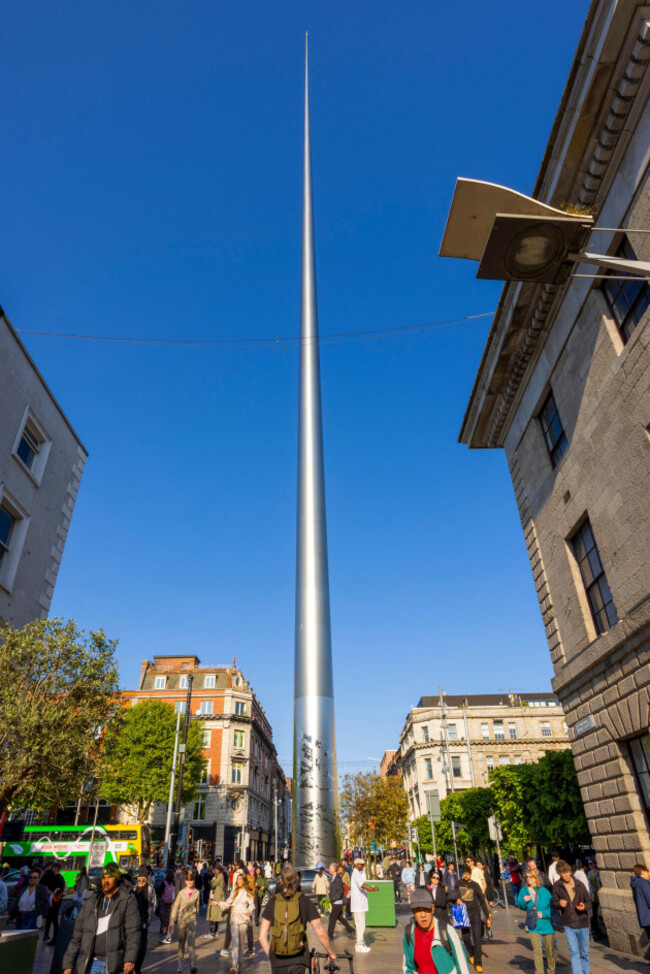
The third, Anna Livia, aka the ‘Floozie in the Jacuzzi’, was moved from O’Connell Street to make room for the steel spiked phallus, the Spire, which blends into the cityscape akin to a MAGA supporter in a Massachusetts lesbian bar.
Very telling indeed. And not a-musing at all.
Lise Hand is a journalist and writer. This column runs every Wednesday.
To embed this post, copy the code below on your site









have your say