Share your views on our Irish-language content

We need your help now

Support from readers like you keeps The Journal open.

You are visiting us because we have something you value. Independent, unbiased news that tells the truth. Advertising revenue goes some way to support our mission, but this year it has not been enough.

If you've seen value in our reporting, please contribute what you can, so we can continue to produce accurate and meaningful journalism. For everyone who needs it.

Alamy Stock Photo

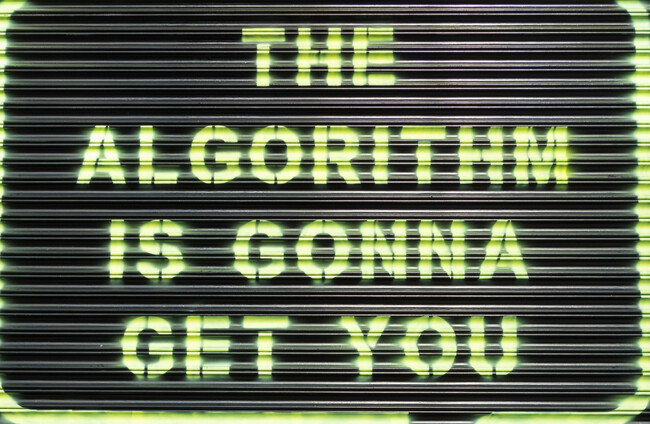
Brain rot and the rise of AI Slop We're scrolling like the old days, but everything's changed

Finian Murphy looks at the influence of AI on our feeds, our news and ultimately, our thought processes.

FOR 20 YEARS, Oxford University Press has tracked the evolution of the English language, selecting words that capture the culture of each year. In 2013, it was “selfie;” in 2014, “vape;” and in 2015, the cry-laugh emoji.

Other winning terms like “podcast,” “post-truth,” and “squeezed middle” now feel familiar, having forecasted cultural shifts.

In 2024, their word of the year was “brain rot” – a term describing the effects of bingeing low-quality digital content, especially on social platforms. Usage of the phrase jumped 230% from 2023 to 2024. Another shortlisted contender was “AI slop.”

AI slop refers to mass-produced, often bizarre or misleading AI-generated content: images, videos, music, and articles crafted for algorithmic visibility, not value. If you’ve been online recently, you’ve likely seen it: the bread-horse image, “Shrimp Jesus,” or the AI ‘Band’ the Velvet Sundown.

This surge in AI-generated filler is no accident. In 2022, Meta’s Mark Zuckerberg announced that Facebook and Instagram would double the content users see from accounts they don’t follow. That means up to a third of your feed is now decided by AI rather than your social network. Coupled with limited fact-checking and the monetisation of engagement, this opens the floodgates for AI slop to proliferate.

How AI is reshaping the news feed

The 2025 Reuters Institute Digital News Report offers early insight into AI’s effect on how we access news. Global use of chatbots to consume news remains low (7% overall, 12% among under-35s). But the real issue isn’t how people ask AI for news — it’s how AI-generated content is being injected into news and social feeds.

Irish audiences are gradually warming to AI in journalism. In 2024, just 15% were comfortable with AI-generated news content overseen by humans. In 2025, that rose to 19%, with under-35s nearly twice as likely to express comfort as over-35s.

Where are people getting their news? In Ireland, 58% continue to use TV and 58% use online media such as news sites (excluding blogs and social media). Social media trails slightly at 47%, while radio stands at 36%, print newspapers at 22%, podcasts at 12%, and AI chatbots at 5%.

This paints a picture of an audience still anchored in traditional sources but increasingly exposed to AI-generated content, often without knowing it. The shift from consumption to infiltration underscores a quiet transformation in the architecture of information.

Trust, verification and the AI generation gap

When people doubt something they see online, they still turn first to trusted news outlets, official websites, or fact-checking platforms. But among 18-34 year-olds, new verification habits are emerging: 22% consult online comments, 21% check social platforms or video networks, and 13% even ask AI bots.

With nearly half of all adults (47%) sourcing news through social media, and more of that content AI-generated, we now see one in five people relying on non-human systems to verify what may already be artificial.

Irish people remain concerned: 68% say they’re unsure what is real or fake online. The figure is highest among over-65s (72%) but still significant among 18-24s (62%).

Who do we think spreads misinformation? Equally, 47% say politicians and influencers. Only 23% suspect “ordinary people.” Yet the reality is more complex. Ordinary users now have unprecedented access to generative tools that can create convincing deepfakes and misleading content.

The dangers aren’t just political. As activist Laura Bates notes, “96% of deepfakes are pornographic,” and 99% of those depict women or girls. The erosion of trust and the rise in gender-based synthetic abuse are among the most troubling dimensions of AI slop.

The Liar’s dividend: Trust in the age of AI slop

AI slop isn’t just background noise; it will actively undermine public trust. As John Oliver recently highlighted, the Liar’s Dividend is a term for when real footage or facts are dismissed as fake, simply because they could have been AI-generated. This growing scepticism is toxic to civil discourse and democracy.

While platforms claim to be fighting misinformation, their algorithms still promote content that drives engagement, even if it’s misleading. Without clear AI labelling, even vigilant users struggle to discern what’s real.

The New York Times ran an experiment asking readers to identify AI-generated videos. Among its affluent, media-literate audience, the average failure rate across ten videos was 44%. While 80% correctly identified a fashion influencer video as real, 34% could not identify a fake post-match interview, and 38% believed a fake AI-generated news broadcast. Nearly half (47%) believed a fake TED Talk was authentic.

The blurring of online and offline realities opens space for manipulation and doubt. What can be done? Platforms should label AI content clearly and prioritise authentic sources. Users must actively downrank misleading accounts by blocking or reporting. But deeper change will require regulation, media literacy, and investment in public interest media to push back against the flood of AI slop.

Finian Murphy is a Researcher and Strategist focused on public sentiment, culture and communities.  

Readers like you are keeping these stories free for everyone...
A mix of advertising and supporting contributions helps keep paywalls away from valuable information like this article. Over 5,000 readers like you have already stepped up and support us with a monthly payment or a once-off donation.

View 12 comments
Close
12 Comments
This is YOUR comments community. Stay civil, stay constructive, stay on topic. Please familiarise yourself with our comments policy here before taking part.
Leave a Comment
    Submit a report
    Please help us understand how this comment violates our community guidelines.
    Thank you for the feedback
    Your feedback has been sent to our team for review.

    Leave a commentcancel

     
    JournalTv
    News in 60 seconds