Sign in. It’s quick, free and it’s up to you.
An account is an optional way to support the work we do. Find out more.
Sign in. It’s quick, free and it’s up to you.
An account is an optional way to support the work we do. Find out more.


LAST UPDATE | 10 Apr 2025
THIS WEEK, OUR political leaders will once again claim triumph over the Good Friday Agreement’s success on its anniversary today, 10 April. But how can we consider the Good Friday Agreement a success when citizens are still spending decades and their remaining years struggling for even a modicum of truth and justice?
We mark the 27th anniversary of the signing of the Good Friday Agreement while an 87-year-old widow, Bridie Brown, who has spent almost three decades seeking the truth about the murder of her husband, is being dragged back to court by the UK Secretary of State for Northern Ireland.
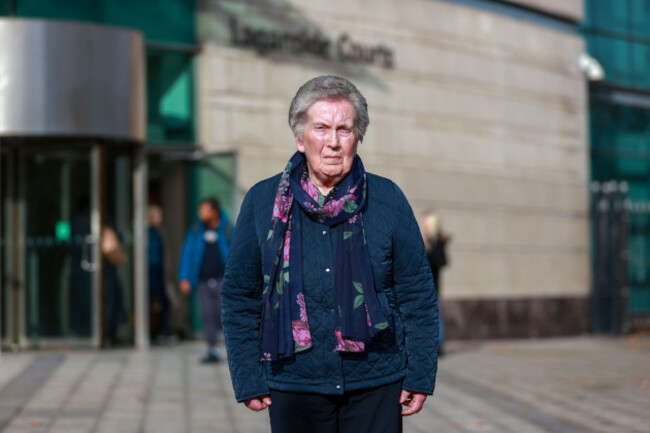
To continue subjecting victims and survivors in Northern Ireland to further suffering through prolonged and arduous legal challenges is cruel, callous and utterly shameful. In 1997, 61-year-old Sean Brown was abducted while closing the gates to a GAA club in Bellaghy. The partially burned body of the father-of-six was discovered beside the scorched remains of his burnt-out car. No one has been convicted of his murder.
A 2004 police ombudsman report interrogating the investigation into the murder of Sean Brown found that “no earnest effort was made to identify those who had carried out the murder”.
After 26 years, the family was finally granted an inquest. The hearing was subsequently halted in 2024 after the coroner stated that he could not proceed due to material being withheld on the grounds of national security. Mr Justice Patrick Kinney revealed that more than 25 people, including State agents, have been linked to the murder by intelligence material.
The coroner described delays to the disclosure process as “deplorable”. He later wrote to the Secretary of State for Northern Ireland requesting a public inquiry into the Brown murder, a request that was supported by PSNI Chief Constable Jon Boucher. The UK government refused.
In December 2024, the High Court in Belfast ruled that the UK government was in breach of its Article 2 obligations under the ECHR in relation to the Brown case, wherein the judge ordered the Secretary of State Hilary Benn to open a public inquiry. On New Year’s Eve, the government instead lodged an appeal against the order.
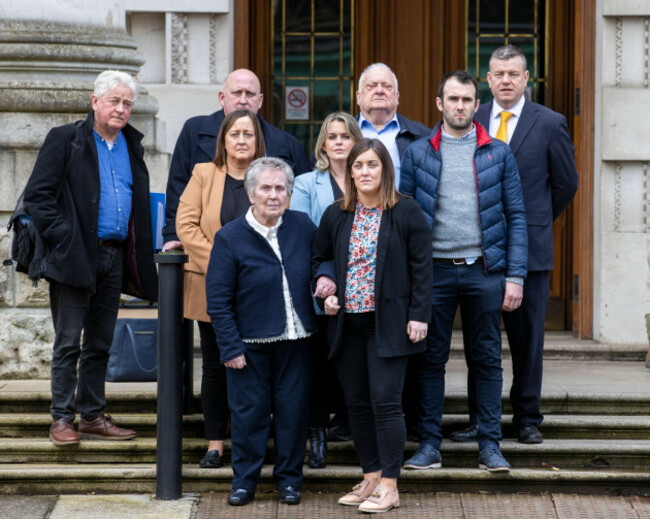
Earlier this month, the Court of Appeal in Belfast ruled that the failure of the UK government to order a public inquiry into the murder of Sean Brown was unlawful and “cannot stand”. This was the Brown family’s 58th court appearance since Sean Brown’s murder.
Pause for a moment to consider how this decision may have impacted Bridie Brown. Consider the relief that must surely have been felt, the vindication, when the High Court ruled that a public inquiry must be granted, only to be denied once again and forced to return to court. Every year that the Brown family is denied a public inquiry is a year closer to Bridie Brown never seeing justice.
Many consider this to be a tactic perpetrated by the UK government; the longer this can be dragged through the courts, the more victims and campaigners will die before they have a chance to uncover the truth of what happened to their loved one. Paddy Cassidy, Brid Kane, Jackie Nicholl, Thomas McConville and Bridie Brown’s own son Damian spent their lives seeking truth and justice, but ultimately passed away without ever having been granted either.
During last year’s UK general election campaign, Labour’s now-Secretary of State for Northern Ireland Hilary Benn said that, once elected to government, his party would repeal the Conservatives’ widely condemned Legacy Act and return to the principles of the Stormont House Agreement, which sought to embed transitional justice institutions in Northern Ireland. He rescinded on this commitment.
Rather than return to the Stormont House Agreement, Labour is seeking to cherry-pick the Legacy Act, doing the bare minimum to bring the legislation in line with the European Convention on Human Rights (ECHR). Benn has wedded himself to maintaining a toxic piece of legislation that has been rejected by victims, human rights groups, and Northern Ireland’s political parties. He is actively rejecting requests for public inquiries and instructing families to use the Independent Commission and Information Recovery (ICRIR).

The ICRIR does not have the support of victims’ groups in Northern Ireland and the courts have found that the Commission’s disclosure process, which provides the Secretary of State for Northern Ireland with the ability to veto disclosure, to be incompatible with the ECHR.
In September, Benn instructed the McKearney and Fox families to use the ICRIR, denying their request for a public inquiry. 32-year-old Kevin McKearney and 69-year-old John – known as Jack – McKearney were murdered as they worked in their butcher shop in 1992. 63-year-old Charles Fox and his wife, 54-year-old Teresa, were shot in their home that same year. Responsibility for all four murders was claimed by loyalist paramilitaries.
The priority of the subsequent British governments is not to seek justice for the innocent civilians murdered or the grieving families they leave behind, but rather to protect the State and State actors from the consequences of their actions. The Legacy Act, and within it the ICRIR, was designed with the explicit purpose of protecting British Armed Forces and State actors.
Families continue to refuse to use the ICRIR. You cannot force victims to trust a structure created under the premise of shielding the British Armed Forces from exposure and consequences of their actions. The ICRIR will never succeed, despite the enormous resources being thrown at it or Benn’s attempts to force families to use it. Meanwhile, more families will suffer.
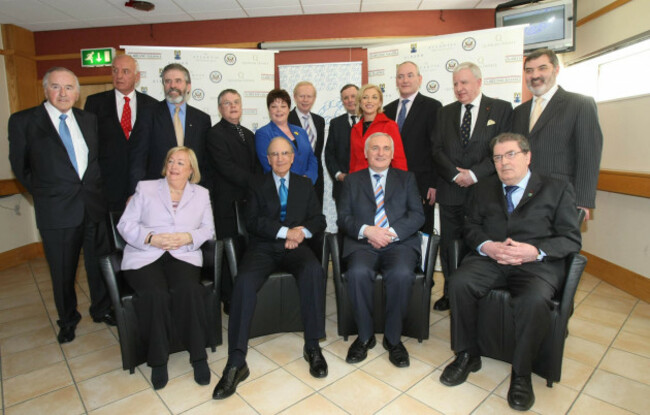
The Irish government is not free from criticism; Stormont House is a joint agreement between the UK and Irish governments — both the UK and Ireland are co-guarantors of the Good Friday Agreement — so where is the action? Fine Gael and Fianna Fáil will speak empathetically about the success of the Good Friday Agreement during anniversary events this month, but both parties have equally failed to deliver a path to truth and justice for families.
The abject failure of political leaders to create a mechanism for transitional justice limits our peace and inflicts a level of trauma and suffering that those with the power to do something are sheltered from — after all, the weight of injustice carried by the bereaved doesn’t quite show up at the polling stations in the Republic.

There are 1,300 unsolved murders connected to the Troubles; families have spent decades in a system designed to deny them even a degree of justice, many have died without answers, and many more might still.
How can this be considered acceptable? Where is our collective outrage at what is being inflicted on these families? How can we consider the peace process to be a success while this continues? Peace that denies justice is no peace at all.
Emma DeSouza is a writer and campaigner.
To embed this post, copy the code below on your site














have your say