Sign in. It’s quick, free and it’s up to you.
An account is an optional way to support the work we do. Find out more.
Sign in. It’s quick, free and it’s up to you.
An account is an optional way to support the work we do. Find out more.

IRELAND HAS EXPERIENCED major economic success in recent years – but behind that gloss, inequalities impacting the most vulnerable have significantly widened.
Thousands of families in Ireland are living on the breadline and one-parent families have the highest consistent poverty rate of all households, rising by 4% in the last 12 months alone.
One-parent families have the highest deprivation rate of all households and account for nearly 60% of families in emergency accommodation.
One in five lone parent families went without heating last year due to a lack of money and almost 4 in 10 were in arrears with their utility bills.
All this, despite the fact that one-parent families only make up a quarter of all families with children.
One-parent families are disproportionally impacted by the multiple, intersecting crises of our society: child poverty, housing, health and childcare. They are often the families with the least wealth and resources yet act as the shock-absorbers of failed social policy.
At One Family – the national organisation to support people parenting alone and sharing parenting - we see the reality of these statistics daily in the families we advocate for. In 2024, we dealt with 6,395 queries to our Ask One Family helpline and social media contacts and delivered over 5,200 services and interventions to 709 children and adults.
Too many of the parents we work with are concerned about struggling to afford basic food items, to heat their home or to pay for school shoes; not through any fault of their own, but because of systemic failure.
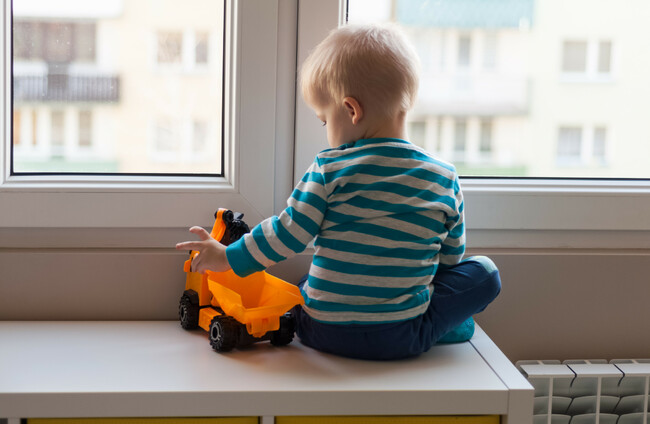
Family homelessness, which is something we used to rarely see, is now far too common and can have a traumatic, long-term impact on children who are growing up in hotel rooms unable to have friends over, have space to do their homework or room to play.
For parents in emergency accommodation and those dependent on social welfare payments, it is a struggle to cover the essential needs of their children, never mind anything outside of the daily routine.
We saw this recently with our social outing to Dublin Zoo. Without the support of One Family to cover all costs – travel, snacks, food, entry into the zoo – not all families would’ve been able to attend.
There are also many parents who are working full-time but still struggling to survive, often finding the gap between paydays too wide to navigate without cutting back on food, heat or other essentials.
Now, as the uncertainty of Trump tariffs and other economic headwinds swirl, we need clear political action to protect the most vulnerable children and families.
It’s been well publicised in media reports that this autumn’s Budget will not deliver cost-of-living packages and we will see reduced government spending as fiscal preparations are made to manage economic uncertainties.
But one-parent families cannot be the ones to bear this cost. The giveaway budgets of recent years, while providing some immediate, short-term relief for one-parent families, wasted public funds on people who did not need double Child Benefit or energy credits.
This massive spending did nothing to address the systemic barriers which keep some families trapped in poverty, deprivation and homelessness.
Now, more than ever, one-parent families need urgent, targeted measures that are evidence-based, so that their basic needs can be met. For many, social protection payments are currently failing to protect, with children paying the highest cost.
We know government is prioritising child poverty and targeted supports so our proposals for Budget 2026 reflect this.
An efficient way to target the poorest children is through existing payments such as the Child Support Payment and Back-To-School Clothing & Footwear Allowance.
We want the core rates of social protection payments increased to keep up with inflation and prevent further real-time value decline.
We want an increased childcare subsidy for lone parents who are in employment or education, as current rates of childcare remain too high and inaccessible.
We need significant investment in homelessness prevention, including the tenant-in-situ scheme and an increase in housing support payments so that they are in line with market rents and lone parents don’t have to bridge the gulf between payment and rent with the limited income they have.
Along with these protections, we want systemic inequalities which often create a financial traps that prevent parents from working to be addressed, including;
changes to the Working Family Payment so that minimum hours for lone parents are equitable with other families; changes to the Jobseeker’s Transitional Payment so that parents who are in employment or education can receive this payment until their youngest child completes education; changes to Parent’s Benefit so that the children of lone parents receive 18 weeks of entitlement, which is the case for children of two-parent households, instead of the current 9 weeks.
Most of Ireland’s poorest children live in one-parent families. We all share a moral responsibility to prevent poverty reaching unprecedented levels and ensure everybody in Ireland has a decent standard of living.
There is a clear choice for government to make in Budget 2026, to either take evidence-based action to deliver for the most vulnerable families or else enable further increases in poverty, deprivation and family homelessness.
One Family is Ireland’s national organisation for people parenting alone, sharing parenting, and separating.
To embed this post, copy the code below on your site












have your say