Sign in. It’s quick, free and it’s up to you.
An account is an optional way to support the work we do. Find out more.
Sign in. It’s quick, free and it’s up to you.
An account is an optional way to support the work we do. Find out more.

THE HIGH-SPEED TRAIN between Paris and Nice ground to a halt just outside Lyon earlier this week due to an electrical fault.
With temperatures above 30 °C, air conditioning failed, and passengers quickly became overheated, forcing railway staff to open the doors and let them seek shelter in whatever shade they could find along the railway line.
Police and firefighters distributed cold drinks and aid during the four-hour delay. This is one of thousands of incidents triggered by the extreme unseasonal heat dome that has brought scorching May temperatures across Europe.
Rail systems worldwide are vulnerable to heatwaves, as high temperatures can cause railway lines to buckle, overhead electric cables to sag and signalling equipment to fail. Even in Ireland, high temperatures can disrupt our rail system, as acknowledged by Irish Rail in its 2024 climate adaptation strategy.
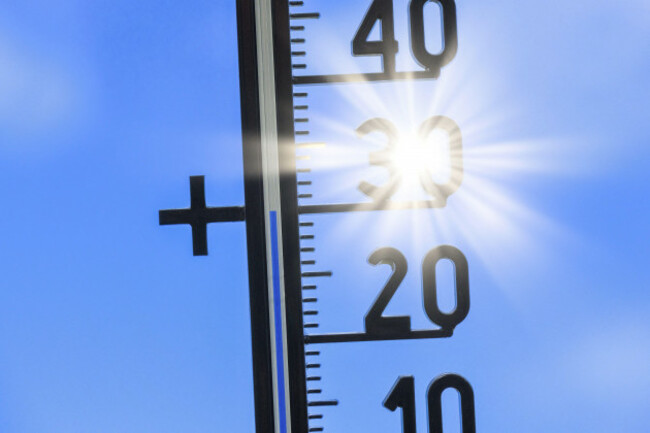
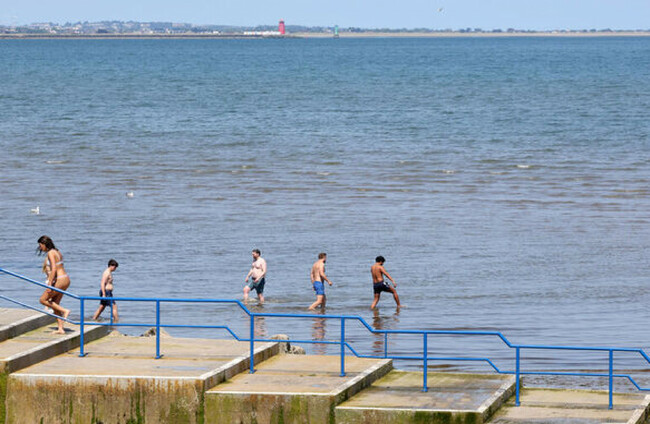
Normally, heat records, like records in athletics, are broken by tiny margins, yet this week, Ireland’s all-time May temperature record was smashed by 2C, with the mercury hitting 30.5 °C at Shannon Airport on Tuesday, 26th. In sporting terms, this is equivalent to the all-but-impossible feat of running the 100 metres in under eight seconds. Our weather systems are now, for all intents and purposes, on steroids.
While soaring temperatures in Ireland are generally greeted as an informal national holiday, elsewhere, they spell misery and death. This week, India’s capital, Delhi, recorded its hottest May night in 14 years, with minimum nighttime temperatures of 32.4 °C, while daytime temperatures topped 48.2 °C in the northern Indian state of Uttar Pradesh, with multiple heatstroke deaths recorded and hospitals inundated.

Electricity consumption is surging across India, as millions turn to air conditioning to help cope with lethal temperatures, but power cuts are frequent, and tens of millions have no access whatever to air cooling.
Heat-related deaths have increased by around one third across Europe in just the last two decades; the continent as a whole is heating more than twice as fast as the global average, with experts warning of hundreds of thousands of annual heat deaths across Europe by 2100, representing a severe public health crisis.
Extreme temperatures are now affecting almost every country on Earth, and the rapid rate of heating is even leaving climate scientists aghast. ‘We are on the brink of an irreversible climate disaster. This is a global emergency beyond any doubt’.
That was the shocking conclusion of the State of the Climate report, published by the Stockholm Resilience Centre in 2024 and endorsed by more than 15,000 active climate scientists.
‘Much of the very fabric of life on Earth is imperilled. We find ourselves amid an abrupt climate upheaval, a dire situation never before encountered in the annals of human existence’, the report added. ‘Tragically, we are failing to avoid serious impacts, and we can now only hope to limit the extent of the damage’.
Earlier this year, the World Meteorological Organisation (WMO) published its 2025 report, which confirmed that all 11 of the hottest years ever recorded have been since 2015. The likelihood of this being a coincidence is one in several billion.
The WMO report has tallied an ever-increasing global energy imbalance; this is the extent to which energy enters and leaves the Earth system, and it hit an all-time high in 2025, with more than 90% of this excess energy being absorbed by the world’s oceans, leading to ocean heating to a depth of two kilometres.
Heat is now accumulating in the world’s oceans at a rate 18 times greater than all human annual energy use, leading to marine heatwaves, more powerful storm systems and accelerating global sea level rise.
Meanwhile, in response to rising air and water temperatures, the world’s glaciers are losing on average 273 billion tonnes of ice every year, and this rate has risen sharply over the last decade.
According to the WMO, the next five years are likely to be exceptionally hot globally, with near certainty that a new record for the hottest year ever will be set by 2030, as a strong El Niño event further accelerates global heating. According to climate scientist, Friederike Otto, in the near term, the world is facing “a whole range of extreme weather events that exceeds anything we’ve experienced in the past”.
Amid the gloomy climate prognosis, scientists recently highlighted some genuinely good news: the plummeting cost of wind and solar energy and its widespread adoption have led scientists to reduce their worst-case scenario of global temperatures rising by 4.5 °C by the end of the century to a 3.5 °C rise. The bad news, however, is that a 3.5 °C rise would itself be catastrophic.
Though a small country, Ireland continues to punch far above its weight in terms of carbon pollution; we are already among the very worst per capita polluters in the EU27, and this week the Environmental Protection Agency confirmed that Ireland is completely off track to meet any of its legally mandated 2030 emissions reduction targets.
An indication of just how little interest the current government has in climate change can be seen in the fact that the 2026 Climate Action Plan, which was due to be published months ago, is nowhere in sight and is now unlikely to appear before the autumn of the year it is supposed to be planning for.
Climate minister Darragh O’Brien seems far more passionate about lifting the cap on our ultra-polluting Dublin Airport than actually meeting any of our binding national and EU targets. O’Brien promised this week to bring a “slimmed-down” version of the plan to Cabinet in the coming weeks, which presumably means yet more targets jettisoned and solemn commitments abandoned.
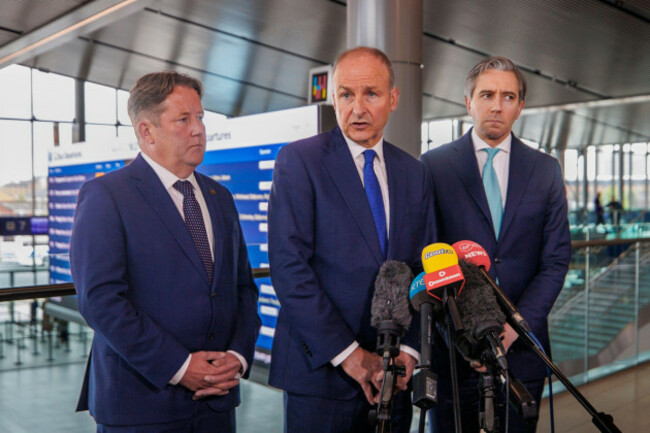
Despite the blasé demeanour of the Taoiseach and his ministers, missing our legal climate targets is not in fact a trivial matter. The government’s own expert advisers have warned that the state is facing a “staggering” bill of between €8-€26 billion in non-compliance fines from the EU, with the Irish Fiscal Advisory Council labelling our inaction on the green transition a ‘colossal missed opportunity’.
On a per-capita basis, Ireland is last among the entire EU27 in terms of meeting its climate targets, with our huge emissions-intensive and politically connected livestock sector among the chief culprits.
The fact that agriculture, both here and globally, is already reeling under the impact of climate-fuelled extreme weather events, from regular droughts to months of constant rainfall and severe cold snaps, doesn’t seem to have cut any ice with that sector’s lobbyists.
In the UK, there is growing concern that its domestic food production only accounts for 60% of its own food needs, with the remaining 40% imported. Given the deepening instability in global politics, combined with increasingly difficult conditions facing many food producers, a country’s ability to meet its own domestic needs has never been more critical.
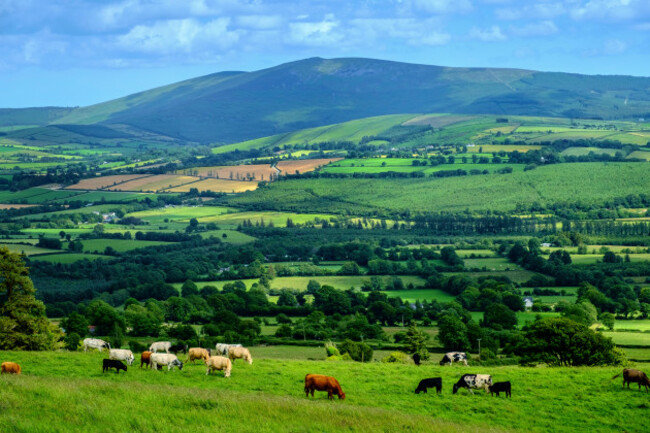
Ireland, with its light population by UK or European standards, with access to ample farmland and fresh water, should be a food powerhouse, yet in reality, we are vastly more import-dependent than even the UK, as we import four-fifths of everything we eat, as well as millions of tonnes of animal feeds and chemical fertilisers that our export-oriented livestock sector depends on.
Even if our politicians are uninterested in climate change as an issue, surely they must be aware of the growing global crisis of food insecurity, and they should be working with the farming sector to ensure it is capable of meeting the primary food calorie needs of the Irish population by aggressively diversifying in horticulture, tillage and organic systems generally.
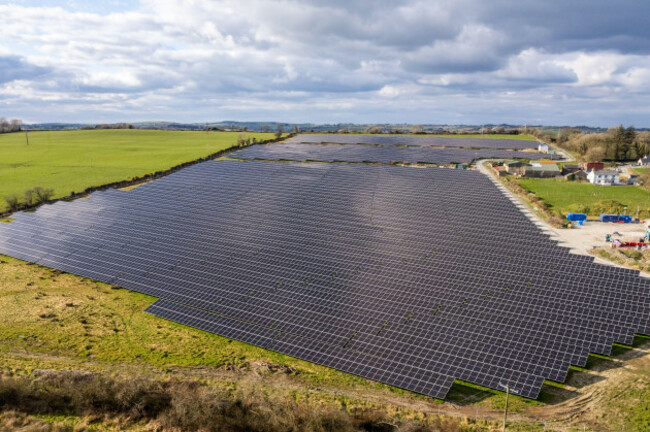
Similarly, Ireland has the opportunity to be a European clean energy leader, given that we have the best wind speeds in Europe and ample land for solar farms. Here, too, we are lagging behind.
In recent weeks, we have been treated to the spectacle of Fianna Fáil claiming to be seriously interested in building a nuclear power plant in Ireland. In the extremely unlikely event that this was ever actually built, it would take several decades to complete – time we do not have – and likely end up costing tens of billions of euros.
Look a little closer at those promoting this hare-brained scheme, and you will find that that viewpoint is often twinned with the desire to stymie the development of solar farms in Ireland. Why would anyone be opposed to locally produced clean energy that benefits farmers who lease their land for solar farms? Those objections mostly come from sectors like the dairy industry, with their main concern being a worry about being outbid for land leasing by solar companies.
One of the greatest obstacles in the fight against climate breakdown is the constant battle between competing agendas, each one demanding priority for its particular issue over the bigger picture. But, with temperatures climbing up by the minute, time is clearly running out, and it is this kind of short-sightedness that has crippled so much innovation in Ireland and left us years behind in the clean energy revolution that we should instead be leading.
Meanwhile, Ireland is a net importer of over €1 million of fossil fuels every hour, or nearly €10 billion a year, money that could and should be spent on building our clean-energy future.
John Gibbons is an environmental journalist and author of ‘The Lie of the Land – A game plan for Ireland in the climate crisis’.
To embed this post, copy the code below on your site











have your say