Sign in. It’s quick, free and it’s up to you.
An account is an optional way to support the work we do. Find out more.
Sign in. It’s quick, free and it’s up to you.
An account is an optional way to support the work we do. Find out more.
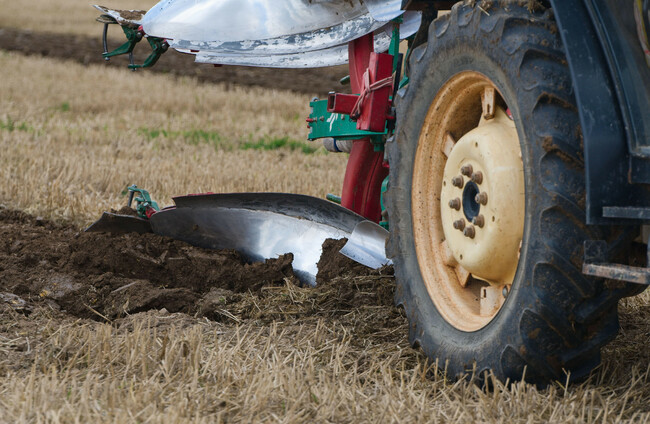

WITH THE PLOUGHING Championships taking place this week in Tullamore, Co Offaly, we’re going to hear a lot about farming and how farmers as the “backbone of the rural economy”. In my view, that portrayal is a disservice to them and the generations that went before them.
There is a tendency to view farmers as one big cohort, as if all farmers are all equal, when the reality is anything but. The variation among farms in size and income is massive. One size does not fit all.
Reducing all farmers to some skeletal component of a wider economy – rather than recognising them as the most essential element in producing food and potentially regenerating our natural environment – has devalued them in the supply chain; almost in the same way that food itself is now devalued.
Is this “backbone” expression in fact just a smokescreen, sucked up by so many, because the people making most of the money from agriculture are not in fact the farmers, but the agri-businesses?
(Well, unless you are a dairy farmer in a sector which sits head and shoulders above all others in terms of farm income. While 2025 has been an exceptionally good year for beef and sheep farmers, grain growers have not enjoyed such an upsurge in their commodity prices. A rising tide doesn’t always raise all boats.)
These businesses exist because of agricultural activity. They are propped up by farmers (helped with a good whack of taxpayers money) who buy their products and services – fertiliser, agrochemicals, fuel, seed, feed, machinery, animal health products, contractors, etc. This leaves little in the coffers for anything else.
Agribusiness is big business, yes. And we all need access to quality inputs and services to run our farms, but do we always require it, or need to use so much of it? Maybe it’s time farmers show more restraint when it comes to their input costs.
The cost of doing farming is just too expensive for most farmers to make a decent return.
While some farmers may be content that they are contributing to the incomes of other sectors with their hard-earned money, many are not.
The current thinking among many farmers is that these inputs are necessary for their farming models and that their farms would cease to be productive without them. I get that; this is what we are told, and have been told for decades. I did a degree in agriculture 30 years ago, and unfortunately, the teachings haven’t really changed that much since (in a world which has changed a great deal).
The ethos of farming is still largely about monocrops, chemical fertiliser application, spraying of weeds like docks and nettles, using insecticides and fungicides on arable and vegetable crops, spraying before ploughing, spraying after seeding. I could go on. That’s before you get into the animal health product side of things, where the routine use of anti-parasitic medications is still the norm for many farmers when it should be the exception.
Inputs which are known to damage our natural environment, our climate, and human health, and inputs which make many farm enterprises unprofitable. It’s bad enough being reliant on an unpredictable farm gate price, without being shackled by high input prices too.
But it doesn’t have to be this way.
Things are changing. There are now many thousands of farmers across Ireland doing things differently. They are taking back control of their farms and are improving their farm profitability by lowering their input costs.
Are these farmers now less important to the rural economy in the eyes of the powers that be?
Farmers who use little or no synthetic fertiliser and who are reducing their chemical inputs, sometimes to zero. Farmers who are using fewer and fewer animal health products because their animals are healthier, and who are (correctly) testing if they need to be used in the first place.
Arable farmers who no longer plough their fields so they can build soil carbon and organic matter, with many now using fewer pesticides because they have restored biodiversity in their soil, and it is growing stronger plants.
From an environmental perspective, we know that Irish agriculture can play a significantly positive role in reducing Ireland’s GHG emissions, and has the almost all of the power to restore biodiversity to our countryside. A key attraction to many farmers is that lower input costs usually make good environmental sense too. For example:
And so, while farmers (and our natural environment) have the most to gain from a transition towards agroecological/organic/regenerative systems, who has the most to lose from such a realignment of agricultural practices? It is those who make and sell the agrochemical and fossil fuel-based inputs that “conventional agriculture” is so reliant on.
The economic ambitions of the few determine the future of the many, and their influence is overwhelming – on our politicians and on our civil servants.
And it is for this very reason that our system of farming is so difficult to change, despite the Dáil’s declaration of a Climate and Biodiversity Emergency way back in 2019.
The Green Party did its best for the four and a half years it was in Government, and as Minister I supported 4,000 farmers to transition to organic farming.
I pushed for measures to help farmers reduce their chemical fertiliser use such as growing multi-species swards and red clover; I initiated a soil sampling scheme which went beyond the basic measures of soil chemistry; and I introduced financial supports for farmers to adopt environmental sustainability practices on their farms.
But the fear is that these supports will be rescinded by this Government that puts the economic growth of the few ahead of the many, and certainly ahead of any action on the environment.
Continuing to encourage our farmers to punish our natural environment in the interest of economic return for others, is so counter-productive in the long term for farmers and for nature.
More and more farmers are waking up to the realisation that their farms need stability, and that comes with diligent control of input costs.
So, if the state wants to be serious about supporting farmers, it much stop viewing agriculture through the lens of agri-business. A trek around the Ploughing site this week will tell you everything you need to know about what is important in the Irish Ag-Food sector.
Most farmers are well placed to adopt practices which will increase their bottom line, build resilience on their farms, and deliver positively for the environment. But that requires an honest conversation with politicians and farm organisations alike about who they really represent, and what is important to them.
Are they willing to recognise farmers as essential food producers and true custodians of the land, and not just pawns in a bigger game? Unfortunately, I don’t think that is a conversation many in the Ag-Food sector is willing to have any time soon – they have too much to lose.
Pippa Hackett is a former Green Party Minister of State in the Department of Agriculture, Food and the Marine. She has a PhD and runs a farming and bloodstock enterprise with her husband in Co Offaly.
To embed this post, copy the code below on your site















have your say