Sign in. It’s quick, free and it’s up to you.
An account is an optional way to support the work we do. Find out more.
Sign in. It’s quick, free and it’s up to you.
An account is an optional way to support the work we do. Find out more.
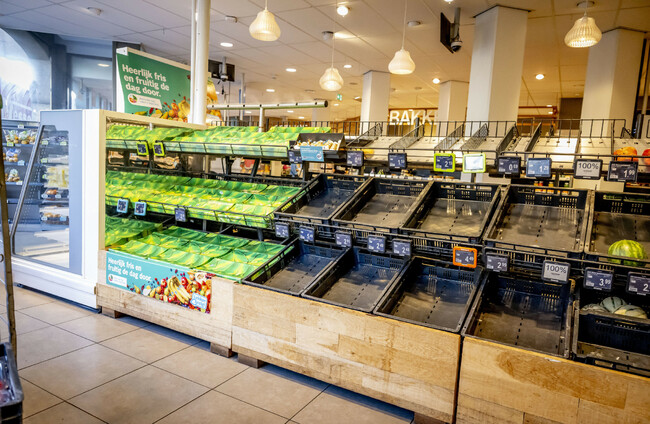

FOOD IS FUNDAMENTAL to how we live. It is something every one of us has to navigate every day.
It affects our health, environment, culture, communities and economy. It connects us to farming, biodiversity, climate, tradition, family and place and influences the choices we make at home, in schools, in shops and in our communities.
Yet our understanding of food is increasingly fragmented.
Recent research carried out by our team at Airfield Estate, the only urban working farm and food education charity in Dublin, found that almost all parents and primary school teachers surveyed (89.5%) believed that many children are disconnected from how food is grown, produced and prepared. If we lose that connection entirely, we risk raising generations with little understanding of the very systems that sustain them.
This is mirrored by research published by the National Dairy Council earlier this year, which found that over half (56%) of children under 12 in Ireland have never seen a cow being milked.
This means that places like Airfield now play a critical role in bridging the growing divide between urban life and the realities of food production. These experiences should not be rare or novel for children in Ireland.
We welcome 12,000 schoolchildren every year, and as a working farm and food education provider in Dublin, we see this gap every day. Many children arrive having never seen where eggs come from or vegetables growing, met farm animals or spoken to a farmer.
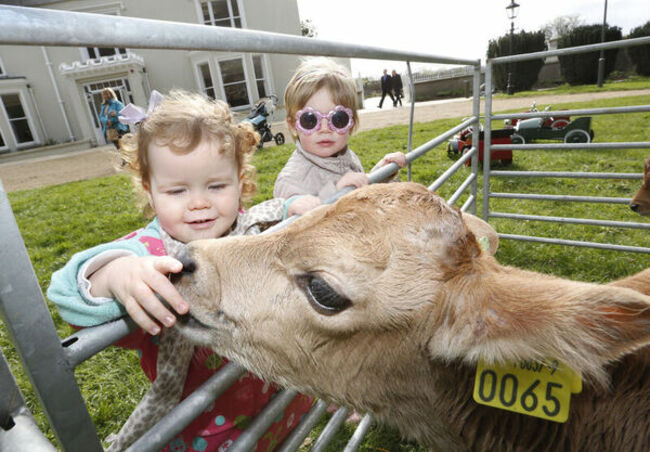
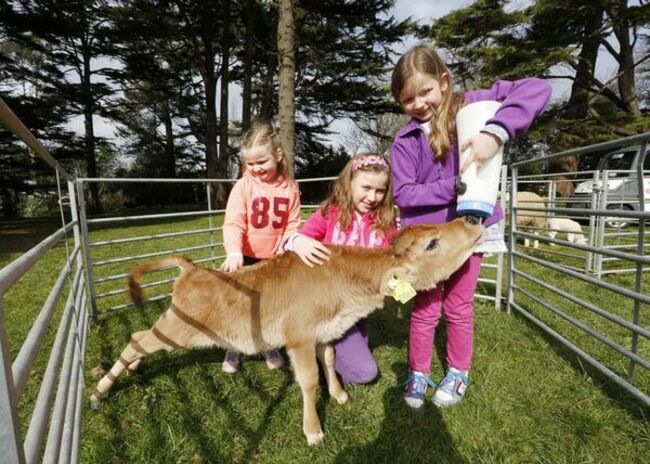
Yet the moment they experience it first-hand, the connection is immediate. We work hard to champion youth food education through our Living Classroom model, which combines food production, education, nutrition and sustainability through hands-on learning experiences. Through programmes such as Farmer Time, Breakfast Clubs, GROW and our 38-acre farm and gardens, we demonstrate how experiential food learning can connect young people with food and farming.
The knowledge, skills and experiences developed during childhood can shape how people understand and interact with food throughout their lives. But this is not a children’s issue alone. Our ambition should be to develop a food-literate Ireland. Food literacy should support people throughout their lives: in schools, families, communities, workplaces or the wider food environment.
Food literacy is not simply knowing what is healthy or being able to cook. It is the knowledge, skills and confidence to understand food, make informed decisions and navigate an increasingly complex food environment throughout life. It helps people to participate more confidently in the food system and connect more deeply with nature, one another and our food culture.
Food literacy can therefore help guide people through many of the challenges facing society – from health and sustainability to climate, biodiversity, food systems and everyday decision-making. Food literacy can support more informed citizenship and more sustainable consumption by helping people understand how their food choices connect to wider global systems.
It is worthwhile looking at how we educate people about food in Ireland. Food is often taught through individual subjects and programmes – nutrition through health, farming through agriculture, biodiversity through science and cooking through practical subjects – without always helping people understand how these things connect.
According to our research, 70% of parents surveyed believe that children are not receiving enough education about food in primary school. Additionally, at second level, there are declining student numbers for Home Economics at Leaving Cert, and for those that do choose this subject, there is less practical cookery time within the curriculum.
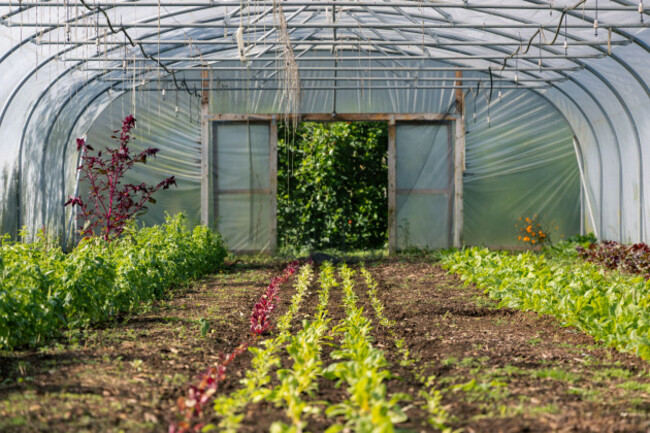
There is also the real-life learning that happens at home with family, with peers and in communities too. But if these communities are becoming less connected to their food, and the land which it comes from, we risk losing knowledge and skills that contribute to healthier, more resilient communities and food systems
Having spent over 30 years working in nutrition and trying to get people to change what they’re eating, there is still a long way to go. What’s really missing is a collaborative approach between all actors in the food chain including academia, industry, health and policy.
However, it is heartening to see a growing appetite among people who want to know more about the food that they are buying and eating. This has been driven in part by the rise of Sophie Morris, and various food producers sharing the ins and outs of growing and sustaining food supplies like Green Earth Organics and Portnoo Market Garden in an increasingly fragile system on social media.
The recent TV series ‘How to Shop Well’ on RTÉ 1 also demonstrates how we can expand food literacy through a variety of approaches and highlight to viewers the challenges and opportunities facing Ireland’s food sector.
But Ireland needs a more joined-up approach, to ensure lifelong capabilities. We are calling for food literacy to be recognised as a core life skill and for a coordinated, cross-government approach to building a more food-literate Ireland. We need a National Food Literacy Strategy and are calling on the government to act now.
Food deserves the same attention as other essential life skills. Ireland has recognised that preparing people for modern life requires more than traditional literacy and numeracy.
The Literacy, Numeracy and Digital Literacy Strategy 2024–2033 recognises digital literacy as a foundational capability for learners.
Ireland has also developed a National Financial Literacy Strategy, recognising the importance of giving people the knowledge, skills and confidence to navigate financial decisions throughout their lives. These approaches demonstrate that when a capability is fundamental to how people participate in modern society, it can warrant national recognition, coordination and investment.
We believe food literacy deserves the same ambition.
Just as digital literacy helps people navigate a digital world and financial literacy helps people navigate financial decisions, food literacy helps people navigate the food environment and the food system on which we all depend.
The good news? Ireland does not need to start from scratch.
There is already significant work happening across Ireland. NGOs, community organisations, schools, farms, educators, businesses and other organisations are developing programmes, resources and initiatives that support food literacy in different ways.
This work is valuable and should be supported. But good work happening in isolation cannot create the scale of change that is needed. There is currently no overarching national framework bringing these efforts together around a shared ambition for food literacy.
Ireland needs to connect and strengthen what is already happening.
A national strategy could bring together government, education, health, agriculture, environment, communities, NGOs, businesses and other partners around a common ambition. It would give food literacy greater recognition as a shared national priority, while allowing the many organisations already working in this space to contribute their expertise.
Children should be the starting point, but the ambition should be lifelong.
Every child should have the opportunity to develop the knowledge, skills, confidence and experiences needed to understand and navigate food throughout their lives. And people of all ages should have opportunities to continue developing their food literacy.
Because food is not just something we eat. It connects our health, our environment, our culture, our communities and how we live every day.
Food is fundamental to life. Understanding it should be a fundamental life skill.
Claire Mac Evilly is CEO of Airfield Estate in Dublin.
To embed this post, copy the code below on your site












have your say