Sign in. It’s quick, free and it’s up to you.
An account is an optional way to support the work we do. Find out more.
Sign in. It’s quick, free and it’s up to you.
An account is an optional way to support the work we do. Find out more.


EUROVISION IS ALMOST upon us again, and with it comes more political controversy. For a simple song contest, famed for strange voting and cheesy songs and dramatic dance routines, it never fails to demonstrate that people care about it a lot more than they let on.
This year, the European Broadcasting Union (EBU) faces one of its toughest challenges as most of Europe looks on in horror at the events taking place in Gaza. This has led to very understandable calls that Israel should be banned from the competition.
On the face of it, the request will resonate with many. If a country chooses to invade another territory and inflict the level of human suffering on civilians that we are seeing on our screens every night, then, whatever the original reason for the action, the country must be accountable.
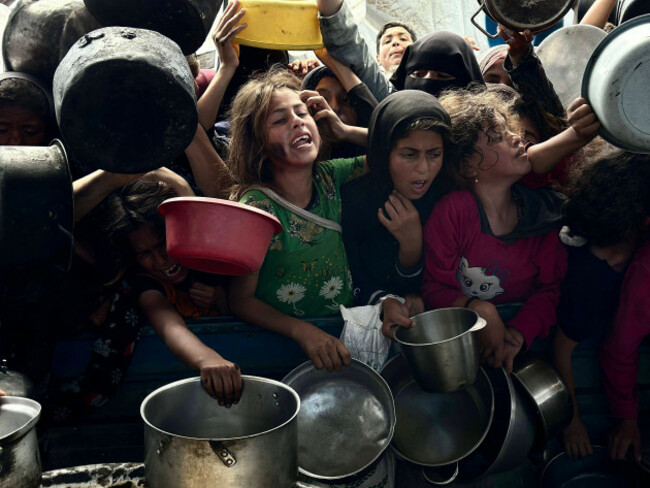
Indeed, many in the EBU will fear the impact of Israel’s participation on the contest and the scope for protests and even safety at the event as a result.
A closer look, though, shows just how difficult this is going to be for the EBU. Broadcasters like RTÉ have asked that the issue be discussed in the hope that either an agreement might be reached or that the pressure can be left in the hands of the EBU as the decision-maker.
The complexity here is that the Eurovision has nothing to do with governments. Neither States nor governments enter the contest. What people are supporting are TV broadcasters rather than states. But we all know how seriously countries take this and how the flags are waved. We certainly know countries and leaders of them view it as an important space to put their country on show.
Therein lies the EBU headache.
The song contest has withstood much political pressure. Back when the likes of the old European Economic Community (EEC) would not allow Greece or Spain entry to the bloc because they were under authoritarian rule, the EBU acted differently and let them participate. It has never sat in judgment of countries run by dictators. Back then, they requested only that the broadcaster fulfil the rules of the EBU, and then they could take up membership. With that comes the bonus of being allowed into Eurovision.
The horrendous conflict in the former Yugoslav republics saw entries dramatically breaking a siege, being shot at and escaping on a plane to make it to Millstreet in Ireland just to be part of the contest. That conflict saw terrible war crimes, but again, the EBU asks only that the broadcaster obey the rules of the EBU.
It never judged that Britain or indeed Ireland might not be part of the contest due to the conflict in Northern Ireland. That Greece or Turkey should answer for issues between them, or that Azerbaijan and Armenia should be answerable for conflicts. To navigate all this, the EBU stuck to the process that its own rules were what mattered.
The EBU is not the best communicator, however. It does a lot more than Eurovision. This is just where we all encounter it. It is, though, a Union, and it supports broadcasters across Europe in their mission and in journalistic values.
For many years, some in the EBU suggested that they had their doubts about some elements of Russian broadcasters and how much freedom they had. However, they always managed to do just enough, even if without making many friends. That all changed in the aftermath of the invasion of Ukraine. The EBU has tried to make clear what happened at this time, but it has not been very good at doing so.
The decision was taken to suspend the Russian broadcasters because other EBU members felt that the coverage of the war in Ukraine did not meet EBU standards. While the world believed it was an easy decision based on the invasion, the EBU had found a technical breach of its rules, and that was the issue. Other members felt the broadcasters could no longer demonstrate sufficient independence from the state in their coverage, and as a result, they had no issue suspending them.
The position with Israel is, according to sources, a lot trickier. The broadcaster, KAN, has not had difficulty demonstrating independence from the state when covering issues, even if it is sympathetic to the state at times. Indeed, some in the EBU feel that the EBU has supported KAN at many points over recent decades in asserting its independence and fighting off any attempt by the state to control the station.
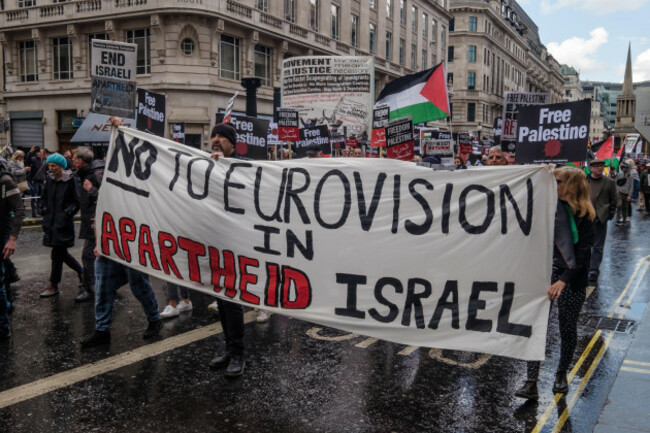
Some feel the Israeli government would like a lot more control of the station and its position if they could get it. Therin lies the problem. To save face in front of a public rightly disgusted by the method of war being inflicted, the EBU could suspend KAN. But this would be a new step if they cannot do it based on a breach of rules by the broadcaster. And if they do it, they are throwing KAN, a dedicated member, to the wolves and into the arms of a government that might be happy to see it out of the Union for reasons other than Eurovision.
Countries and broadcasters could decide not to take part, and that might put pressure on Israel to withdraw, but they are all conscious in each broadcaster that this is not the government they are dealing with. It is a TV station, just like them. None of them wants to be answerable for what their government might do tomorrow.
A crackdown on street violence, a draconian immigration policy, an attack on a specific minority… who can say any new government in Europe might not do something the world is appalled at anymore? Each of these broadcasters does not want to be held accountable for actions they can’t control.
The problem will stay with us. Where we wave flags, we must accept that these things are rightly debated. It is helpful, though, to understand why it is such an issue, and indeed, the time may be approaching when the post-war politics of Europe that always valued togetherness and peace may be getting replaced by something else, something darker, and Eurovision will face new trials as a result.
Will the EBU need to change, or can it continue in its current mission? Only time can tell.
Johnny Fallon is a political commentator, author and voice of ‘The Johnny Fallon Podcast’.
To embed this post, copy the code below on your site














have your say