Sign in. It’s quick, free and it’s up to you.
An account is an optional way to support the work we do. Find out more.
Sign in. It’s quick, free and it’s up to you.
An account is an optional way to support the work we do. Find out more.
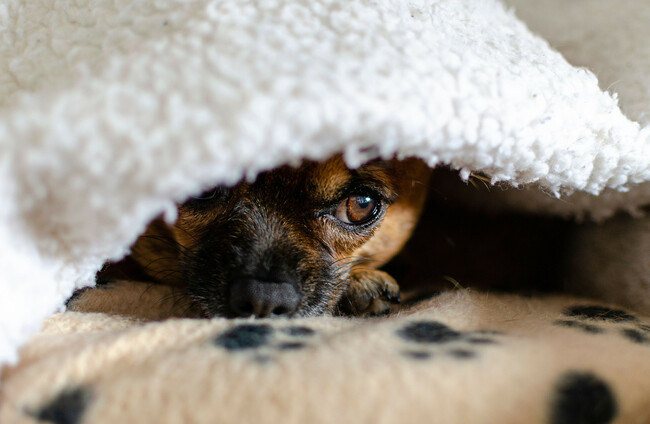

HALLOWEEN CAN BE great fun for us but quite unsettling for dogs.
Unfamiliar costumes, noisy visitors, doorbells, fireworks and changes in routine can all be confusing or frightening. Even confident dogs may react differently when their environment suddenly feels unpredictable.
Planning ahead helps keep things calm and safe. Simple steps like managing door activity, creating a quiet space, using background sound and supervising trick-or-treat interactions can make all the difference to how your dog copes.
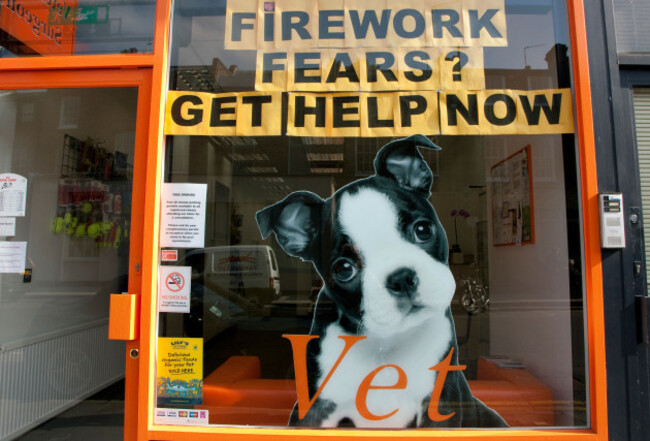
Fireworks are distressing for dogs because of the way their senses and instincts interpret sudden, loud, unpredictable sounds.
Dogs hear at roughly four times the distance we can and at much higher frequencies. What sounds like a loud pop or bang to us can feel to them like standing beside an explosion: sharp, close, and physically painful.
Their ears are also finely tuned for detecting subtle sounds, so the chaos of fireworks, random bangs, echoes and whistling tones is overwhelming rather than predictable noise.

Beyond hearing, dogs also feel vibrations through their paws and body, which can make each explosion feel like the ground is shaking.
Combined with the smell of smoke and flashing lights, their sensory world becomes full of mixed signals. They can’t tell that the source of the noise isn’t a real threat, so their survival system kicks in: adrenaline, racing heart, panting, pacing, hiding or trying to escape.
For a human comparison, imagine being home alone at night and suddenly hearing repeated gunshots and car alarms going off right outside your window, with the walls shaking from the sound.
You don’t know when the next bang will come, or how long it will last.
Even if someone tells you “it’s just fireworks,” your body still reacts instinctively with fear because it feels unsafe.
If noise fear seems to be worse this year than previous years, ask your vet to check for pain or discomfort. Research shows dogs in pain are more likely to develop or intensify noise sensitivities.
While Halloween decorations seem harmless or even funny to us, they can be genuinely alarming for dogs. Dogs experience the world through a very different sensory lens, one that’s finely tuned for detecting changes, movement and potential threats.
Dogs are experts at spotting movement and noticing when something in their environment looks different.
A life-sized skeleton, a giant inflatable spider or a ghost that suddenly moves or lights up can look like an unfamiliar creature appearing out of nowhere.
Their eyes are wired to notice contrast and motion more than detail, so a wobbling decoration in the dark can seem alive and unpredictable.
On top of that, many decorations produce sounds such as shrieking, rattling chains or eerie music.
Rearranging furniture to make room for decorations, adding flashing lights, or cluttering walkways can alter a dog’s sense of safety and predictability.
Many dogs rely on a consistent layout of their home for security, so sudden changes can heighten uncertainty.
Some breeds – particularly those bred for guarding, herding or hunting – have been selectively bred to notice even small environmental changes. Their vigilance, which is useful in their original work, means they may react more strongly to unexpected movement, sound or visual changes.
What feels like harmless fun to us can feel like a sudden threat to them.
Dogs often find costumes and masks on familiar people confusing or even frightening. They rely heavily on visual cues, scent and tone of voice to recognise us, and a costume can distort all three at once.
Dogs read our body shape, facial expressions and movement patterns to understand who we are and how we feel. When a person suddenly looks taller, bulkier or has their face covered, the dog may not immediately recognise them.
Masks hide eyes and facial features key parts of human communication that dogs have learned to interpret.
Dogs try to piece together all the cues, sight, sound, scent, posture to decide if something is safe. When those signals don’t match (“you smell familiar but look and move like a stranger”), it creates uncertainty.
This may lead to hesitation, barking, backing away or even defensive behaviour. Even typically relaxed dogs can be startled if costumes appear suddenly in dim light or during noisy celebrations.
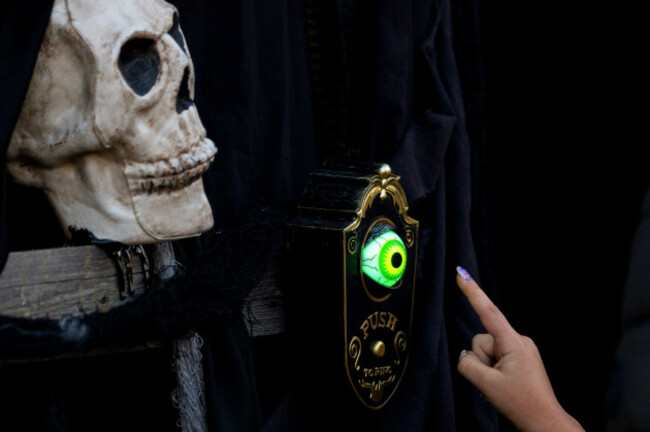
Constant visitors can also be stressful for dogs because it disrupts the normal rhythm of the household. Each time the door opens, new scents, sounds and visual stimuli rush in, people in costumes, unfamiliar voices and unusual smells. When the door keeps opening and closing, it can trigger two main types of responses.
The door represents both opportunity and risk. Excited or anxious dogs may try to bolt outside, either to greet people, to investigate or to flee from the noise and commotion.
This is especially likely if the dog is already on edge or has a history of door-dashing.
From the dog’s perspective, strangers are repeatedly approaching and entering their territory. This can easily provoke a defensive or alerting response, as the dog feels compelled to warn or protect their home and family. The constant repetition of door knocks, doorbells, and strange visitors in masks reinforces that cycle of arousal.
Take your dog for a calm, sniffy walk and toilet break before dusk. Physical activity and scent exploration help lower arousal. Avoid evening walks once fireworks or trick or treat begins.
Choose the quietest interior room in the house. Add a soft bed, familiar scent, a water bowl, and a steady background sound such as white noise, a fan, or calm music. Research with shelter dogs has shown that soft rock and reggae are the most effective genres for reducing stress and promoting relaxation (Bowman et al., University of Glasgow, 2017).
Close the curtains and blinds to block flashing lights, and turn on indoor lights to reduce contrast from fireworks outside. Keep at least one closed door or baby gate between your dog and the front door.
Place a friendly sign or leave a sweet bowl outside to reduce doorbell ringing.
Prepare long-lasting chews, lick mats, or food puzzles. These encourage licking and sniffing, both of which lower heart rate and promote calm.
Only dress your dog up if they clearly enjoy it. Avoid anything that restricts movement or covers the face, ears, or chest. Dogs rely on body language to feel secure; restrictive costumes can make them anxious.
Keep chocolate and sugar-free candies (especially xylitol) out of reach. Store wrappers and bins securely to prevent scavenging.
Ensure your dog’s microchip and tag details are current and the chip scans correctly. Many shelters see a spike in lost dogs after fireworks.
If your dog shows fear of loud noise, consult your vet about event-based medication or anxiety aids. Studies show that early, appropriate medication can prevent escalation of noise-related phobias. Do not trial new medication for the first time on Halloween itself.
8. Assign roles
One adult handles the door; another stays responsible for the dog. If your dog chooses to rest in the safe room, let them. Comfort is allowed, reassuring a frightened dog does not reinforce fear.
Use a secure harness and collar with two attachment points. For known escape risks, add a backup line or a well-fitted basket muzzle for safety.
Your dog isn’t being stubborn or dramatic; they’re trying to cope with an unpredictable, overwhelming environment. A calm plan, familiar routines, and empathy go a long way.
Have a happy and safe Halloween.
Suzi Walsh is an expert dog behaviourist and dog trainer. She has an honours degree in Zoology and a Masters in Applied Animal Welfare and Behaviour from the Royal Dick School of Veterinary. She has worked as a behaviourist on both TV, radio and has also worked training dogs in the film industry.
To embed this post, copy the code below on your site











have your say