We need your help now

Support from readers like you keeps The Journal open.

You are visiting us because we have something you value. Independent, unbiased news that tells the truth. Advertising revenue goes some way to support our mission, but this year it has not been enough.

If you've seen value in our reporting, please contribute what you can, so we can continue to produce accurate and meaningful journalism. For everyone who needs it.

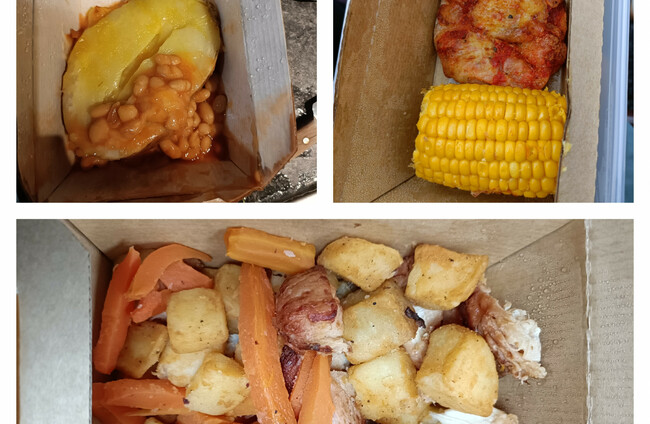
Parents sent images of some of the school dinners with The Journal. The Journal

Hot School Meals The intentions are good, but the delivery is poor

Jen Cummins says the programme is built on the right principle, but food waste, poor design and a one-size-fits-all approach risk undermining children’s health and learning.

LAST UPDATE | 2 hrs ago

IRELAND’S HOT SCHOOL meals programme is built on a simple and indisputable truth: a child cannot learn if they are hungry. Anyone who has worked in the School Completion Programme understands this deeply.

The effects of food poverty show up in classrooms every day as tiredness, poor concentration, behavioural issues, absenteeism and children falling behind long before exams ever come into view.

That is why the ambition behind the hot school meals programme matters, and why it deserves support. Education policy does not exist in a vacuum; it is inseparable from social policy, public health, and long-term economic planning.

Supporting the principle of a programme, however, does not absolve the Government of responsibility for how that programme is delivered. In fact, it creates a greater obligation to ensure it works properly, uses public money responsibly, and genuinely improves outcomes for children. On that measure, the hot school meals programme is falling short, and we are now at a point where ignoring its weaknesses risks greater problems rearing their head in the future.

Food waste

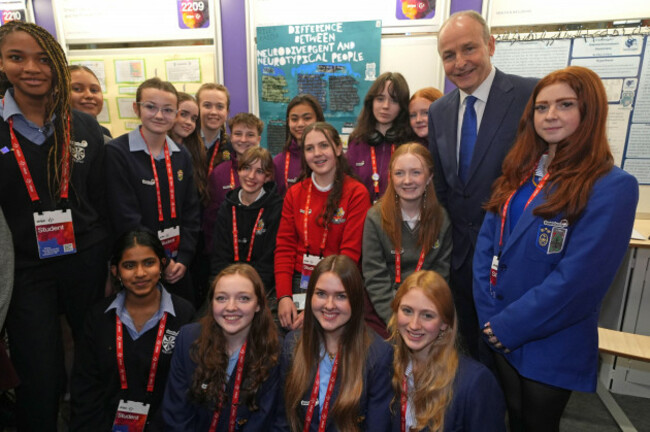
Some of the most compelling evidence of these weaknesses has not come from a departmental review or a consultancy report, but from two young students. Éadaoin Coyle and Eliza Finnegan from Dunmore Community School carried out a detailed research project for the Stripe Young Scientist competition, examining portion sizes and food waste under the hot school meals scheme.

They conducted careful, ethical and evidence-based research, the kind of work policymakers regularly claim to value, but too often overlook. Their work deserves serious thought and recognition.

taoiseach-micheal-martin-with-students-during-his-visit-to-the-stripe-young-scientist-and-technology-exhibition-at-the-rds-in-dublin-picture-date-friday-january-9-2026 Éadaoin Coyle and Eliza Finnegan (centre) from Dunmore Community School are joined by Taoiseach Micheál Martin at the RDS. Alamy Stock Photo Alamy Stock Photo

Their findings were stark. On the day measured, 21.4% of all food provided in the school was wasted. Waste levels were highest among the youngest children, with Junior and Senior Infants leaving almost a quarter of their meals uneaten.

Waste steadily declined as age increased, confirming what teachers and parents have been saying for years: a one-size-fits-all approach to portion sizes does not work for children with very different developmental and nutritional needs.

This matters politically for three reasons. First, food waste on this scale is indefensible when public money is being spent during a cost-of-living crisis. Second, it points to meals that are not designed to satisfy children’s needs. And third, it raises serious questions about how the programme is structured and who it is designed to serve.

Challenges facing the scheme

The current model relies heavily on large private contractors delivering meals at scale. While this may appear efficient on paper, it comes with hidden costs. Meals are mass-produced off-site, transported long distances and delivered in standardised portions designed for logistics over suitability or quality. The outcome is predictable: younger children overwhelmed by portion sizes, older children sometimes still hungry and bins filled with food that taxpayers have already paid for.

Parents and educators have been raising concerns for some time, often accompanied by troubling images of meals being served. Yet these voices, particularly those of small rural schools, remain underrepresented in how programmes like these are drawn up. Many rural schools struggle to participate at all due to infrastructure requirements, storage limitations, or the absence of suitable suppliers. The result is a two-tier system where access depends not on need, but on geography and capacity.

There are also serious questions about nutritional quality. While the programme is described as providing “hot, nutritious meals”, the reality varies widely. Eadaoin and Eliza’s research included an interview with a qualified nutritionist who made clear that children of different ages require different portion sizes and nutritional balances. Serving the same meal in the same quantity to a four-year-old and a 12-year-old makes little nutritional or educational sense.

This is not a trivial issue. Poor nutrition in childhood is linked to long-term health problems, lower educational attainment and increased pressure on public services later in life. If we get this wrong now, we are doomed to pay a greater price later on. This can present itself through higher healthcare costs, poorer workforce outcomes, and deepened inequality. School meals should be a cornerstone of preventative public health policy, not a shiny political project.

Looking elsewhere for guidance

International comparisons show what is possible. Countries like Finland, Sweden, Estonia and Portugal treat school meals as a universal public good. Meals are often cooked on-site or in municipal kitchens, governed by strict nutritional standards and subject to frequent inspection. In Finland, access to a balanced school meal is guaranteed in law, and students are actively involved in menu planning and feedback. In Portugal, meals are designed around the Mediterranean diet and viewed as part of health education, not just food provision.

Ireland, by contrast, still operates a largely outsourced model with limited inspection – currently, only around 20% of participating schools are inspected annually. That level of oversight would not be accepted in any other area of child welfare. This is not an argument against hot school meals; it is an argument for doing them properly. A programme designed to tackle educational disadvantage should not generate unnecessary waste, exclude rural schools, or prioritise private contracts over children’s wellbeing.

There are better options: more flexible procurement models, greater use of local providers, age-appropriate portions, stronger nutritional standards and the meaningful involvement of schools, parents and students in evaluation. Most importantly, we should listen when young people engage seriously with public policy. If two students can identify these issues through careful research, the government can, and must, respond with meaningful reform.

The hot school meals programme reflects the kind of Ireland many of us want to build: one where children are supported, not left to struggle in silence. But good intentions are not enough. The Government’s decisions must be evidence-led, equitable and accountable.

I hope to see more forward planning from Government. An Ireland where schools are built with catering facilities, the administrative burden isn’t placed on principals and school staff and an education system that recognises the importance of socialising around meal time for our children’s development. We need to get this right; our future depends on it.

Jen Cummins is a TD for Dublin South Central and is the party’s spokesperson on education. 

Readers like you are keeping these stories free for everyone...
A mix of advertising and supporting contributions helps keep paywalls away from valuable information like this article. Over 5,000 readers like you have already stepped up and support us with a monthly payment or a once-off donation.

View 28 comments
Close
28 Comments
This is YOUR comments community. Stay civil, stay constructive, stay on topic. Please familiarise yourself with our comments policy here before taking part.
Leave a Comment
    Submit a report
    Please help us understand how this comment violates our community guidelines.
    Thank you for the feedback
    Your feedback has been sent to our team for review.

    Leave a commentcancel

     
    JournalTv
    News in 60 seconds