Sign in. It’s quick, free and it’s up to you.
An account is an optional way to support the work we do. Find out more.
Sign in. It’s quick, free and it’s up to you.
An account is an optional way to support the work we do. Find out more.

I’D LIKE TO give you some food for thought.
I try to look for the positive stories to tell when it comes to Irish nature, because there are lots out there to inspire, motivate and give some hope. The many Irish Nature Heroes out there doing amazing work to reverse our biodiversity crisis for a start.
But this story sits in my mind like a dead weight. It needs to be told. I made a short video about it on my Instagram and it really resonated with people, so I thought I’d share it more widely.
Do you know what the Irish national bird is?
You’d be forgiven for thinking it’s the bird that was on the old 50-pence coin before we converted to euro.
You would also be forgiven for thinking that bird is a kingfisher, as many do, but it’s actually a woodcock. Neither of those birds though, are our Irish national bird.
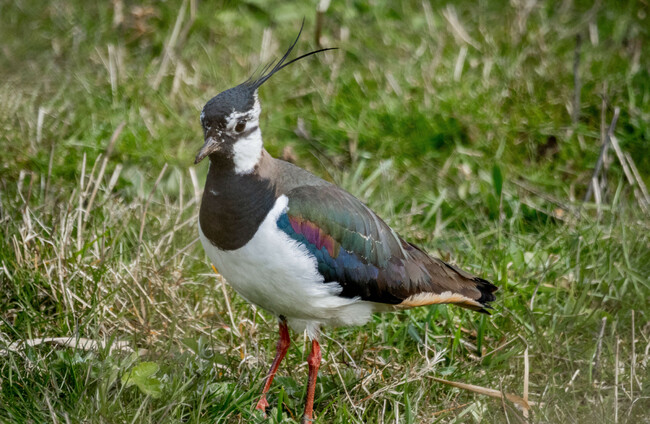
It’s called a lapwing, or green plover. It’s a beautiful, pigeon sized wetland bird with a stylish wispy crest at the back of its head. A wader, it can be seen in It tends to feed at night, searching for invertebrates like earthworms and arthropods.
It was declared the Republic of Ireland’s national bird by a the Irish Wildbird Conservancy, now known as Birdwatch Ireland, in 1990. While the Oireachtas itself has never made an official designation for it, and many other birds have been suggested, since then it has remained in place, established in hearts and minds as a national symbol.
The Northern lapwing (Vanellus vanellus) is a fitting choice. The bird—known as pilibín in Irish—was widespread in the 90’s, instantly recognisable by its iridescent plumage, wispy crest, and evocative “peewit” call. It also has patriotic green, white and orange colouring in its plumage.
However, despite its emblematic status, the lapwing now finds itself on Ireland’s Red List of Birds of Conservation Concern. As in, a bird put forward as our national bird is now threatened with extinction.
Let that sink in a moment. A bird chosen to represent the country’s natural beauty could become a symbol of its environmental neglect.
The best time of year to see lapwings is from now till April. Each Autumn, our airspace becomes very busy with birdlife. We are all familiar with the fact that many birds such as swallows, swifts and martins arrive here in Spring to breed during the summer. But as they head off to warmer lands in Autumn, many species of bird are arriving in Ireland to over-winter here. This includes great numbers of lapwing from western & central Europe.
However, we also have a native Irish population of lapwing who reside here all year, and although numbers of both migrating and native lapwing have decreased, it’s our Irish population that is on the Red List of endangered species.
Once a familiar sight across farmlands and wetlands, it has experienced catastrophic population declines in the last twenty years, as much as 90%. And wintering numbers — although bolstered by migrant birds from northern Europe — have declined by an estimated 64% since 1994.
Lapwing numbers are monitored by The Irish Wetland Bird Survey (I-WeBS) which is coordinated by BirdWatch Ireland and funded by the National Parks and Wildlife Service.
Lapwing rely on wetlands to live and feed- one of our most threatened habitats in Ireland. They are also ground nesting, preferring to nest in fields that are relatively bare, adjacent to grass. Their eggs and chicks are superbly camouflaged, but non-the-less superbly vulnerable to disturbance, damage and predation.
Loss of breeding and feeding habitat through agricultural intensification, draining of peatlands and afforestation have all contributed to their quick decline.
What does it say about us if we cannot protect our own national bird? A creature chosen to represent our natural heritage is now becoming a symbol of its unravelling. The lapwing’s decline is not just a statistic — it’s a mirror held up to our environmental policies, land management, and national priorities.
The first step toward change is awareness — talk about it, recognising the value of our wildlife, and the urgency of its plight. My ambition with my social media and articles like this, is to raise that awareness, get the conversation going around dinner tables until the collective conversation gets loud enough to have impact.
The biggest thing you can do if you can though, is directly support charity organisations like BirdWatch Ireland, who are doing extraordinary work to protect Irish habitats, monitor populations, and campaign for stronger protections.
By supporting these charities, through membership and/or donations, we can directly contribute to efforts that are making a tangible difference on the ground. Whether through habitat restoration, advocacy, or education, their work offers real hope — not just for the lapwing, but for all of Ireland’s threatened species.
You can follow Jack Morley’s Irish nature journey on his Instagram @the_rewildlife or on YouTube @TheRewildlife. If you have land you’d like to rewild, you can learn more here: Rewildyourland.ie.
To embed this post, copy the code below on your site














have your say