Sign in. It’s quick, free and it’s up to you.
An account is an optional way to support the work we do. Find out more.
Sign in. It’s quick, free and it’s up to you.
An account is an optional way to support the work we do. Find out more.
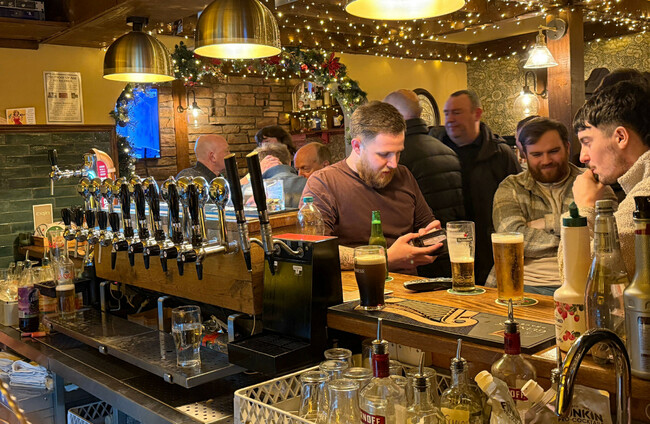

TAOISEACH MICHEÁL MARTIN recently did not rule out cutting excise on alcohol as part of next month’s budget. Minister for Enterprise Peter Burke is reported to be in support of an excise cut, as a measure to help rural pubs. A cut in excise duty is exactly the wrong tool
The government cut the VAT rate for the hospitality sector as part of last year’s budget, with the rate for food services coming down from 13.5% to 9%, but this only applies to pubs that serve food, not alcohol.
Is it possible to save rural pubs by state-subsidised support to allow them to function as a public diner? Such a model already exists – why not pilot it in rural pubs in Ireland?
It is understood that Mr Burke would back any measure to aid rural pubs, and he’s completely right – Irish pubs are worth saving. But a cut in excise duty will not value our pubs – it will value alcohol consumption. A brew that the Irish have abused wholeheartedly for generations. It is time to normalise our relationship with alcohol.
The alcohol industry persists in linking excise duty with pub closures. Alcohol Action Ireland outlines how they have absolutely nothing to do with each other. Alcohol excise duties have not increased since 2014 – 12 years ago. It is absurd to suggest that they are responsible for the market transforming. Excise duties apply to all alcohol, not just alcohol sold in pubs.
Making alcohol cheaper would lead to an increase in consumption across the population – which is exactly what the industry wants.
Comparing excise duty levels across countries is misleading. Ireland has the third-highest average annual full-time adjusted salary across the EU, behind only Luxembourg and Denmark, so alcohol is in fact very affordable in Ireland, and affordability is a key driver of alcohol harm.
Shop bought alcohol today is around the same price as it was 20 years ago. Taking inflation into account, as of 2024, off-trade alcohol in Ireland is 85% more affordable than in 2003, while even alcohol bought in the on-trade is 24% more affordable than it was two decades ago.
Making alcohol cheaper would increase alcohol harms – violence, domestic violence, road deaths, anti-social behaviour and other alcohol related crimes.
An alternative model is to support rural pubs as community diners.
In 2022, to help address social isolation in rural communities, the then minister for the Department of Rural and Community Development, Heather Humphries, launched the ‘Pubs as Community Hubs’ pilot programme with the aim of transforming pubs into multifunctional community hubs.
The initiative provided funding to support rural pubs to diversify their facilities for community use – including community cinemas, digital hubs, book clubs, arts and crafts workshops and community meeting places.
Funding of €50,000 was provided to pubs in Cork, Kerry, Clare, Cavan and Donegal as part of the pilot programme, with plans to expand to other parts of the country if the pilot was a success.
The pilot was considered a success, with all participating pubs continuing to run the initiatives that were funded – cinemas, local markets, changing facilities and meeting places for local groups.
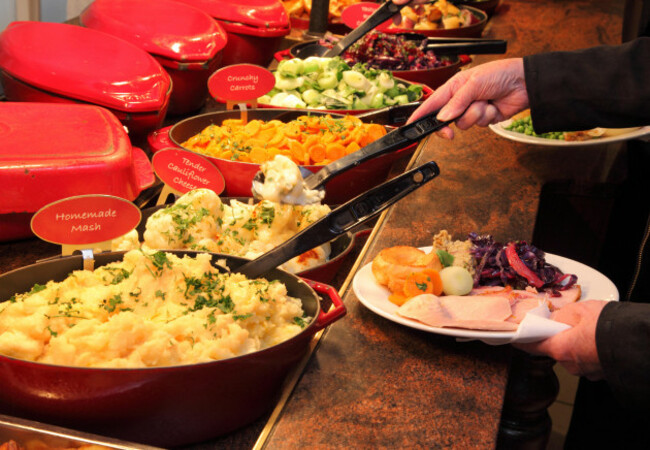
What better way to service local communities than to provide state-supported public diners – the rural pub is the ideal venue.
With the capacity to provide decent jobs to local residents, public diners can provide a viable alternative to precarious informal labour, simultaneously providing opportunities for training and skills development that benefit workers and customers alike.
Public restaurants give everybody the opportunity to enjoy healthy and delicious food in pleasant surroundings – not just the increasingly limited few who can afford a night out in a fancy restaurant.
They also provide a viable model for affordable healthy food delivered in a community setting where the previous model, provided by women in the home, has largely disappeared as women have taken up the option to work full-time while raising their families.
As with schools, transport and hospitals, public restaurants do not come cheap. They require investment in construction and ongoing maintenance. The uptick is that they generate longtime returns in health, equity and community cohesion – parameters that have slumped in recent decades – replaced by the profit-driven needs of market forces.
Such a model is already being piloted in two UK cities, Dundee and Nottingham, with the support of Nourish Scotland, the University of Sussex and local universities and researchers. The Nottingham trial is inviting local businesses and organisations to help operate and shape the diner model. Both pilot projects are funded by the UK Research and Innovation fund to test if community-based restaurants can tackle food inequality and promote sustainable, healthier eating.
Public diners would provide a steady market for local food producers. To do that, they need robust supports in terms of a living wage, access to land to grow produce at a fair price and supports to access to markets.
The production and consumption of food in short chains means increased economic and social activity in rural areas. Agroeconomic growers and producers have a reduced carbon footprint. Food products are fresh and nutrient-dense, provided directly into local households. Local food production provides local employment.
University College Cork (UCC) is already working in this space, contributing significantly to local and international food policy through the Cork Food Policy Council in terms of academic and sustainable initiatives aimed at creating fairer, healthier and more sustainable food systems.
These initiatives include the FOODPATH Project led by Professor Janas Harrington from the School of Public Health, UCC that investigates inequalities in access to affordable food and mapping of local food environment policies.
State support to rural publicans to allow the development of a network of community diners across the country would challenge several problems at once – social isolation in rural communities, the cost of living crisis that puts healthy food our of reach for many, and a shift away from the highly processed unhealthy diet we have succeeded in convincing ourselves is normal. It would also provide a steady market for local producers and convert rural pubs into thriving businesses at the heart of the community, outside of normal pub hours.
Is it possible that the next phase of ‘Pubs as Community Hubs’ could see pubs being used as public diners? What a difference that would make to the city and the lives of the people who live in it.
If rural pubs are to be saved, and they are worth saving, supports that will benefit local communities are needed – not supports that will increase the profits of the industry and lead to even more alcohol harm.
Isn’t it time we considered health before profit and tested an alternative model that placed affordability, social isolation and health at the top table?
Dr Catherine Conlon is a public health doctor with the HSE in Cork and former director human health and nutrition, safefood.
To embed this post, copy the code below on your site












have your say