Sign in. It’s quick, free and it’s up to you.
An account is an optional way to support the work we do. Find out more.
Sign in. It’s quick, free and it’s up to you.
An account is an optional way to support the work we do. Find out more.
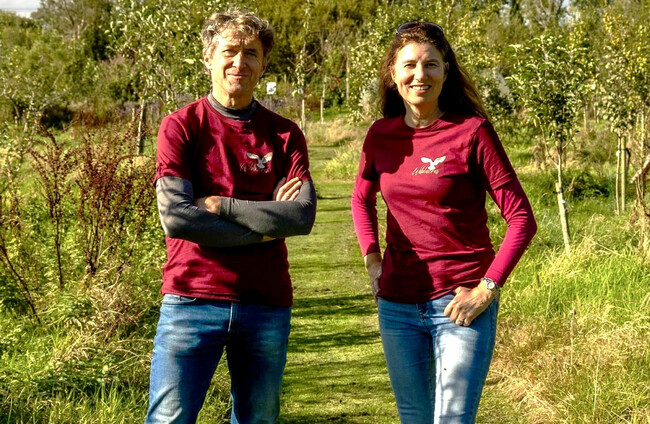

It’s National Biodiversity Week, and here at The Journal, we’re celebrating the people who are helping nature recover at a time of difficult climate challenges.
Wildacres is a multi-award-winning nature reserve and biodiversity education centre. It’s set on 34 acres close to Brittas Bay in Southeast Wicklow. Established by husband-and-wife team Brian O’Toole and Gilly Taylor, in 2017, Wildacres is a social enterprise dedicated to biodiversity restoration, protection, monitoring and education.
The couple’s mission is to inspire and help others to make a positive difference for the environment and their well-being. They host a range of engaging and entertaining nature-based tours and interactive workshops for individuals, community groups, clubs and corporate groups. Here, Gilly tells the story of how Wildacres came about…
BIODIVERSITY IS NOT the poor relation of climate; it is the twin sister. We need to solve both crises simultaneously to ensure sustainability.
And the good news? We have the solutions. Change is possible. The challenge? We need to implement those solutions faster.
So, here is our story of how we built Wildacres, our biodiversity and nature reserve in County Wicklow. Wildacres is one of many projects across Ireland aiming to make a positive impact on the environment, and the beauty of it is that everyone, individuals, community groups and businesses, can play their part.
Brian had spent about 30 years working in sales and management in the construction industry, but he always had a love of nature. I had 20 years behind me working in Sales, Marketing and Management in the Media Services Sector. In recent years, I retrained as a Nutrition & Fitness Coach and Pilates Instructor.
We were both hungry to move away from the corporate lives we’d been living, and couldn’t stop thinking about how we might set up a sanctuary for native wildlife. You could say it was a calling.
Truth be told, at the end of 2017, when we acquired the land that we now call Wildacres, it was a massive relief. Our plan was to find a place where we could encourage biodiversity and help nature to flourish. We had spent several frustrating years hunting for the ‘right’ place, with plenty of upsets and let-downs along the way.
Our narrow search focus had caused some problems – we wanted somewhere not too far from our home in South Dublin so that we could commute; in the direction of Wexford so we could visit our parents easily; in east Wicklow so that we had a straight run of it; no buildings so that the price would be reasonable; and finally, land that had potential for biodiversity restoration. A tall ask, you might say.
After much perseverance and determination, we found the perfect parcel — 17.5 acres of wet agricultural land on the Redcross river that wasn’t in demand due to it being difficult land to farm conventionally. Ideal as a Nature Reserve.
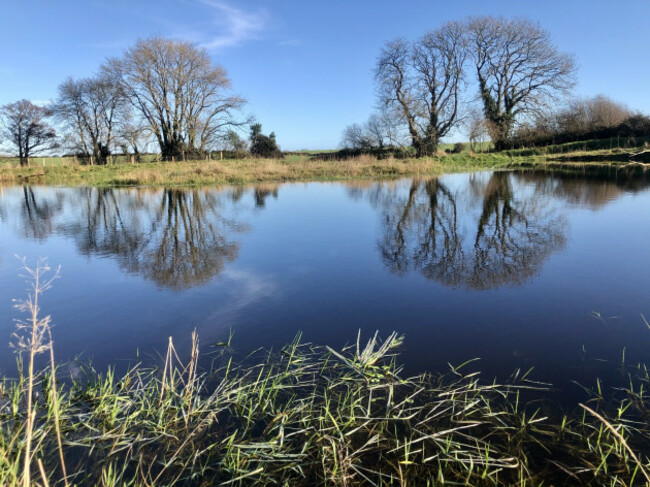
Brian had the vision for what the future could hold for wildlife on these four fields of mono-species perennial rye grass, and knew how to go about attracting biodiversity back, having been a nature enthusiast since he was a small child.
I proudly became his understudy and immersed myself in getting up to speed with nature knowledge, constantly asking questions. My heart has been captivated by the wonders of wildlife ever since. And while Brian started planting and digging, I began putting structure on the process to restore habitats and planning for the economic sustainability of the venture.
The first couple of years were tough because the land had been a desert for wildlife for decades, having been intensively grazed by sheep and cattle. We often remarked that the place seemed dead, devoid of bird song and the buzz of insects.
We excitedly started planting native woodland and hedgerow, creating wildlife ponds and blocking land drains, initiating the natural regeneration of wildflower meadow helping it along with seed harvesting and plug planting, restoring and repairing the riparian zone along the riverbank and erecting a barn (we needed shelter on wet, windy, wild days!)
Brian left his job in the family business (after 30 years), and I put to one side a new career as a Nutrition and Health Coach. We started working together full-time at Wildacres. The timing was perfect – old enough to be financially stable, young enough to have the physical fitness and energy that the project required.
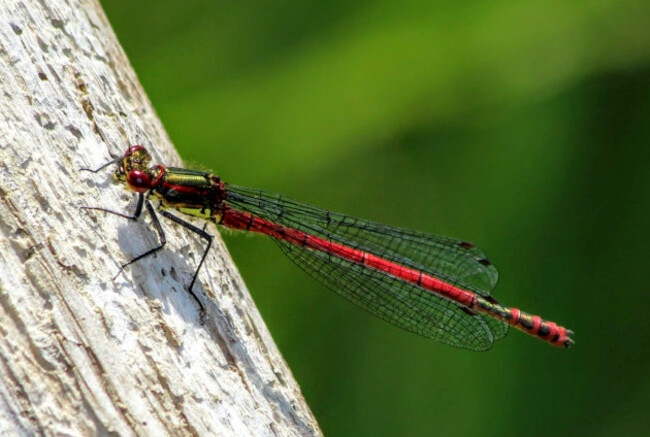
It wasn’t too long before the magic began to happen. Frogspawn appeared in the ponds in giant gelatinous rafts, iridescent dragonflies showed up and showed off their dazzling aerobatic displays, wildflowers reawakened after years of slumber from the soil seed bank, birds moved in variety and abundance, including Great Spotted Woodpecker and Kingfisher.
Insects gradually became more prolific, and wild mammals such as Pine Marten and Otter, although elusive, started to expose themselves on our trail cameras. Happy days.
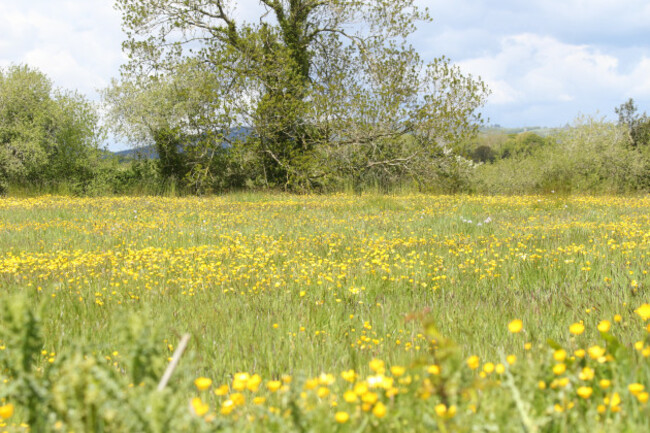
By 2022, the natural renaissance was very visible and exciting, and we were bursting to share it with others. So, in March that year, feeling a little anxious about whether people would come, we opened for guided tours and workshops. And people came!
With wildlife returning and visitors coming to learn what they could do in their own space and community, we gained more and more media attention, and things took off from there.
Every positive action for biodiversity makes a difference. All life on Earth needs food, water, shelter and a healthy environment.
Putting a window box of native wildflowers on your windowsill provides pollen and nectar for pollinators; putting a bird bath on your balcony provides drinking water and bathing facilities for our feathered friends; planting a native hedge in your garden provides shelter and food for insects, small mammals and birds.
Even creating a wildlife pond on your farm provides habitat for all manner of flora and fauna, while planting native trees in your community space or around your business premises will sequester tonnes of carbon for hundreds of years. The time to act is now.
For anyone who owns a lawn mower – using it to cut only pathways and borders in your grassy space, throughout spring and summer, is the simplest action to take to bring biodiversity back.
The stunning native perennial wildflowers and wild grasses that thrive in the uncut areas will attract a host of pollinators such as butterflies and bees, and other important creatures. And the beauty is, it gives you more time to relax and watch nature coming back.
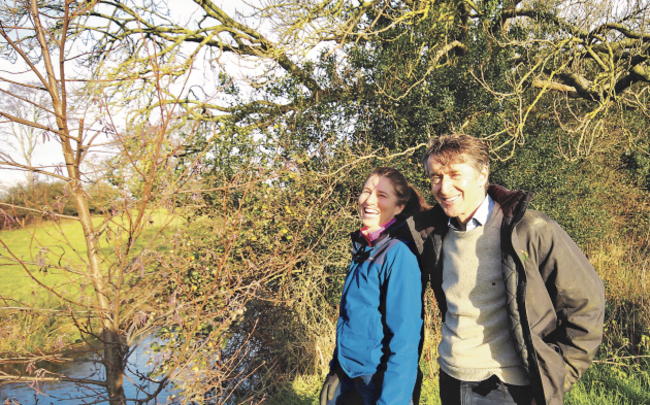
There’s no need to spend a cent – no need to buy wildflower seed mixes, fertiliser, or chemicals. Just maybe a sickle or scythe to cut in the autumn after flowering has finished, and the seed is set for the next generation next year. And the clippings make great mulch for around the native trees or orchard trees that a neighbour has planted nearby.
We are adding more workshops, tours and safaris to our what’s on page on our website (Our Bat & Moth Safari is our latest addition) and are increasingly hosting more corporate groups for educational, fun and practical team building days.
All income earned from event bookings and gifts purchased goes directly back into the project. We are constantly adding new attractions for wildlife, and this in turn provides fascinating new interest for visitors.
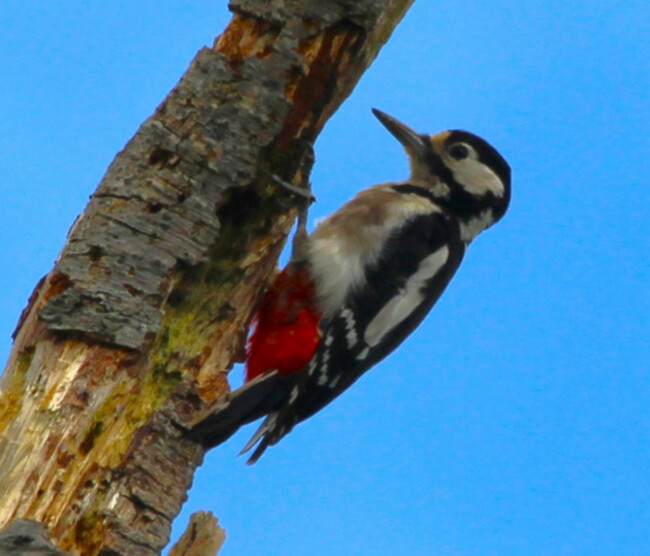
Additionally, we are creating a more structured biodiversity monitoring programme so that we can truly measure what nature is achieving. And because we are addicted to biodiversity restoration and hard work, we increased the size of Wildacres with the purchase of another 16.5 acres earlier this year.
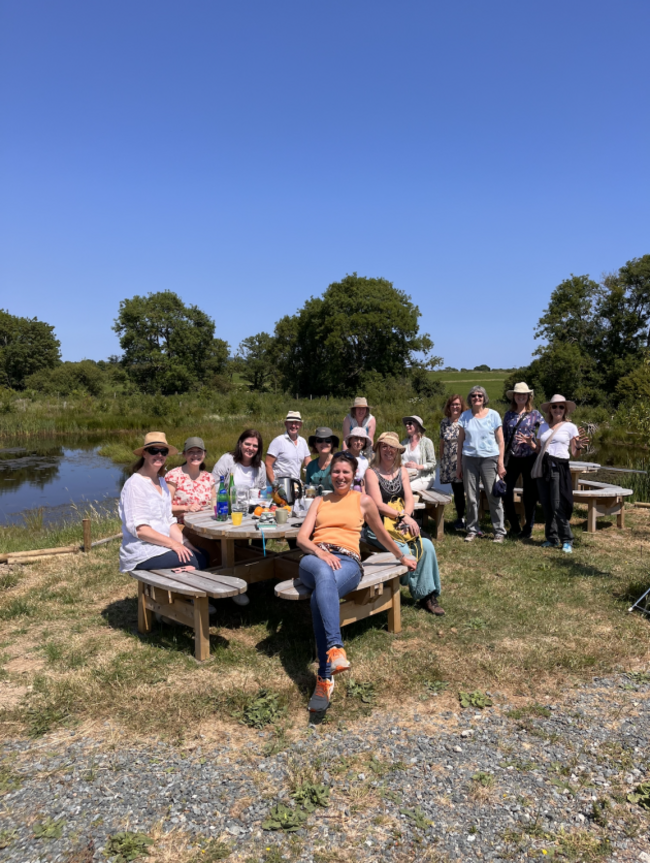
We are also so very lucky to have a group of amazing, dedicated volunteers at Wildacres, which is growing. This wonderful community brings a lovely social dimension to the project, and we are so grateful for their hard work and great company.
Our plan for the future is to give Wildacres to a Trust so that it will continue as a nature reserve and environmental social enterprise, dedicated to biodiversity restoration and education, long after we have passed on.
A legacy we feel very proud of.
Gilly Taylor and Brian O’Toole are the proprietors and owners of Wildacres in County Wicklow. Find them on wildacres.ie and Instagram at @wildacresnaturereserve.
To embed this post, copy the code below on your site












have your say