We need your help now

Support from readers like you keeps The Journal open.

You are visiting us because we have something you value. Independent, unbiased news that tells the truth. Advertising revenue goes some way to support our mission, but this year it has not been enough.

If you've seen value in our reporting, please contribute what you can, so we can continue to produce accurate and meaningful journalism. For everyone who needs it.

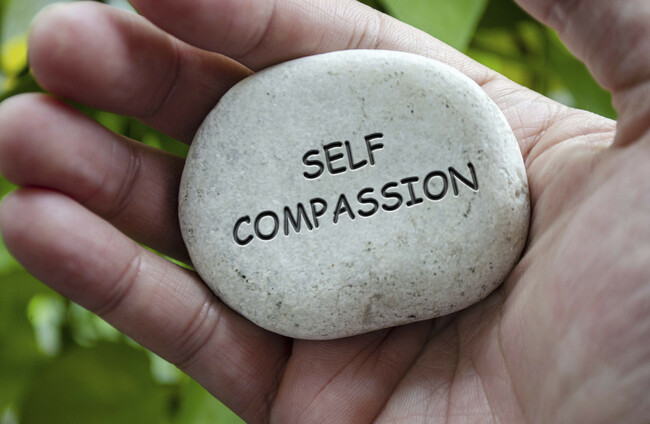
Alamy Stock Photo

Caroline Foran's new book I wish I'd known sooner that self-compassion changes everything

In an extract from her new book, Everything I Wish I’d Known About Anxiety, the author explains why being kinder to yourself isn’t self-indulgent, it’s essential.

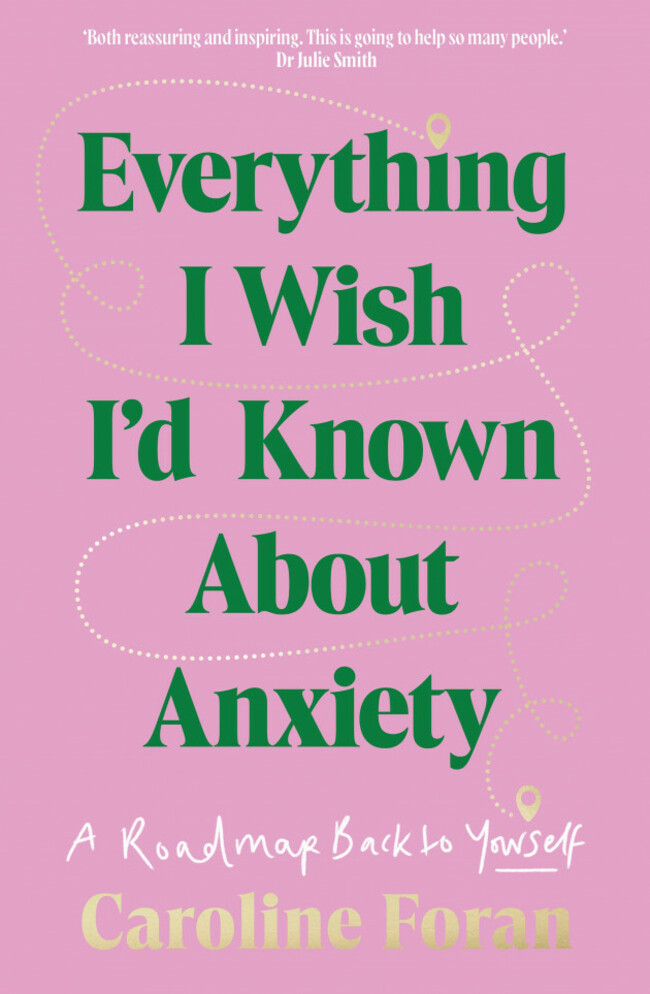
Caroline Foran’s new book offers a clear, step-by-step roadmap for moving in the right direction through anxiety, without skipping the essential foundations that make recovery stick.

Here, in an excerpt, the acclaimed author outlines why the art of self-compassion is one that has revealed its true power to her. If you can truly embrace a more positive inner voice, you’re halfway there…

AND NOW FOR the most unskippable chapter before we set off. If there’s one thing you won’t get anywhere without – no matter how badly you want it or how well you think you know the route – it’s fuel (or to be charged up if you drive electric – you get the idea).

In this case, the fuel that will power you through these stops is this: self-compassion. Get on board with this idea, and you’ll find it a lot easier to move through the stops and come out the other side. Without it, getting unstuck will feel nearly impossible. It’s why it took me so long.

Understanding the science of self-compassion, which turned it from a wellness trend I once rolled my eyes at into a biological tool I couldn’t ignore, is something I discovered much too late.

In fact, I didn’t even mention it in my first anxiety book because, back then, I hadn’t yet had the eye-opening conversations with some of the world’s leading experts on the topic.

I knew I shouldn’t be so hard on myself – enough people had told me that – but I honestly considered self-compassion a bit of a swizz. Without diving into the research, I lumped it in with frothy positive affirmations and manifestation – none of which I believed would make a blind bit of difference to my experience.

(I’m still sceptical about manifestation, especially its promises to those who are already and conveniently quite privileged, but that’s a topic for another book.)

EIWIKAA_V7_220126_HW_RGB Everything I Wish I’d Known About Anxiety by Caroline Foran is published by Gill and is out now. Gill Books Gill Books

Self-compassion, though? I was way off. Let me share something one of the most accomplished neuroscientists working today, Dr Michael Keane, said to me. It’s stuck with me ever since, and because it came from someone who has conducted peer-reviewed, cutting-edge research, it carries a lot of weight. Michael said, ‘Caroline, if self-compassion was a pill, every single person would take one every single day. That’s how powerful it is.’

Put another way, the benefits of self-compassion for both mind and body are not up for debate. We’re not talking about a nice-to-have here. We’re talking essential. So let’s unpack it together.

Understanding self-compassion

The basic idea of self-compassion is that we are kind to ourselves. We don’t ridicule or shame ourselves for struggling,

chipping away at our already fragile mental state, because we believe we’re weak or don’t have a good enough reason to feel the way we do. Self-compassion is a deep acknowledgement of our situation – no sugar-coating, no ‘but it could be worse’. It feels hard because, right now, it is hard. End of.

With self-compassion, there’s no rush to fix the moment, no pressure to switch to a different perspective – just a self-directed empathy for whatever struggle you’re in. It’s a shift away from the tough-love response that comes so easily to many of us, where we view ourselves as the problem, towards the belief that we are worthy of kindness and care in our own struggle.

It’s a shift away from seeing yourself as something to be fixed (I know I saw myself as one big unfixable problem) to seeing yourself as a whole human being who’s facing difficulty. It’s a deep recognition that you’re doing the best you can, even when it doesn’t feel like it.

medium-close-up-of-a-woman-in-a-pink-puffed-sleeve-shirt-creating-a-heart-shape-with-her-hands-representing-compassion-support-and-womens-health-aw Alamy Stock Photo Alamy Stock Photo

In the time since I began putting this roadmap together, I had the pleasure of recording a podcast with Dr Kristin Neff, a pioneer in the study of self-compassion and the first person to operationally define it. Dr Neff identifies three core components that make up the practice of self-compassion: mindfulness, common humanity and self-kindness. These three elements guide us in responding to ourselves with greater understanding, balance and care when we’re struggling.

Mindfulness is about acknowledging our pain without over-identifying with it. It’s the ability to face difficult emotions with awareness, not avoidance. It allows us to see our suffering for what it is, without exaggerating or downplaying it, and without letting it define us.

Common humanity is the recognition that suffering is a shared human experience. You’re not alone in what you’re feeling. This isn’t just about you – everyone struggles, everyone has moments of weakness or fear, and there’s no shame in it. This element of self-compassion reminds us that we’re all part of a collective human experience, not isolated in our pain.

Self-kindness is the heart of self-compassion: it means treating ourselves with care, patience and understanding instead of self-criticism or harshness. It’s the ability to speak to ourselves as we would to a dear friend in need – gently, without judgement, offering comfort and support.

This is the essence of self-compassion, but it’s often misconstrued. So here’s what it is not. Self-compassion is not self-indulgence. It’s not about thinking about yourself too much or getting lost in your own head, endlessly analysing your feelings. It’s not about retreating into yourself in a way that makes mountains out of molehills or becomes a kind of self-obsession.

It’s not toxic positivity either, where you plaster a smile on your face and pretend everything’s fine when you know it’s not, only for the feelings to bubble up with more severity later. It’s definitely not about parroting meaningless affirmations to yourself in the mirror that feel completely out of sync with your mental state. It’s also not about shirking responsibility or avoiding things you have to deal with.

a-woman-finds-tranquility-and-self-compassion-resting-her-hands-on-her-chest-with-a-gentle-smile-in-her-cozy-plant-filled-living-room Alamy Stock Photo Alamy Stock Photo

This is not the easy route – we’re not simply lying down and letting life pass us by. None of this is easy. Self-compassion isn’t about avoiding the tough stuff; it’s about meeting the tough stuff with both arms wrapped around yourself, choosing not to add guilt and self-blame into the mix.

Finally, self-compassion is not about loving yourself. There are days when ‘loving yourself ’ feels like the hardest thing you can imagine. Sometimes simply liking yourself can be too big an ask. And that’s okay. You don’t have to go that far to reach self-compassion. Similarly, you don’t need to even think positively; self-compassion is a neutral response. It’s about acknowledging that you’re human, and that right now what you’re feeling is difficult.

An example of self-compassion would be pausing as you’re about to berate yourself for having spiralling anxious thoughts, and saying to yourself, This is hard. This feels like a lot. What do I need right now? What might help me feel even just a tiny bit better here at this moment? You’re not trying to solve everything in one go. You’re giving yourself permission to feel – without judgement, without rushing to fix things, and without pretending it’s not as hard as it is.

What’s more, by first acknowledging that, yes, this is hard and then considering what small steps might be helpful in the here and now, you proactively and gently move yourself forward.

Caroline Foran is an international bestselling Irish author, journalist and podcaster known for her honest, practical writing on anxiety and mental health. Her previous books, including Owning It and Naked, have helped thousands navigate anxiety with clarity and confidence. Her new book, Everything I Wish I’d Known About Anxiety, published by Gill, is out now.

Readers like you are keeping these stories free for everyone...
A mix of advertising and supporting contributions helps keep paywalls away from valuable information like this article. Over 5,000 readers like you have already stepped up and support us with a monthly payment or a once-off donation.

Close
14 Comments
This is YOUR comments community. Stay civil, stay constructive, stay on topic. Please familiarise yourself with our comments policy here before taking part.
Leave a Comment
    Submit a report
    Please help us understand how this comment violates our community guidelines.
    Thank you for the feedback
    Your feedback has been sent to our team for review.

    Leave a commentcancel

     
    JournalTv
    News in 60 seconds