Sign in. It’s quick, free and it’s up to you.
An account is an optional way to support the work we do. Find out more.
Sign in. It’s quick, free and it’s up to you.
An account is an optional way to support the work we do. Find out more.
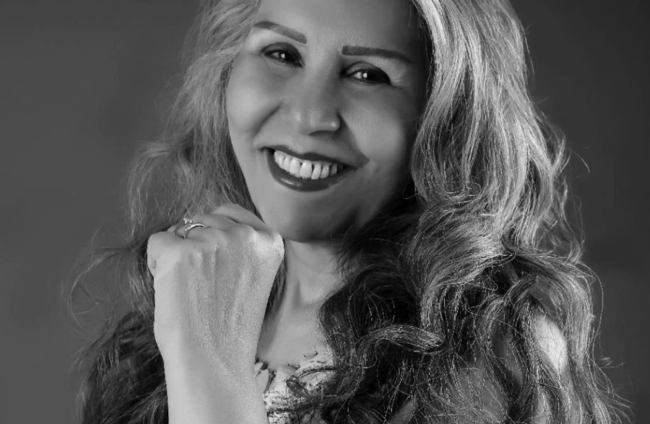

MAHVASH SABET IS best known in Ireland for sharing the 2017 PEN Pinter Prize for Poetry with the late Belfast poet, Michael Longley.
That year, while still in prison in Iran, she was named the PEN International Writer of Courage having authored a highly regarded volume of prison poems.
“I am humbled to share the PEN Pinter Prize with Mahvash Sabet,” Longley commented on the occasion of the award, “an Iranian poet condemned in 2010 to 20 years in prison simply because of her Bahá’í faith and her work on behalf of the Bahá’í community.” She was, he continued, “a songbird trapped in a cage”.
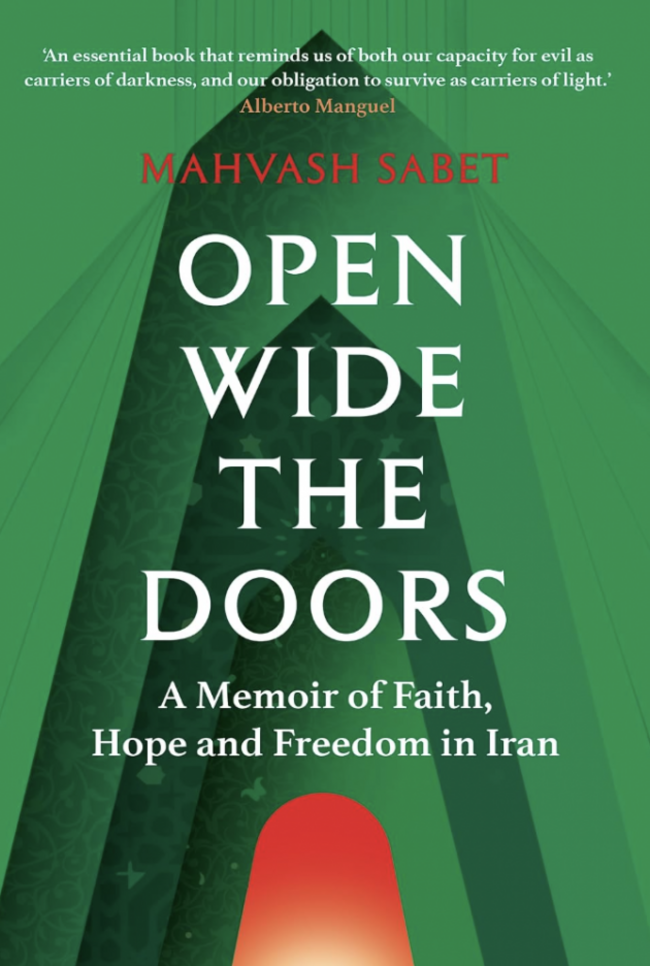
Twice sentenced to 10 years in prison because of her faith, Mahvash Sabet’s memoir of her early days of incarceration in Iran’s notorious prison system — compiled from little scraps of paper smuggled out from her cell — has now been published.
Open Wide the Doors shows through her personal experience of torture and imprisonment the human cost to those who have fallen foul of Iran’s revolution. A member of the Yaran, an informal group that helped support Iran’s Baháʼí community, Sabet writes from the perspective of a long-persecuted minority; the faith she espouses is not accepted by the state.
In March 2008, the Intelligence Bureau summoned Mahvash Sabet to their office in Mashhad. She left home telling her husband she would be back home in Tehran that evening.
Arrested and consigned to solitary confinement, her long ordeal began. It would be 10 years before Sabet saw home again. Within a few short years, she was arrested once more and sentenced to further imprisonment. At present she is, following heart surgery, on medical furlough from prison and awaits being summoned back to complete her sentence.
Documenting Sabet’s first 10 months of incarceration in Mashhad, and later in Tehran’s notorious Evin Prison, Open Wide the Doors depicts another face of Iran, the reality for those who, for whatever reason, find themselves deprived of their freedom.
Her compassion for the women she encounters in prison for various offences — prison guards and other prisoners of conscience — is palpable.
Through her suffering, she fashions an indomitable desire not to be a victim. She clings to an attitude of resilience, convinced, even in the face of appalling deprivation and punishment, that if you keep your heart open, no judge, no interrogator, no torturer can crush your soul. Speaking of the conditions prevailing in her first place of confinement, she writes:
“It is where the basest kind of behaviour serves to test the gold or alloy of your soul. It is where you learn how to sustain blows, face humiliations, defy the breaking of your will, with neither passivity nor aggression, as neither victim nor blamer.
“Here is where you learn to withstand duplicity, deception, suspicion and paranoia with quiet resilience, and a calm trust in the truth.”
Towards the close of her memoir, Sabet comments on an unexpected outcome of her incarceration, locked up with Iranians drawn from all echelons of society.
Having been exposed to years of anti-Bahá’í faith propaganda, many found this to be their first opportunity to observe a member of this persecuted minority up close and personal.
In time, whatever prejudices they had previously espoused began to dissolve. She likens this to “fresh air” blowing through the corridors of the jail. And she continues:
“There is no difference between the millions who have braved tyranny in the past and those who are enduring injustice right now, between the Bahá’ís of Iran today and everyone else in our suffering country …
“All the peoples of this beautiful land deserve the right to breathe the fresh and unpolluted air of oneness.
“The purest air humans can breathe comes from recognition of our oneness, acceptance of our essential unity. The gates of the heart open wide when we see how little distinguishes us from others in the world.”
In the end, Michael Longley’s words of tribute to Sabet provide a searing response to all that we read as eloquently set out in the pages of this memoir.
Her incarceration by the Iranian authorities, he said, was “a sin against the light”.
Dr Brendan McNamara is a historian of religions and lectures in the Study of Religions Department, UCC. Mahvash Sabet’s memoir, Open Wide the Doors: A Memoir of Faith, Hope and Freedom in Iran, is now published by Oneworld Publications.
To embed this post, copy the code below on your site
















have your say