Sign in. It’s quick, free and it’s up to you.
An account is an optional way to support the work we do. Find out more.
Sign in. It’s quick, free and it’s up to you.
An account is an optional way to support the work we do. Find out more.
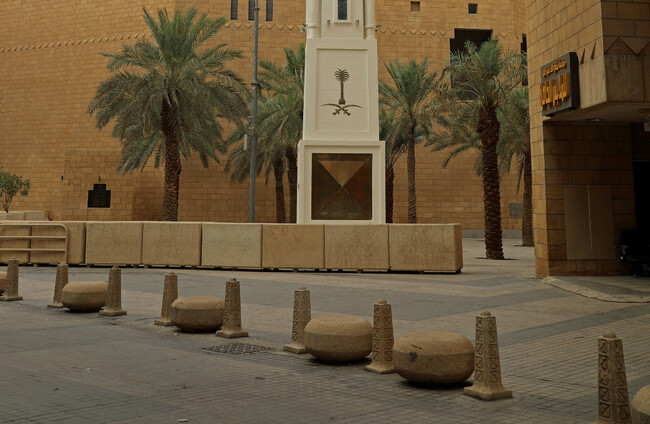

I REMEMBER THE holes in the ground, designed to allow for the efficient drainage of human blood after the state-sanctioned beheadings had been completed.
My visit to Al Safat Square in Riyadh in 2011 will always stay with me, and is perhaps just one of the reasons why the announcement that Saudi Arabia will host the 2034 FIFA World Cup seems so egregious.
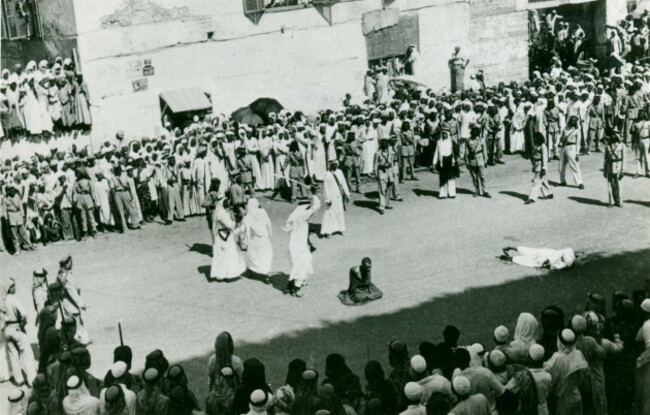
While my visit didn’t coincide with a public execution, I could feel a ghostly darkness below the blinding desert sunshine. “Chop Chop Square”, as it is less affectionately known, used to be the site of regular public executions, by sword, that took place in the Saudi capital.
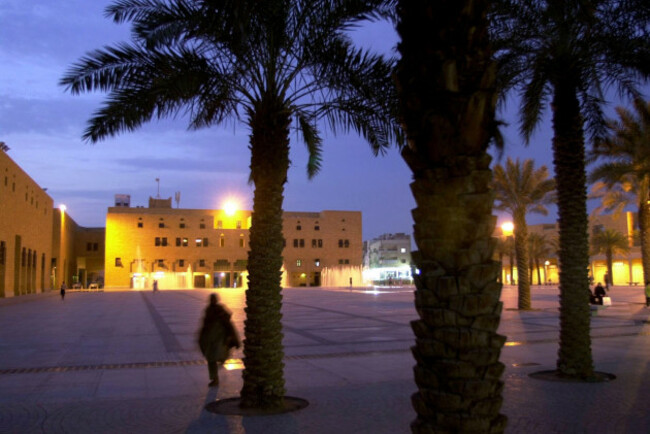
When I walked across the sweltering square in the al-Dirah neighbourhood of Riyadh, flanked by the impressive Grand Mosque, tourism didn’t exist in the Gulf state. It was still a closed society, open only to foreign investment, infrastructure and military interests. It would have been inconceivable just 13 years ago to imagine that this insular place could realistically become the host nation of such a global event.
Now, the executions have moved behind closed doors, far removed from the encroaching eyes of Western sensibilities. Saudi is open for business and is apparently ready to welcome the world to its sunny promise of football and fun. Yet when Mohammad Bin Salman, the Kingdom’s Crown Prince and de facto ruler, took over in 2015, executions almost doubled from that year to 2022.
If the recent revelations in Syria can teach us anything, it is that the only thing more frightful than human rights abuses carried out in plain sight is when they happen behind the opaque facade of apparent respectability.
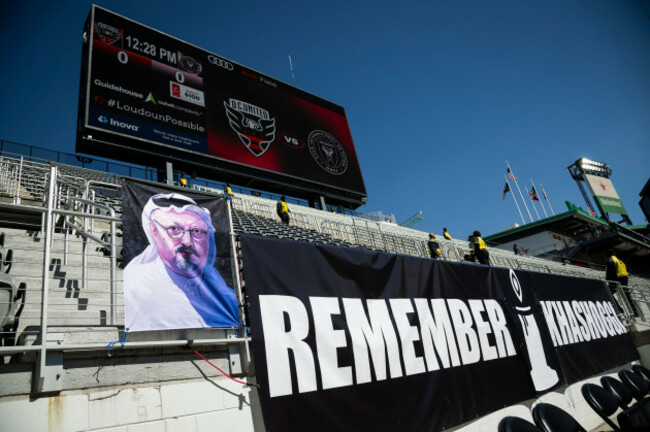
The awarding of one of the world’s most prestigious international events to Saudi Arabia represents the apex of a decade-long sportswashing programme in which golf (the LIV Tour), Formula 1 [the Jeddah Grand Prix) and now football have been used to launder the country’s human rights record.
Just after Argentina’s World Cup victory in 2022, Lionel Messi appeared in a number of high-profile tourism ads for Saudi Arabia.
He was variously depicted either roaming around an empty desert on a camel or kicking down apparent stereotypes about the anachronisms of Saudi culture. His voiceover intoned, “What I love about Saudi is that I always discover what I never expected.”
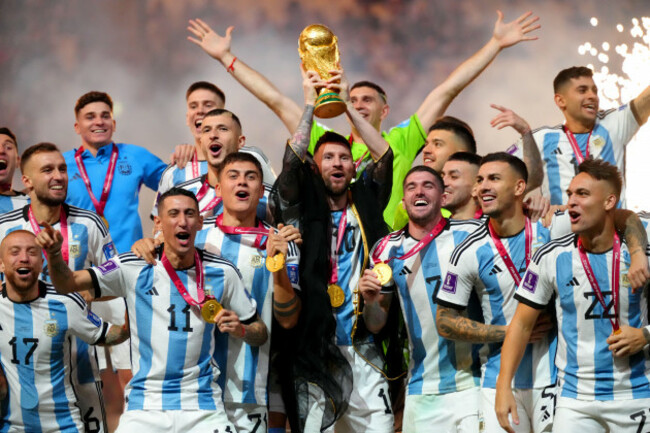
I feel the same way, Lionel! Another human rights abuse around the corner, come explore! The willingness of sports stars to priortise their own personal accumulation of extreme wealth, at the expense of ethical considerations, is perhaps unparalleled when it comes to Saudi’s recruitment across football and golf, in particular.
While the world’s international football federations gathered in Switzerland to rubber stamp the Kingdom’s entry to the big league, it is now up to the players and the fans to ask a simple question: How far exactly does our ethical radar extend, and are we willing to legitimise the way this country operates? Are we happy to drink the Kool-Aid?
It’s important to acknowledge the progress that has been made in a number of key areas in Saudi society. Aspects of male guardianship have been relaxed. Women have been able to drive cars since 2018. Foreign women are not required to wear the abaya anymore (although the same privilege doesn’t extend to the native female population).
The outward facade that Saudi presents is a country which is modernising… shiny new skyscrapers and ultra chic new cities such as Neom are emerging from the Gulf sands. Yet all this clashes with a much darker underbelly of human rights abuses. This marginal liberalisation has failed to materialise into meaningful progress in the area of criminal and social justice.
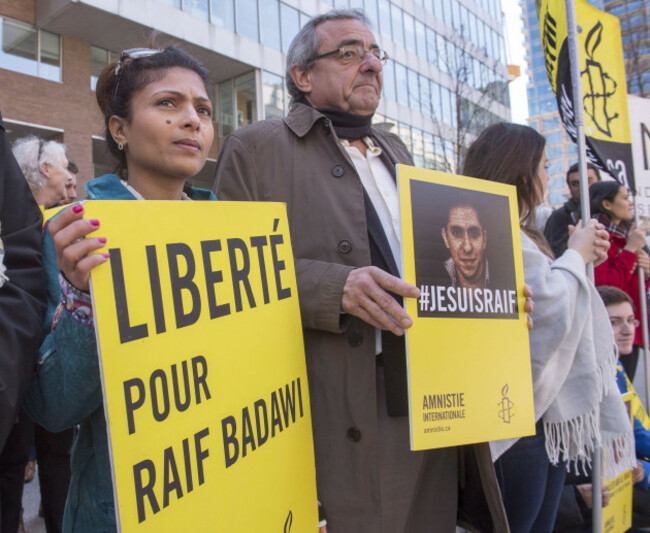
There is a litany of screaming, inconvenient truths about Saudi Arabia that sportswashing can never fully silence. This is a country still governed under the repressive weight of Sharia Law. Homosexuality is strictly outlawed and is technically punishable by death. Saudi Arabia is an absolute monarchy and political dissent is quashed. In 2015, the Supreme Court of Saudi Arabia upheld the case of Raif Badawi, a blogger convicted for apostasy. He was sentenced to 1000 lashes and imprisonment. He was released after seven years.
I can only begin to imagine how excited he is about the World Cup.
On 12 March 2022, Saudi carried out its largest mass execution in its history. Those executed were convicted of “allegiance to foreign terrorist organisations” and holding “deviant beliefs,” according to the Saudi Press Agency. On that day, 81 people were killed. Michelle Bachelet, the United Nations High Commissioner for Human Rights, claimed that half of those killed were minority Shia Muslims, who had engaged in political protest.
How can the international community roll over and turn a blind eye to kangaroo justice like this for the sake of football? What is perhaps more alarming for the thousands of non-Saudis who will surely flock to the Kingdom for the tournament is the fact that the country has this year executed more foreigners than at any other time in its history. According to a calculation by Agence France-Presse (AFP), 101 non-nationals have been put to death so far in 2024. Some of these executions were of prisoners convicted of drug-related offences.
Critics of my argument will claim hypocrisy. Why is it okay for the United States, another country that uses capital punishment, to host the World Cup in 2026, but it isn’t okay for Saudi Arabia? The major difference is this: in Saudi, the death penalty is routinely used for crimes of political dissent, not the supposedly high threshold of first-degree murder like in the US system.
https://soundcloud.com/the-explainer-podcast/whats-happening-with-the-2022-fifa-world-cup
A lot has been made of the rise of women in Saudi. It is true that significant numbers of women attend university, for example. However, despite some advances, Saudi Arabia still operates a system of male guardianship, in which many major life decisions must still be signed off by either a woman’s father or husband. This includes marriage and divorce and guardians “are still able to file cases of disobedience against a woman, which includes absence from the home,” according to Equality Now, a women’s justice charity.
There was a moment at the selection event in Zurich last week when the camera zoomed in on the famous World Cup trophy sitting atop a table, with the deep green Saudi flag behind it. My eye caught the outline of the sword which adorns the bottom half of the pennant. This sword is the symbol of the House of Saud, the nation’s founding family.
Yet to many, it will bring to mind the people who met their end through the abominable use of this instrument of barbarism at Chop Chop Square. What will this public square be used for during the World Cup? Probably a Fan Zone with big screens, drowning out the ghosts of a dark history.
Simon Tierney is a journalist and writer.
To embed this post, copy the code below on your site






have your say