Sign in. It’s quick, free and it’s up to you.
An account is an optional way to support the work we do. Find out more.
Sign in. It’s quick, free and it’s up to you.
An account is an optional way to support the work we do. Find out more.

THERE ARE CARS you drive, and then there are cars that drive themselves into the cultural imagination and never leave.
Cinema has given us some of the most iconic automobiles in history, and the strange thing is that a lot of them were never really meant to be stars. They were props. Means of transport for fictional characters. And yet here we are, decades later, still talking about them.
The Aston Martin DB5 is probably the most famous movie car in the world, and it earned that title in Goldfinger in 1964.
Sean Connery behind the wheel, Silver Birch paint, and a set of gadgets that made children everywhere want to grow up to be spies. The car came fitted with a rear smokescreen system, revolving number plates front and rear, simulated twin front machine guns, tyre slashers, and a bullet-resistant rear shield.
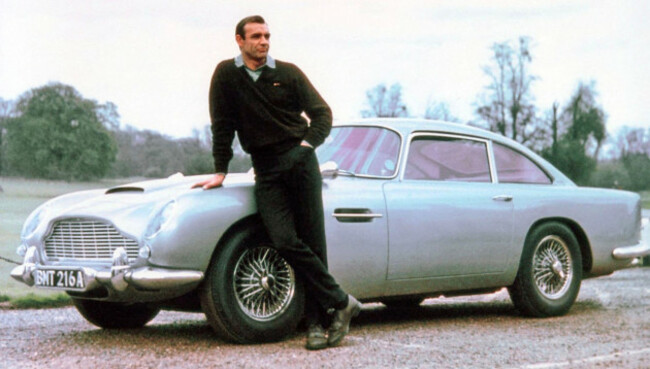
The whole lot was dreamed up by special effects man John Stears, who reportedly went back to Aston Martin with his wish list and was told it was impossible. He built the gadgets anyway. The closest I got was the Corgi model and anyone old enough to remember will also recall how quickly the missiles got lost in our 1980s thick carpet.
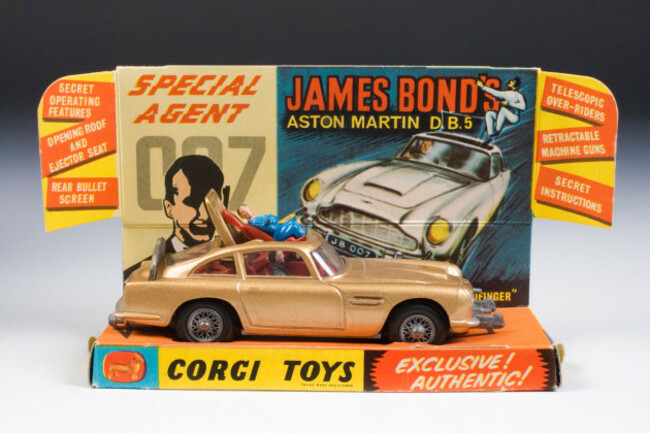
The car appeared again in Thunderball, after which it was stripped of all its spy equipment and sold. It changed hands several times, was sold at Sotheby’s in New York in 1986 for $250,000 (€217,000), and then in June 1997, it was stolen from a secure airport hangar in Boca Raton, Florida, and disappeared for 25 years.
Art Recovery International eventually traced it to somewhere in the Middle East, and as of writing it remains there, unrecovered, and estimated to be worth over $25 million (€21.67 million). The most famous car in the world, and nobody’s quite sure whose wall it’s hanging on.
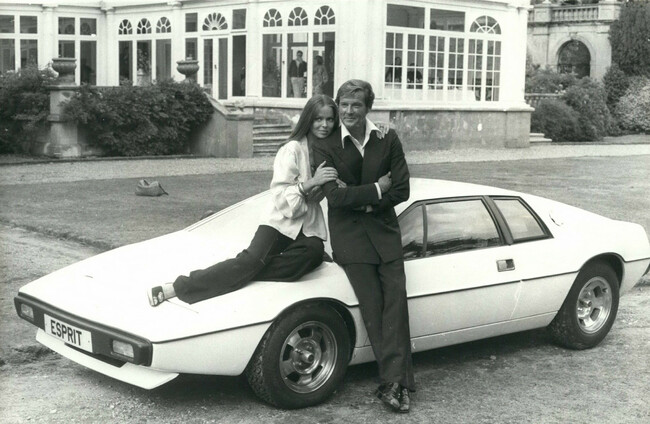
The Lotus Esprit that Roger Moore drove into the sea in The Spy Who Loved Me (1977) is a different kind of story. And it’s my personal favourite.
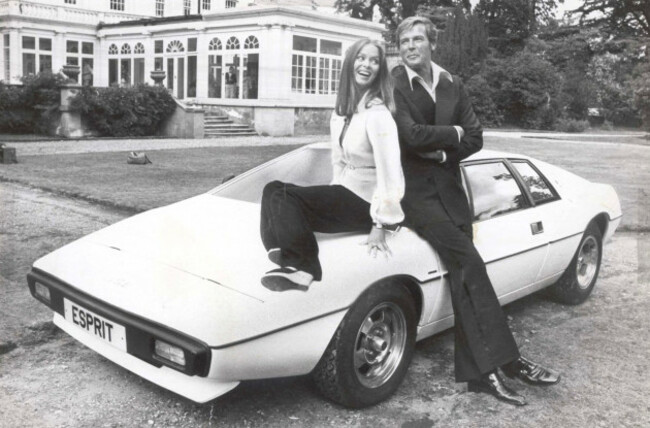
Production nicknamed the submarine version “Wet Nellie” as a nod to the autogyro from You Only Live Twice, and it was built by an underwater engineering firm in Florida. It was powered by four electric motors, could move forward but not reverse, and the operator inside had to use scuba gear because it wasn’t watertight.
It cost around $100,000 (€86,000) to build, which sounds like a lot until you consider what happened to one of the surviving versions in 1989. It went at auction as a blind lot, meaning the buyer had no idea what was inside the storage unit they’d just purchased. A couple bought it for $100. It was later sold to Elon Musk for $1 million (€867,000). Not a bad return on a storage unit.
Then there’s the DeLorean. Built in Dunmurry just outside Belfast from 1981, the DMC-12 featured gull-wing doors and a brushed stainless steel body. It was not, by most accounts, a particularly good car.
The V6 was underpowered, the build quality was inconsistent, and the company went into liquidation within a year of production starting. Then Back to the Future came out in 1985, and none of that mattered any more.
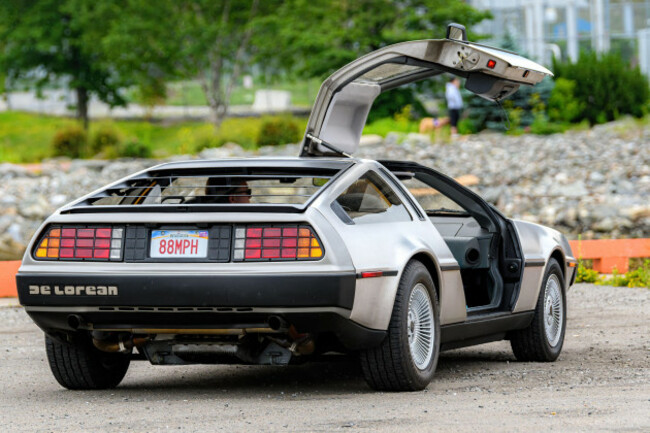
Director Robert Zemeckis changed the script’s time machine from a laser-equipped refrigerator to a DeLorean after deciding he needed something mobile for more dynamic storytelling, and the stainless steel, sci-fi angles of the car made it the most plausible-looking time machine imaginable.
Six DeLorean chassis were used during production. One was destroyed at the end of Back to the Future Part III, two were left to rot, and the primary hero car eventually ended up fully restored and on permanent display at the Petersen Automotive Museum in Los Angeles.
Meanwhile, the actual factory in Dunmurry still stands, and the workers who built those cars are very much part of local memory. There’s a particular Irish pride in the fact that the most recognisable time machine in cinema history was built on the outskirts of Belfast.
The Cannonball Run (1981) gave us the Lamborghini Countach at the height of its powers. If you grew up in Ireland in the 1980s, that film was basically a religion, and the opening scene was almost three minutes of uninterrupted Countach, the V12 soundtrack filling the cinema while the car carved through the Nevada desert.
The car in the film was a black 1979 LP 400 S with a mustard yellow interior, loaned to director Hal Needham by a Florida-based car collector who happened to be a friend of his. It was one of only 105 LP 400 S models ever built.
In 2021, 40 years after the film’s release, it was inducted into the National Historic Vehicle Register of the United States Library of Congress, sitting alongside the BTTF DeLorean on a list of just 30 vehicles considered of national importance to American culture. A Lamborghini, in the Library of Congress. There’s something marvellous about that.
Ronin (1998) is the film serious car people mention when they want to make a point. Robert De Niro, Jean Reno, a mysterious briefcase, and a set of car chase sequences that have never been bettered.
The car at the centre of it all is a first-generation Audi S8. Director John Frankenheimer, who had previously made Grand Prix, insisted the chases were filmed on location in France with no special effects. The actors and stunt drivers were actually doing it through the streets of Nice and Paris.
Around 80 cars were destroyed during production. The actor playing the wheelman, Skipp Sudduth, asked Frankenheimer if he could do the driving himself. The director’s response was: “I don’t want to see any brake lights.”
The S8 was not the obvious choice for a chase car. It was a large, expensive German executive saloon. But it was fast, grippy via Quattro all-wheel drive, and it looked completely anonymous, which was precisely the point.
The film put the A8 and S8 on the map as genuine performance cars in a way that no amount of press launches could have managed, and car enthusiasts have been citing Ronin in arguments ever since.
Risky Business (1983) made Tom Cruise a star and made the Porsche 928 a cultural object. The 928 was Porsche’s unloved oddball, a front-engined grand tourer with a V8 that was supposed to replace the 911 and never quite did.
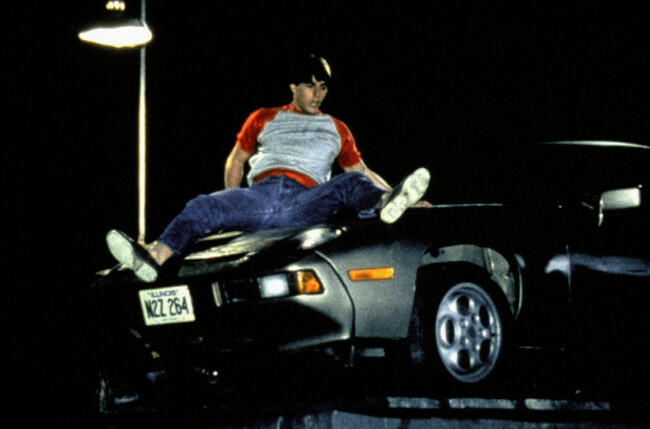
Director Paul Brickman chose it specifically because it was exotic but not completely unattainable, the sort of car a successful suburban Chicago father might actually own. He reportedly approached Porsche for help and was turned down. They found the cars themselves.
The famous sliding scene, white socks on a wooden floor, and then the 928 disappearing into the night, did more for that car’s image than anything Porsche’s marketing department managed in the same decade.
Tom Cruise had no idea how to drive a manual gearbox before filming, and the primary car on set is the one he learned on. That same car sold at auction in 2021 for just under $2 million (€1.73 million).
Porsche eventually came back to the producer and told him: “We still wouldn’t have given you a car, but you were right.” And if you fancy one very like it, there is one on DoneDeal cars for €62,500.
And then there is the AMC Pacer. The Pacer was a strange-looking compact car from the mid-1970s that history had largely filed under “honourable failure” by the time Wayne’s World came out in 1992.
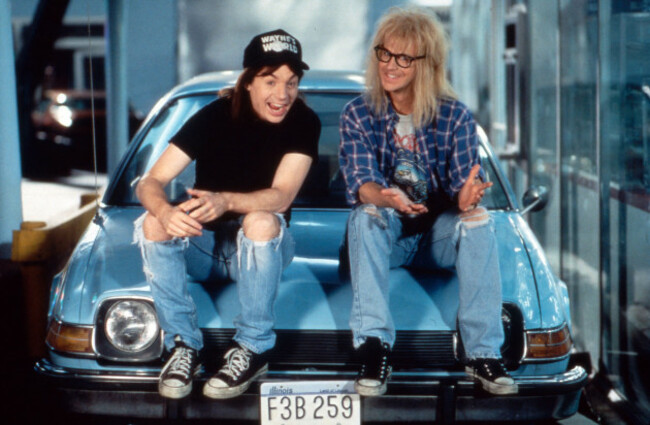
The film’s Mirthmobile was a 1976 model painted light blue with flame decals, mismatched wheels, and the kind of interior modifications that only Wayne and Garth could have considered improvements, including a ceiling-mounted liquorice dispenser and a cupholder drilled into the dash.
The Bohemian Rhapsody scene in the Pacer was real in the sense that it was unscripted — Mike Myers, Dana Carvey and the other cast members were genuinely just doing it.
After filming, it was given away by MTV as a competition prize. The winner got the car, a hotel stay in New York, tickets to Saturday Night Live, and a private screening with Myers and Carvey. She brought it back to Oregon, and at some point it ended up stored outside and started deteriorating.
It later turned up on Pawn Stars, was restored, sold in 2016 for $37,400 (€32,000), and sold again at Barrett-Jackson in 2022 for $71,500 (€62,000), a new world record for a 1976 AMC Pacer. Which, when you think about it, is exactly the kind of ending Wayne and Garth would have wanted.
What all these cars have in common is that they did something a specification sheet never can. They became characters.
The DB5 didn’t just transport Bond, it told you something about him. The Esprit driving into the sea said that anything is possible if you have the right car from Q Branch. The DeLorean arrived already looking like it was from the future. The Countach at the Cannonball start line was a statement of intent.
The S8 threading through Nice said that a sensible German saloon could be the most dangerous vehicle on the road. The 928 sliding through suburban Chicago at night was teenage freedom made physical. And the Pacer, bless it, said that you don’t need a cool car to have a cool time.
Cinema strips a car back to its most essential quality, which is how it makes you feel. And decades on, these cars still do it.
Paddy Comyn is the head of automotive content and communications with DoneDeal Cars. He has been involved in the Irish motor industry for more than 25 years.
Journal Media Ltd has shareholders in common with DoneDeal Ltd
To embed this post, copy the code below on your site














have your say