Sign in. It’s quick, free and it’s up to you.
An account is an optional way to support the work we do. Find out more.
Sign in. It’s quick, free and it’s up to you.
An account is an optional way to support the work we do. Find out more.
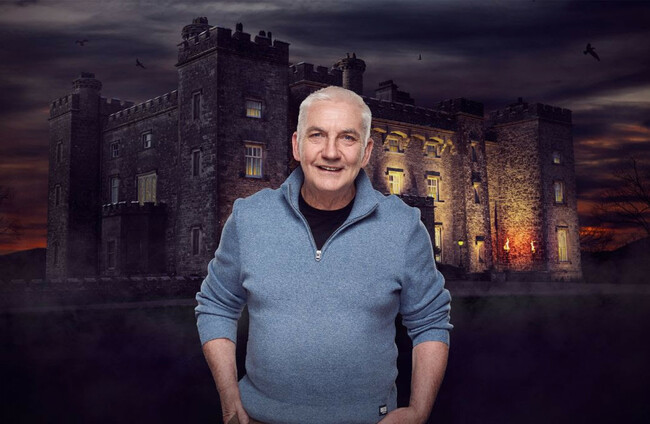

Warning: This article contains spoilers for The Traitors on RTÉ.
YOU’D HAVE TO have been living under a rock recently not to have gotten wind of the Irish version of The Traitors. For me, I say “gotten wind of” rather than “watching” because until recently, everything I knew about the show was gleaned only through broadcasts on the radio. My daily update arrived on a breakfast show, sometimes via a comedy sketch.
It’s a game where everyone is for themselves in a setting where creating an atmosphere thick with tension and paranoia was actively encouraged. Such cut-throat shenanigans are proving to be highly addictive content for viewers. I was heartened to discover certain tactics are deliberately employed to tap into peoples’ fears and anxieties surrounding betrayal. You see, personally, I don’t have a poker face. It’s more of a “what on God’s green earth is going on here?” resting face.
The series premiere earlier this month drew in more than 600,000 viewers. What else has the show delivered besides persuading a sizeable number of the country’s population to gather round their viewing medium of choice three times a week and see journalists celebrating the power Siobhan McSweeney could yield with one theatrical arch of an eyebrow?
It transpires this suspenseful reality competition has also raised some interesting conversations around age.
At the end of Monday night’s episode, 68-year-old Paudie revealed he had thought he was going to get knocked out of the competition early in the game purely because he was the oldest contestant. Yet, mid-way through proceedings, he is very much still standing.
The first contestant to be banished from the roundtable by her fellow players was Diane, a 54-year-old radio presenter from Galway. There was some commentary online after her departure about the first banishment being against the eldest woman contestant.
However, speaking to journalists after she was knocked out of the game, Diane said she didn’t think the decision to banish her was “age-related”. “I think it was the stronger personalities they were getting rid of,” she said.
Similarly, 49-year-old Dave, the first player to be murdered by the traitors, said he believes that age “had absolutely nothing to do with it”.
“I think I would have won a lot of people over and that’s why the traitors got rid of me, because I would have been a strong, influential character.”
A former player from the UK version, who coincidentally is also called Diane, a 63-year-old from Northern Ireland, has said she “never considered her age” when applying for the game, nor does she in her daily life. However, she did flag an ageist assumption amongst younger contestants and admitted to being “quite shocked” that her ability to perform well physically in some of her missions was underestimated. “That annoys me a little bit because why can’t we be [fit] as we get older?”
Has The Traitors turned up the volume on noise behind the enduring concept of ageism and certain perceived dynamics between the older and younger generations? In some ways, yes. The subtleties between the groups, however, are nuanced.
Older people carry the reputation of being wise and conservative yet can also be labelled as out of touch and stubborn. Placed in situations like the Traitors, they quickly find themselves balancing years of valuable experience with very real feelings of anxiety about being sidelined. And on national television to boot.
Younger people then are seen as energetic and idealistic whilst at the same time, considered naïve, privileged and fickle. When in the same competitive, albeit make-believe, arena with their elders, they find themselves juggling ambition with their own fears of being underrated.
Shows like The Traitors can exaggerate the behaviour between generations and happily utilise cultural stereotypes. But those same scenarios arise in our place of work, on the political stage, and even on family WhatsApp groups. Unfortunately, it’s very easy to become caught up in the argument and in situational conflicts, particularly if boomers and zoomers are pitted against each other for enjoyment. But there are a lot of positives too when generations mix for the common good.
Let’s look at complementary strengths as just one example. Experience, patience, and perspective are traits the older generation can bring to the table (ahem). Those attributes coupled with fresh ideas, adaptability and energy, courtesy of the younger folk, can create the perfect recipe for problem solving in any environment. Stark contrasts may live in Machiavellian TV shows, its inhabitants clad in deliberately styled wardrobes all the better to create a sinister moody environment.
But real life is chock full of blurred lines where mentoring and rivalry can and do, co-exist. How many retirees out there have undertaken the role of mentorship, guiding and assisting the “digital natives”, demonstrating that knowledge isn’t just about being tech savvy but also about how to handle life itself.
Not to be outdone, the younger crew are only too willing to assist their grandparents and older counterparts with online bills, navigating tricky and confusing, but essential aspects of social media.
Many theories abound on why we are preoccupied with the generational divide. Some quarters say it gives us a sense of identity where we can bond through stereotype even if there is a certain amount of finger pointing going on about “being roasted by Gen Z.” I think it’s fair to say a great deal of generational resentment can be chalked up to simple misunderstandings.
We live in a world that is constantly evolving, for better and worse.
Younger people are inhabiting a space much different to that of their predecessors. This can create tension that isolates and separates, creating an obstacle where meaningful and empathetic connections could ideally take place. Speaking of empathetic connections, is The Traitors a reflection, fair or otherwise, on real life?
Aspects of human behaviour like making speedy judgements about people happen in real life too. Our navigation of daily life is echoed within the castle walls; the show just strips away the polite surface of it all, highlighting any suspicions or bias in accelerated real time.
My final take on the show might appear idealistic but for what it’s worth, outside of any castle walls, we need bridges, not banishments. We have to co-exist; ageism, generational divide and all. Because the only way to win the long game is together.
Gwen Loughman is the gatekeeper of four boys, one husband and a watcher-over of two dogs.
To embed this post, copy the code below on your site
















have your say