Sign in. It’s quick, free and it’s up to you.
An account is an optional way to support the work we do. Find out more.
Sign in. It’s quick, free and it’s up to you.
An account is an optional way to support the work we do. Find out more.


IRELAND’S VIBRANT TECH scene offers young Irish people a wealth of opportunities. Over the past decade some of the world’s top tech companies have made Dublin their home, alongside a burgeoning indigenous startup community. More recently, digital and social media firms have emerged as popular choices for people setting out on their careers.
As a result, I’m often asked by parents, teachers and students how young people can improve their prospects of getting a job in Ireland’s digital sector.
It should go without saying that if you’d like to break into a new field, you should gain some experience before you even apply for the job. The nature of web technologies makes this straightforward if you have the passion and are willing to put in some work. Whether you’re in college or already working, there’s nothing to stop you becoming a social media expert in your spare time.
But what about the job application and interview process itself? I’ve spent much of my career in internet companies, at Google for six-and-a-half years and now at Twitter, where we’ve built our European headquarters from a handful of people to more than 100 employees in the past 18 months. Over these past eight years I’ve interviewed more than a thousand candidates from all around the world.
My conclusion is that while there is no such thing as the perfect candidate, the most successful ones do have common characteristics.
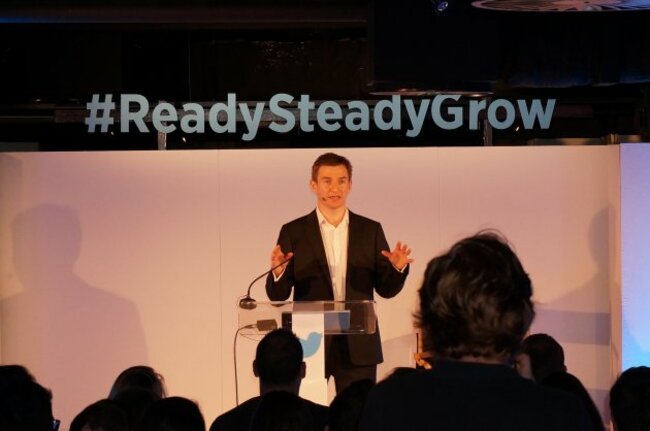
Above all, it is attitude that distinguishes the best candidates at interview and indeed the highest-performing employees at work. Natural intelligence, relevant experience, technical expertise, good industry network – they’re all important of course. But when you start out, and long after that, the characteristic that most defines you in your professional life is your attitude.
This is not about pasting a grin on your face and having a firm handshake. It’s about the way you respond to adversity, the way you channel your energy, the choices you make. Do you embrace new things, push yourself to achieve, volunteer without being asked, look for the silver lining in every cloud? Or do you complain about others, make excuses, and wait to be asked before you act?
Good interviewers will discover all of these things in a 30 minute chat. In fact, they’ll probably be able to spot it from clues on your CV within 30 seconds.
Another defining characteristic of great candidates is self-awareness. Being open to feedback is crucial – other people observe things about you, good and bad, that you find hard to recognise in yourself. A great way to learn more about yourself is to experiment in the early stages of your career. That doesn’t mean job-hopping — it’s always preferable to stay in a role long enough to make a real impact and earn a reputation — but it does mean pushing the boundaries of your job and trying new things.
If you’re an intern in a tech company, you could volunteer for an assignment that gives you project management skills. Or if you’re a trainee accountant in a small firm, you could become the social media expert and volunteer to use social tools to win new business.
People with high self-awareness know what they’re good at, what they’re bad at, and they know what motivates them. They have a set of personal values — a non-negotiable understanding of what’s most important — that guides them through life. This is a lot to ask of someone in the early stages of their career of course. It takes lifetime to hone these senses. But the best candidates show evidence of self-awareness early in their lives and it is strikingly clear in interviews.
Another common question I am asked is “what’s the best subject to study if you want to work in a company like Twitter?” This of course depends somewhat on the role. You’re unlikely to get a job as an accountant or lawyer without some formal education in the area. But for many of Twitter’s jobs there is no perfectly matching degree course. It matters less what you study and much more how you build on it afterwards. People in our team have studied subjects as diverse as microbiology, archaeology, law, and psychology.
I studied engineering myself and I’m a fan of broad-based Science, Technology, Engineering, and Maths (STEM) courses. They give you a grounding in how to manipulate numbers and how to problem solve — two skills that will not become obsolete over time — and they can serve as a springboard into a variety of fields. It’s certainly worth considering that some of the world’s most successful entrepreneurs studied computer science in college, not business. And it’s undeniably true that numbers play a large part in the vast majority of senior executive roles. So if you’re wondering if maths is worth all the effort, my answer is yes.
The technology landscape is shifting rapidly. In such a fast-moving environment, creating a precise career plan for yourself is not only difficult, it’s self-defeating. Make ambitious goals for yourself by all means but be flexible and try to enjoy the journey wherever it takes you. I spent the first six years of my career traveling the world and designing cellphone networks. No career plan could have envisaged the path that lay ahead of me. Your career is a personal journey that is as unique as your fingerprint. Half the fun is carving a route that excites and challenges you.
And remember – the job you’ll end up doing in a decade probably doesn’t exist yet.
The CV
The interview
Stephen McIntyre is the Europe, Middle East and Africa Head of Sales/Operations at Twitter.
Twitter Dublin recently announced that plans to double the size of its Dublin office to more than 200 people by the end of 2014. People interested in finding out more about employment opportunities at Twitter should visit https://twitter.com/jobs/positions/ and follow @JoinTheFlockEU on Twitter to hear about new positions as they come available.
To embed this post, copy the code below on your site











have your say