Sign in. It’s quick, free and it’s up to you.
An account is an optional way to support the work we do. Find out more.
Sign in. It’s quick, free and it’s up to you.
An account is an optional way to support the work we do. Find out more.
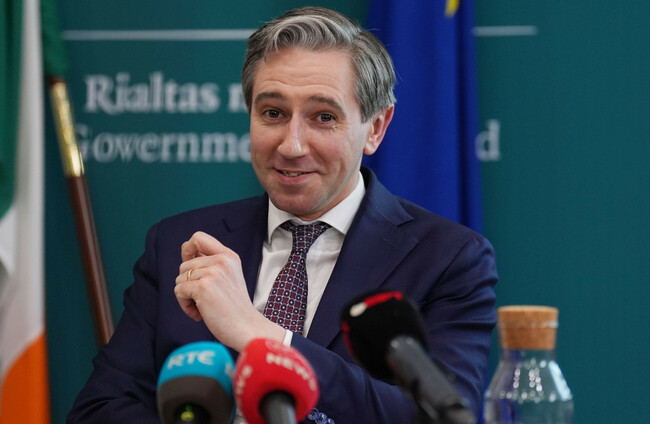
A PROPOSED NEW savings scheme by Tánaiste Simon Harris could favour wealthier households and create “another hole” in Ireland’s tax base, economists are set to warn an Oireachtas committee today.
Harris has proposed introducing a personal investment account (PIA) aimed at encouraging people to move savings into stocks and other investments, with a single flat-rate annual tax replacing existing charges like Capital Gains Tax.
But economists from Trinity College Dublin and University College Dublin are to tell the Oireachtas finance committee this afternoon that the plan could have unintended consequences, including leaving people on the lowest incomes behind and benefitting wealthier individuals.
Enda Hargaden, assistant professor at UCD’s School of Economics, will tell the committee that the scheme would likely represent “another hole in our tax base”, noting that similar tax breaks already reduce State revenues by around €8 billion each year.
“The consensus among the economics profession… is that the State should be reducing these holes in the bucket, not adding entirely new ones,” he is set to tell TDs and senators.
Hargaden will also warn that the policy would likely be regressive, meaning it would disproportionately benefit higher earners.
“The people in our society with the lowest incomes, say the bottom 10 or 20%, will not be able to engage with a policy like this in any meaningful way. Take-up will be low among this group, and the benefits to this group may be small,” Hargaden will say.
“Secondly, higher-income people, say the top 10 or 20%, the sort of people who might have access to a pensions advisor or are generally financially savvy, will take up this programme in very large numbers. The benefits flowing to this group will be large.”
Meanwhile, Barra Roantree, assistant professor in economics at Trinity College, is expected to raise concerns about how the scheme is designed, particularly if it mirrors a Swedish-style model.
Under that approach, investors pay a low annual tax on the total value of their investments instead of tax on profits.
While popular, Roantree will say it could skew benefits towards those earning the highest returns.
“In following this approach, the proposal would bestow the biggest tax break on investments with the highest returns,” he will tell the committee, adding that it could even result in higher relative taxes on low or negative returns.
“This is very difficult to justify in economic terms given that high-return investments will generally be less responsive to taxation, and that there is good evidence showing that wealthy and high-ability investors are more likely to earn high returns,” Roantree will say.
Roantree will also point to wider issues in Ireland’s tax system, arguing that current rules already distort how people save and invest.
He highlighted differences in how assets are taxed, with generous reliefs for property, pensions and certain business assets, compared to other investments like exchange-traded funds.
Both economists will say that reform is needed, but both will also suggest alternative approaches, such as models used in Norway (in which low-return investments are not taxed) or changes to pension-style taxation, could better balance incentives without worsening inequality.
The proposed scheme is part of a broader push by Harris to boost what he has described as Ireland’s weak “investment culture”, with households currently holding an estimated €170 billion in deposits.

To embed this post, copy the code below on your site











have your say