Sign in. It’s quick, free and it’s up to you.
An account is an optional way to support the work we do. Find out more.
Sign in. It’s quick, free and it’s up to you.
An account is an optional way to support the work we do. Find out more.

UNFORTUNATELY, SCAM CALLS and texts can be difficult to identify, and research has shown that large portions of the Irish population have been affected by fraudulent and unsolicited communications.
According to ComReg, the Commission for Communications Regulation, scammers are constantly refining their strategies when it comes to parting people from their money. With the advent of AI, scams are only becoming more credible and more advanced, which means it is important to remain vigilant and not be misled by scammers into revealing personal or sensitive information.
To help protect consumers and businesses, ComReg has been working with the telecommunications industry to implement several anti-scam interventions, in order to help restore trust in the Irish telecommunications network.
ComReg has also issued advice to the public on how they can keep themselves safe from scammers, including:
Additionally, ComReg has published a helpful list of things you should not do when it comes to receiving communications from potentially dubious sources. These include:
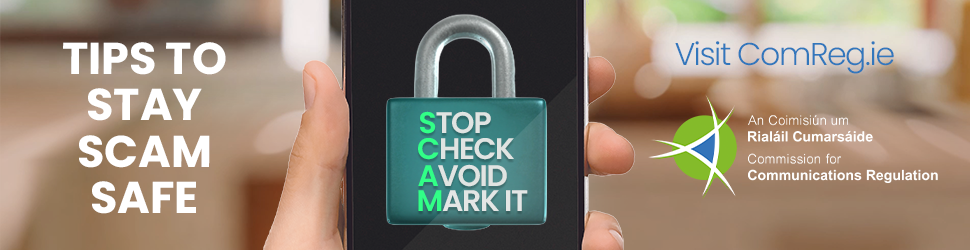
Remember the acronym S-C-A-M, when you receive a call or text you are not sure about:
S – Stop! – Take a moment. Don’t rush to respond to calls or texts that seem urgent.
C – Check – Do you recognise the number? Are there spelling mistakes?
A – Avoid – Don’t answer the call, or click on links in texts.
M – Mark it as spam, then block. Don’t engage further.
Visit ComReg.ie for further information on how to take practical steps to Stay Scam Safe.
To embed this post, copy the code below on your site












have your say