Sign in. It’s quick, free and it’s up to you.
An account is an optional way to support the work we do. Find out more.
Sign in. It’s quick, free and it’s up to you.
An account is an optional way to support the work we do. Find out more.
IT’S A DAY of rest, and you may be in the mood for a quiet corner and a comfy chair. We’ve hand-picked the week’s best reads for you to savour.
1.Denmark during the Holocaust
Michael Ignatieff writes about the “complex tale” of what happened in Denmark during the Holocaust, where Jews were given shelter and helped to escape when the Gestapo came to round them up.
(New Republic – approx 42 minutes reading time, 8410 words)
Both the Danish king and the Danish government decided that their best hope of maintaining Denmark’s sovereignty lay in cooperating but not collaborating with the German occupiers. This “cooperation” profited some Danes but shamed many others. The Danish population harbored ancestral hostility to the Germans, and the occupation reinforced these feelings.
Alan Schwarz looks at ADHD, and how the number of children on medication for it has soared. Dr Connors, a psychologist, calls the situation “preposterous”. Here’s why:
(New York Times – approx 28 minutes reading time, 5654 words)
Companies even try to speak to youngsters directly. Shire — the longtime market leader, with several A.D.H.D. medications including Adderall — recently subsidized 50,000 copies of a comic book that tries to demystify the disorder and uses superheroes to tell children, “Medicines may make it easier to pay attention and control your behavior!”
Pic: Steve Lindridge/Eye Ubiquitous/Press Association Images
Malcolm Gladwell argues that, contrary to what some may think, being nice is not a bad thing at all. But does he agree with Dave Eggers, who begs people not to be critics?
(New York Times – approx 9 minutes reading time, 1917 words)
As an adult, though, Eggers says he came to understand how empty and dangerous this impulse was. He should have been focussed on what was good and true. Instead, he spent his time applying his narrow prejudices to the works of others. The “sellout manual serves only the lazy and the small,” he says.
Sally Jacobs, David Filipov and Patricia Wen examine the story of the Tsarnaev family, whose sons Tamerlan and Dzhokhar are believed to have been involved in the Boston bombing. Their five-month investigation brings up some shocking discoveries.
(Boston Globe – approx 89 minutes reading time, 17,816 words)
Long before the bombs ripped through Boylston Street, all six members of the Tsarnaev family had encounters with local police, some of them repeatedly. One decade after they arrived bristling with expectation, the Tsarnaev family had imploded, each member marked by some personal failure within a culture they never fully understood or adapted to. Only two of the Tsarnaev children would graduate from high school, and none of the four ever found their footing outside the troubled family circle.
File. Pic: Joe Giddens/PA Wire
Elliott D Woods writes about Avishek Sengupta, who drowned while taking part in an obstacle challenge last year. His death was ruled an accident, but a legal fight is his legacy.
(Outside Magazine – approx 38 minutes reading time, 7753 words)
Nobody realized it at first, but Avi didn’t resurface after his plunge. He was underwater and sinking to the bottom, passing out at some point, for reasons that are still unknown. When he was next seen on the surface, at least eight and a half minutes after he’d jumped, he would be unconscious and in the arms of a rescue diver.
Michael M Phillips meets the forgotten mentally-ill veterans who underwent lobotomies. All that remains of their medical history are dusty files that are six decades old.
(Wall St Journal – approx 27 minutes reading time, 5468 words)
Besieged by psychologically damaged troops returning from the battlefields of North Africa, Europe and the Pacific, the Veterans Administration performed the brain-altering operation on former servicemen it diagnosed as depressives, psychotics and schizophrenics, and occasionally on people identified as homosexuals.
…AND ONE FROM THE ARCHIVES…
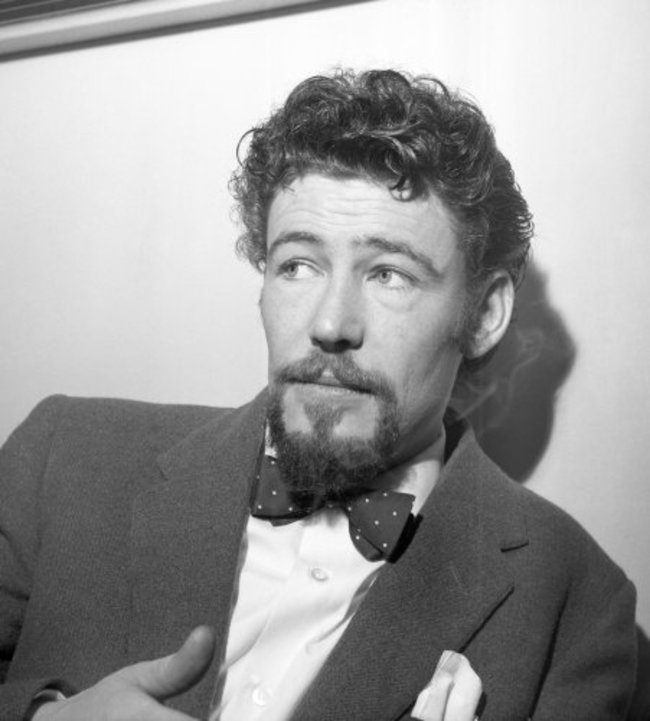
Peter O’Toole in 1960. Pic: PA Wire/PA Images
With the passing of Peter O’Toole, now is a great time to go back and read Gay Talese‘s essay about the Irish actor as he journeyed back to the ‘old sod’ in 1963.
He could still be wild and self-destructive, and the psychiatrists had been no help. All he knew was that within him, simmering in the smithy of his soul, were confusion and conflict, and they were probably all linked somehow with Ireland and the Church, with his smashing up so many cars that his license had to be taken away, and with marching in Ban-the-Bomb parades, with becoming obsessed with Lawrence of Arabia, with detesting cops, barbed wire, and girls who shave under their arms…

To embed this post, copy the code below on your site

















have your say