Sign in. It’s quick, free and it’s up to you.
An account is an optional way to support the work we do. Find out more.
Sign in. It’s quick, free and it’s up to you.
An account is an optional way to support the work we do. Find out more.

IT’S A DAY of rest, and you may be in the mood for a quiet corner and a comfy chair.
We’ve hand-picked some of the week’s best reads for you to savour.

Sleeping for two different periods in 24 hours, rather than just at night, was the norm back in Medieval times. Why did it change?
(BBC, approx. 15 mins reading time)
“Ekirch found casual references to the system of twice-sleeping in every conceivable form, with hundreds in letters, diaries, medical textbooks, philosophical writings, newspaper articles and plays.”

Multiple women have accused David Walliams of sexually inappropriate behaviour and grooming including when they were teenagers, according to an investigation by the Guardian and ITV News. Walliams, 55, denies the allegations. In this article, The Guardian has interviewed some of Walliams’ alleged victims.
(The Guardian, approx. 40 mins reading time)
“Alex spoke about her experiences across several interviews over more than a year. Looking back, she is clear about what she feels happened. ‘I think I was groomed, 100%. We met when I was 15 and he was promising to help me and was a figure of authority and someone that I looked to for guidance and help. He used that power and abused that power the minute he felt he just about could and it was just about safe to.’”
Turkey is the top importer of Europe’s plastic waste, but this article claims that, instead of being recycled, the rubbish ends up as pollution.
(The New York Times, approx. eight mins reading time)
“Walking along canals and beaches around Adana, in southern Turkey, we found discarded packaging for mozzarella from France, wet wipes from Holland, tortellini from Spain and fertilizer from Germany. Ice cream tubs from Britain exhorted consumers to recycle.”
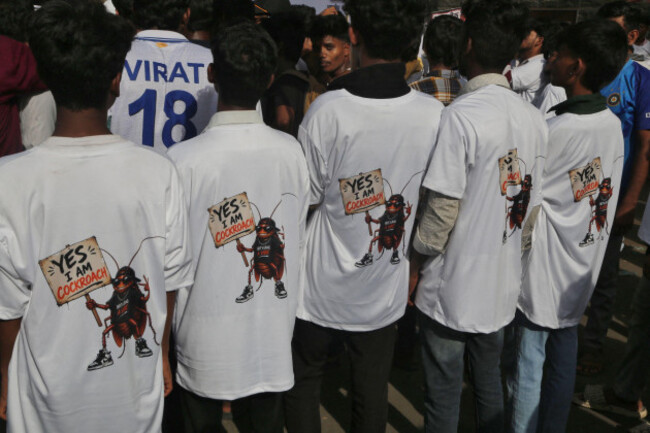
Protests primarily made up of young people are occurring across the world, but they share some similarities.
(The Guardian, approx. eight mins reading time)
“Analysts have been swift to point to the link between the protests. “The reasons are different, but they share the same spark: the breakdown of the social contract,” Arancha González, the dean of the Paris School of International Affairs, told the Italian newspaper Corriere della Sera. ‘In Europe, the idea that economies generate wellbeing and social equality has been shattered.’”

This interesting article explores how a 99-year-old Korean woman once ran a huge flannel empire – but lost it all.
(Outside, approx. 20 mins reading time)
“Placing a woman at the head of an industrial operation violated social traditions. The only reason Sonia was tolerated in her position was that, on paper and in the public eye, the business belonged to KwangDal. Sonia could run everything as long as everyone agreed that Baeekyang Gimo belonged to him.”
Hunter Bigham has been the victim of many romance scams despite never being directly involved in one.
(Associated Press, approx. 20 mins reading time)
“Parents with children older than mine tell me they obsess over grades, which are updated instantly with each new assignment or quiz. They watch their kids via the camera on their Ring doorbell; they monitor text messages. They scrutinize daily photos from sleepaway camp—once a time of complete disconnection—for evidence of sunburns or social ostracism. Why is he standing apart from everyone else? Why isn’t he smiling?”

Once a playground staple, some Pokémon cards have become rare commodities to the community of people who collect them. But a recent scam fooled even the most keen collectors.
(Popular Mechanics, approx. 23 mins reading time)
“He wasn’t alone in making a massive bet. Jason knows a private collector who spent nearly $3 million on a set. But as the frenzy unfolded, Jason and others in the collecting community began to feel that something was off. The cards were supposedly created for a handful of developers to test the game; how was it there were so many of them?”
Electric cars are on the rise – but, according to this article, we could have had them all along if history played out differently.
(Longreads, approx. 30 mins reading time)
“Of the 4,200 vehicles produced by 1900, fewer than 1,000 had IC engines. The balance was shared about equally by steamers and electrics.[1] Inventors were coming out of the woodwork. They dreamed up contraptions and Americans bought them. By 1899, commentators and industry experts saw that the motorcar was destined to revolutionize American life in profound ways.”

To embed this post, copy the code below on your site














have your say