Sign in. It’s quick, free and it’s up to you.
An account is an optional way to support the work we do. Find out more.
Sign in. It’s quick, free and it’s up to you.
An account is an optional way to support the work we do. Find out more.
IT’S A DAY of rest, and you may be in the mood for a quiet corner and a comfy chair.
We’ve hand-picked the week’s best reads for you to savour.
Manvir Singh writes about the death of his cousin in India, one of thousands of women who have been killed in the country as a result of marriage-payment disputes. A moving read about domestic abuse and dowries in India.
(The New Yorker, approx 25 mins reading time)
In 1979, more than four decades before Neeti’s death, protesters poured through the streets of New Delhi with a simple message: Stop burning women. As usual, hundreds of young brides had died in fires that year. Yet now some of those victims were becoming the martyred faces of a new movement. There was Shashibala Chaddha, who was pregnant when she burned to death, and Kanchan Chopra, who was found dead the day after police rebuffed her brother’s attempt to alert them about her plight. The most consequential may have been Tarvinder Kaur. Like Neeti, Kaur was a Sikh woman who lived in Model Town, a well-to-do neighborhood in North Delhi. On May 15, 1979, she was watching television when her mother-in-law allegedly drenched her in kerosene and her sister-in-law set her ablaze with a match. She ran from the room screaming and was driven to a hospital, where she survived just long enough to record a statement with police. The attack was said to have followed five months of bullying, needling, and belittling. She had brought to the marriage a decent dowry—the payment demanded by a groom’s family—which included cushions, crockery, an armoire, and a television set, but her in-laws considered it scanty. According to reports at the time, they wanted gold, cash for their business, and a two-wheeled scooter, and they did not hesitate to tell her. (Kaur’s mother-in-law and sister-in-law were acquitted.)
Finland has spent 20 years and €1 billion building the world’s first permanent storage site for spent nuclear fuel. It will be operational in two years, but is it the answer to nuclear waste?
(BBC Future, approx 15 mins reading time)
This waste needs to be kept away from people and isolated from the environment for a time span almost incomprehensible to human mind. This problem has made the safe management of radioactive waste one of the biggest problems with nuclear energy. The IAEA estimates that there’s around 260,000 tonnes of spent nuclear fuel in interim storage across the world as of 2016, the majority at reactor sites. About 70% of the world’s spent fuel is in storage ponds, with the rest in concrete-and-steel containers called dry casks. Few believe this situation can be maintained indefinitely. “We’ve all benefitted from nuclear energy for over 60 years,” says Lewis Blackburn, a lecturer in nuclear materials at the University of Sheffield in the UK. “It’s our generation of scientists’ and engineers’ responsibility to undertake the challenge to dispose of the waste, instead of leaving it to future generations.” He says Onkalo has public support and was created through a democratic process. “It’s exceptional and a huge milestone. Finland has set an example to the world of what can be achieved with successful cooperation and transparent communication with the public.”
A profile of Robert Kennedy Jr, the conspiracy theorist and Democratic presidential candidate, and his very online campaign for the White House.
(TIME, approx 14 mins reading time)
Weird is one word for Kennedy’s bid, which has won support from figures as disparate as Twitter founder Jack Dorsey, quarterback Aaron Rodgers, actor Alicia Silverstone, and conspiracy theorist Alex Jones. It’s a guerrilla operation staffed by longtime friends and colleagues from Kennedy’s many previous lives—as an environmental lawyer, prolific author, master falconer, Hollywood husband, and anti-vaccine crusader. So far, the candidate has spent more time chatting on podcasts and livestreams than visiting with voters. Instead of dropping in on New Hampshire coffee shops, he’s given a speech at a Miami Bitcoin conference, appeared on Twitter Spaces with Elon Musk, and is slated to be interviewed on June 14 on Joe Rogan’s wildly popular podcast. More striking than the medium is the message—a kind of MAGA for Democrats that stands in stark contrast to the optimism that defined the campaigns of his father and uncle. Kennedy sounds simultaneously stuck in the past and jarringly online, his worldview dark and suspicious.
4. The case of the missing Picasso
An amusing tale of a missing masterpiece and a forklift operator and his father who happened to find it.
(The New York Times, approx 12 mins reading time)
The protracted late February snowfall paralyzed Boston, including the airport, where more than two feet of snow disrupted passenger flights and cargo deliveries. Large containers littered the tarmac, while boxes and packages clogged the docks. “Our dock was a mess,” Bill Rummel said in a 2007 interview with Ira Glass for an ultimately shelved episode of the “This American Life” radio program. With outbound crates at the front and inbound crates at the back, Emery executives demanded a decluttering of the dock. Under pressure, Rummel said, his supervisor pointed to a crate with a missing label and said: Take that with you when you go home tonight. It should be noted that, according to Rummel, this supervisor was later fired. For stealing. Rummel angled the crate into the trunk of his 1962 Chevy Impala and, a few days later, lugged it into his half of a two-story home in Medford, Mass. He pried it open with a hammer to discover that he was now in possession of a Picasso.
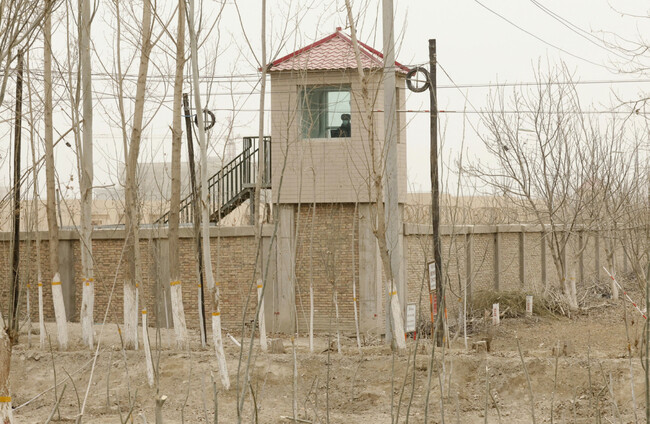
The story of how one Uyghur man fled Xinjiang through the notorious “smuggler’s road” and broke out of a Thai detention centre using a spoon and an old nail.
(Coda, approx 10 mins reading time)
At the border leaving China, we met with the smugglers who would get us out. They stuffed around 12 of us into a regular car, all of us sitting on top of each other. I was traveling alone, I didn’t know anyone else in the car. I remember one guy, Muhammad, who I met in the car for the first time. He was from the same area as me. He was with his wife and two kids and seemed friendly. The road was terrifying. There was a pit of anxiety in my stomach as the smugglers drove through the mountainous jungle at night at breakneck speed. I watched the speedometer needle always hovering above 100 kmph (about 60 mph), and I couldn’t help thinking about how many people were in the car. We heard about another group, crossing the border into Cambodia in a boat, who nearly drowned. After just seven days, we reached Thailand and the border with Malaysia. We sat in the jungle, trying to decide what to do — we could try climbing the border fence.
The chat show host talks about growing up in 1960s Ireland, his career and his TV show Queen of the Universe.
(The Guardian, approx 12 mins reading time)
Norton doesn’t like to be dragged into politics, and yet that doesn’t stop us all trying; asked last year at a literary festival about JK Rowling and cancel culture, he counselled against asking “a bloke on the telly”, instead suggesting: “Talk to trans people, talk to the parents of trans kids.” He got a torrent of abuse for that and had to leave Twitter, but it was a good distillation of his stance, not so much about LGBTQ+ matters, but about his place in the conversation and, indeed, the world. He is showbiz. He is not here to start a fight; he is here to have a laugh. “Your job is to entertain people and to either make people forget other awfulness or to make them believe that things aren’t as awful as they thought they were,” he says. “Maybe that’s where my positivity comes from. Or maybe I’m in this world because I have that view. I don’t know.”
…AND A CLASSIC FROM THE ARCHIVES…
Aslan lead singer Christy Dignam passed away this week at the age of 63. The Journal spoke to him in 2018 about the band’s history and its impact on Irish music.
(The Journal, approx 10 mins reading time)
Aslan have often been compared with the world-famous U2, who were hitting their stride at about the same time and whose members grew up not far from them (although in a “posh enclave”, as Dignam once called it). This comparison has frustrated Dignam at times, as he sees the band as something completely different from Bono, The Edge and the gang. For Dignam, especially today, Aslan are first and foremost an Irish band. “I think because of that we always remained an Irish band, a true Irish band,” he said. “Because if you look at U2 or somebody like that, they’re an international band at this stage. They kind of belong to the world, they don’t belong to Ireland anymore. Where we still belong to Ireland, you know? I think that might be what it is.
Note: The Journal generally selects stories that are not paywalled, but some might not be accessible if you have exceeded your free article limit on the site in question.

To embed this post, copy the code below on your site













have your say