Sign in. It’s quick, free and it’s up to you.
An account is an optional way to support the work we do. Find out more.
Sign in. It’s quick, free and it’s up to you.
An account is an optional way to support the work we do. Find out more.
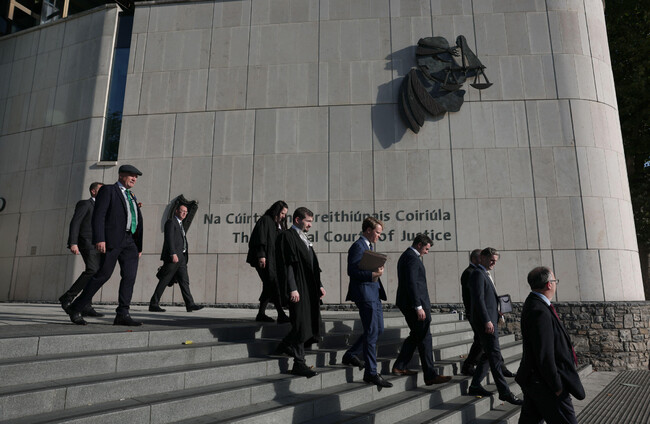
THE ONGOING SOLICITORS’ strike could lead to an increase in judicial reviews being taken if the dispute continues, a legal expert has said.
The row between solicitors and justice minister Jim O’Callaghan has been ongoing since the introduction of changes to the criminal legal aid fees model on 1 July. O’Callaghan claims these were made in an effort to curb what he described as “abuses” of the old scheme.
Where a solicitor used to receive €240 for a first appearance with a legal aid client and €60 for each appearance thereafter, they now receive a flat €520 fee when a case concludes with up to five court appearances.
Solicitors have said the new system is unworkable and have withdrawn their services. They are seeking a second payment if a case lasts beyond 10 court appearances, as well as multiple payments of €520 where a client has multiple charges levelled against them by the state.
Following a meeting on Wednesday, both O’Callaghan and the Law Society agreed on the need “to find a resolution without delay” to the ongoing dispute, and to continue to engage with one another.
All the while, the court system has been severely disrupted due to the ongoing strike. Thousands of trials, including cases involving rape and murder, have been adjourned as there is no legal representation available.
In some cases, defendants with no legal expertise are opting to represent themselves in court.
Some alleged offenders have also been released from custody after it was found their bail hearings were flawed due to a lack of legal representation.
Speaking to The Journal, Dr Conor Hanly, lecturer in law at the University of Galway, said the impact on the system at the moment is somewhat unprecedented.
“If all of this is sorted out in the next few weeks, and I think everybody hopes that it will be, then the overall impact will not be too great. But if it continues, if both sides become intransigent and draw lines in the sand, well we’re in uncharted territory,” he said.
When asked what impact the strike could have in the long term, Hanly said that, in most cases, the biggest effect will likely be “annoyance and discommoding of witnesses, defendants and victims”.
“That’s unfortunate, but it probably won’t give rise to appeals. Delays are, regrettably, endemic in our system anyway. We now have more delays. This is adding to the problem.”
However, he said that at some point, a line can be crossed “and you start heading into prejudice territory”.
Anything that threatens the constitutional right to a fair trial can be prejudicial, such as influencing a jury, failure to disclose evidence, or media reporting of a case.
The real question before any court is, will the trial be fair? We do not do business by allowing unfair trials. If we can’t be reasonably sure of a fair trial, there won’t be a trial.
While delay to a case being heard does not necessarily create prejudice, Hanly said there is a requirement that justice be done fairly as quickly as possible, pointing to the legal maxim ‘justice delayed is justice denied’.
“It’s when those delays become excessive, that’s when the problem is.” But he said deciding what constitutes an excessive delay would be up to a particular court examining the circumstances of a particular case.
According to Hanly, the strike is unlikely to result in an increase in people who have been convicted of a crime filing appeals.
“They would have to show that their conviction was unfair, and that the delay contributed to that unfairness and contributed to the result. I think that’s unlikely,” he said. “I think it’s more likely to result in judicial review proceedings.”
A judicial review is a legal process in the High Court that allows people to challenge the lawfulness of a decision. The court examines how a decision was made, rather than whether it was the right or wrong.
“A defendant could seek judicial review, arguing that the trial is now unfair because of the delay that went into it, and he should not be tried,” Hanly said, adding that the process is designed to ensure “things are done fairly”.
He said the most obvious cases where someone could take a judicial review would be those where a defendant is being held in custody.
“Every person is presumed innocent until the contrary is proven, but somebody who is held on remand is basically in prison. They’re locked up, not having yet been convicted. The longer that goes on, the more problematic it becomes because we’re interfering with the liberty of a presumptively innocent person.”
Other cases that could be affected are in the Children’s Court, where juvenile defendants are at risk of “ageing out” of the system due to continued adjournments.
“That’s a real issue because once they turn 18, they become adults and the whole ball game changes,” Hanly said.
He added that while the current impasse ”doesn’t reflect well on our criminal justice process”, it is positive that both sides are communicating and he is hopeful that matters will be resolved “sooner rather than later”.

To embed this post, copy the code below on your site














have your say