Sign in. It’s quick, free and it’s up to you.
An account is an optional way to support the work we do. Find out more.
Sign in. It’s quick, free and it’s up to you.
An account is an optional way to support the work we do. Find out more.
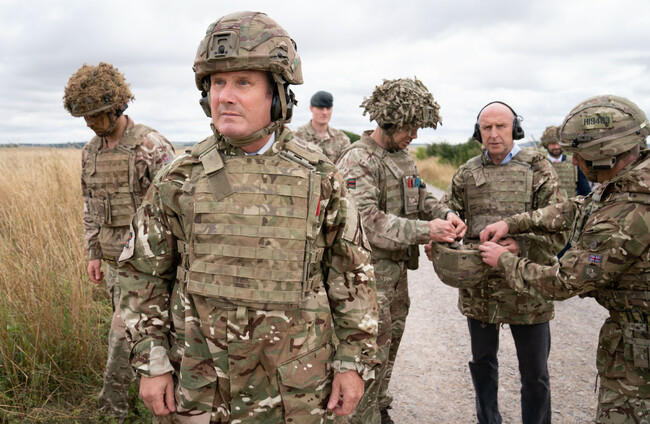
UK PRIME MINISTER Keir Starmer has slashed the aid budget to fund a dramatic increase in defence spending in response to “tyrant” Vladimir Putin and uncertainty over US President Donald Trump’s commitment to European security.
Starmer announced this morning that spending on defence by the UK government will rise from its current 2.3% share of the economy to 2.5% in 2027.
That will mean spending £13.4 billion (€16.1 billion) more every year from 2027, something which Starmer acknowledged will require “extremely difficult and painful choices”.
He said he wants that figure to reach 3% of gross domestic product during the next parliament.
But to fund it, development assistance aid will be slashed from its current level of 0.5% of gross national income to 0.3% in 2027.
The UK prime minister said the plan amounts to “the biggest sustained increase in defence spending since the end of the Cold War”.
Taking spending on the security and intelligence services into account as well as defence, the budget will amount to a 2.6% share of the economy from 2027.
“We must change our national security posture, because a generational challenge requires a generational response,” he said.
“That will demand some extremely difficult and painful choices.
“And through those choices, as hard as they are, we must also seek unity, a whole society effort that will reach into the lives, industries and the homes of the British people.”
Starmer will travel to Washington later this week for talks with the US president, who has repeatedly pushed for Europe to increase its defence spending.
Setting out the need for the UK to respond, the Prime Minister told the UK Parliament that “one of the great lessons of our history is that instability in Europe will always wash up on our shores and that tyrants like Putin only respond to strength.”
He said the UK must stand by Ukraine but “as the nature of that conflict changes, as it has in recent weeks, it brings our response into sharper focus, a new era that we must meet”.
Trump has opened talks with Russian President Putin to end the Ukraine war, putting the transatlantic alliance under severe strain by overriding the concerns of Europe and Kyiv.
“We must reject any false choice between our allies, between one side of the Atlantic or the other that is against our history, country and party, because it’s against our fundamental national interest,” Starmer said.
The US-UK relationship “survived countless external challenges in the past”.
“So this week, when I meet President Trump, I will be clear I want this relationship to go from strength to strength.”
The UK Government has a legal duty for aid spending to meet the United Nations target of 0.7% of gross national income, but that has not been the case since it was cut to 0.5% during the pandemic.
In the financial year 2023/24, the Ministry of Defence spent around £53.9 billion (€65 billion). According to documents from last October’s Budget, this was predicted to increase to £59.8 billion (€72 billion) by 2025/26 under the old funding models, a rise of 2.3%.
However, Starmer said today that the changes will mean “spending an £13.4 billion more on defence every year from 2027”.
The Institute for Fiscal Studies associate director Ben Zaranko warned that cuts to aid “won’t be enough” if defence spending is to increase beyond 2.5%, but also said Starmer had announced a “misleadingly large figure for the ‘extra’ defence spending”.
“An extra 0.2% of GDP is around £6 billion, and this is the size of the cut to the aid budget. Yet he trumpeted a £13 billion increase in defence spending,” Zaranko said.
“It’s hard to be certain without more detail from the Treasury, but this figure only seems to make sense if one thinks the defence budget would otherwise have been frozen in cash terms.”
Aid organisations reacted with fury to the Prime Minister’s decision.
Romilly Greenhill, chief executive of Bond, the umbrella organisation for international development and humanitarian assistance groups, said the cuts are “a short-sighted and appalling move by both the PM and Treasury”.
“Slashing the already diminished UK aid budget to fund an uplift in defence is a reckless decision that will have devastating consequences for millions of marginalised people worldwide,” Greenhill said.
Tory leader Kemi Badenoch backed the cut in aid to fund defence and urged Starmer to take up her suggestion of also raiding the welfare budget to boost spending on the military.
“I’m very pleased to hear the Prime Minister announce that increase to 2.5% by 2027. All of us on this side of the House welcome that, we have all wanted to see more spending on defence,” she said.

To embed this post, copy the code below on your site













have your say