Sign in. It’s quick, free and it’s up to you.
An account is an optional way to support the work we do. Find out more.
Sign in. It’s quick, free and it’s up to you.
An account is an optional way to support the work we do. Find out more.
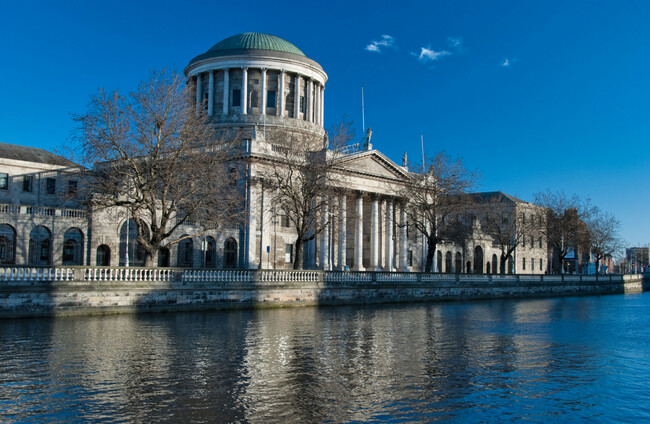
THE SUPREME COURT is to hear a legal challenge over whether the government’s 2023 Climate Action Plan complied with Ireland’s climate laws.
Environmental group Friends of the Irish Environment (FIE) has been granted permission to appeal a Court of Appeal ruling that upheld the government’s plan, with the Supreme Court finding the issues raised are of “general public importance”.
The environmental group has argued the government failed to demonstrate with sufficient detail how the measures contained in the 2023 Climate Action Plan would deliver the emissions reductions required under Ireland’s legally binding carbon budgets.
The Supreme Court granted leave to appeal on 1 July.
Ireland’s Climate Action Plan is published annually and is intended to set out the roadmap for meeting the State’s legally binding emissions reduction targets. The actions included in the 2023 plan have also carried over into subsequent annual plans.
The case centres on whether the government complied with its obligations under the Climate Action and Low Carbon Development Act when approving the plan.
The Act, which was enacted in 2015, is the cornerstone of the state’s climate policy. It legally binds the country to transitioning to a climate-neutral economy by 2050, requiring a 51% reduction in greenhouse gas emissions by 2030.
FIE has argued that ministers failed to show “with a sufficient level of specificity” that the measures contained in the 2023 Climate Action Plan would reduce greenhouse gas emissions in line with Ireland’s carbon budgets.
However, both the High Court and the Court of Appeal rejected that argument.
The Court of Appeal held that FIE had not discharged the burden of proving the government had acted unlawfully when adopting the plan.
In granting leave to appeal, the Supreme Court said the proposed appeal raises important questions about the interpretation of the Climate Action Act, including the extent to which the government must quantify, justify and explain the emissions reductions set out in its Climate Action Plans.
The court said those issues are capable of affecting the preparation and approval of future Climate Action Plans, and therefore met the constitutional threshold for an appeal.
Friends of the Irish Environment said the appeal comes as Ireland remains significantly off track to meet its national and EU climate targets.
Director Tony Lowes said the case was about ensuring future Climate Action Plans provide a meaningful roadmap for reducing emissions.
“Actions speak louder than words. As the impacts of climate change worsen and the window to remain within 2C narrows, Ireland must prepare now for a fair and inclusive transition to a low-carbon society,” Lowes said.
“This requires that Climate Action Plans set out a sufficiently clear roadmap for effective climate action while also serving as a meaningful mechanism for monitoring and ensuring accountability on Government climate action.”
Community Law & Mediation, which is representing FIE through its Centre for Environmental Justice, said the appeal also comes against the backdrop of recent government legislation that critics argue weakens Ireland’s climate governance.
Chief executive Aoife Kelly-Desmond said current climate policies are projected to reduce emissions by up to 25% by 2030, well short of Ireland’s legally binding targets.
“Concerningly, against this backdrop, the Government is forwarding proposals that undermine climate governance and the effectiveness of our climate legislation,” Kelly-Desmond said.

To embed this post, copy the code below on your site















have your say