Sign in. It’s quick, free and it’s up to you.
An account is an optional way to support the work we do. Find out more.
Sign in. It’s quick, free and it’s up to you.
An account is an optional way to support the work we do. Find out more.
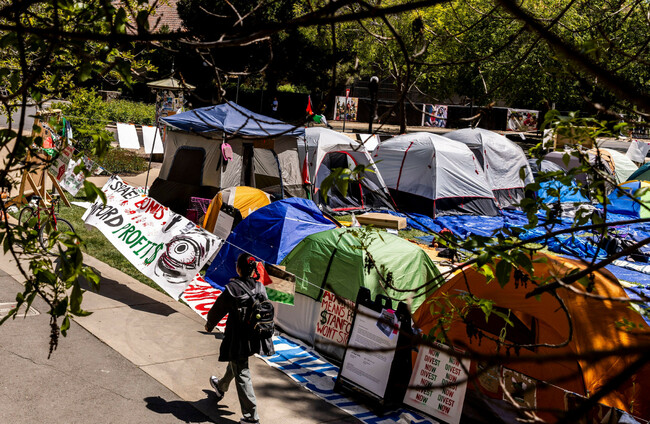
CALIFORNIA STUDENTS TAKING part in a fast in protest against their universities’ ties to Israel say they were partially-inspired by Irish republican hunger strikers.
A number of Stanford University students were arrested after they staged a sit-in protest last year. The students taking part in the fast want the charges dropped.
Since an encampment last year involving hundreds of students, the university has enacted new rules around when, where and how people can protest, which the protesters want reversed.
The university has also rejected calls for divestment from companies contributing to Israel’s siege in Gaza. It argued that any changes to investments to “advance any particular social or political agenda” would conflict with its policy.
The 15 students and faculty members at Stanford who are now on their fifth day without food say they won’t relent until the university meets their demands.
Among the strikers is Owen Martin, a first year physics student who said his ancestors moved from Belfast to America during the famine.
“We came here during one man-made famine, and now we have the worst man-made famine in history spreading across Gaza,” he said.
“There’s a very strong personal connection that I feel.”
Asked how he’s feeling after days without food, Martin said:
“I’m holding up. I think one of the biggest things that keeps me going is that I can break the strike anytime that I want. I can end my hunger, but our brothers and sisters in Gaza cannot.”
He hopes that the extreme measure will see the university “finally start to listen”.
In a statement a spokesperson for Stanford said it “does not intend to negotiate” with the protesters.
They said Stanford respects the rights of students to express their views as long as it’s within the restrictions introduced last year.
Dr Rupa Marya, a veteran activist and professor of medicine for 23 years, is supporting the students involved. Her research focuses on the impact of colonialism on health.
She said it was incredible that the students’ actions were being met with “deafening silence from the administration of these schools”.
The hunger strikes are not only inspired by Irish history, but recent action taken by students in Trinity College Dublin. An encampment on the grounds and a blockade of the Book of Kells tourist experience resulted in the university committing to divestment from Israeli companies.
Marya said the protest was “tactical brilliance”.
Stanford students are doing what is known as a “complete fast”, meaning they don’t eat any calories, but they do drink water.
Marya has been providing information to them about what happens to the body when it fasts, as well as their rights should they become hospitalised.
“If someone’s unconscious and they show up to an emergency room, we have to do everything we can to make sure they don’t expire and make sure they don’t die.
Martin said that another group is ready to begin fasting should the university continue to refuse to engage.
Yousef Helal, a masters student in electrical engineering, is another striker. He said that his muslim faith inspired him to protest against what he sees as injustice.
“The movement is never going to be just sunshine and rainbows, right? It’s not just going to be going to protests with your friends and having a jolly old time. Sometimes we have to make sacrifices to stand up for what’s right,” he told The Journal.
Helal said the “authoritarian” rules around protesting on campus infringe on their right to freedom of speech – a claim Stanford denies.
The Stanford protests are part of a wider student movement in the US right now, concentrated in the state of California.
Other universities involved include San Jose State University and San Francisco State University. There is also a group of 11 protesters staging a fast at Yale, on the east coast.
Last year, a former IRA hunger striker and an ex-British soldier took part in a 24-hour fast to raise funds for victims of the Israeli bombardment of Gaza.

To embed this post, copy the code below on your site











have your say