Sign in. It’s quick, free and it’s up to you.
An account is an optional way to support the work we do. Find out more.
Sign in. It’s quick, free and it’s up to you.
An account is an optional way to support the work we do. Find out more.
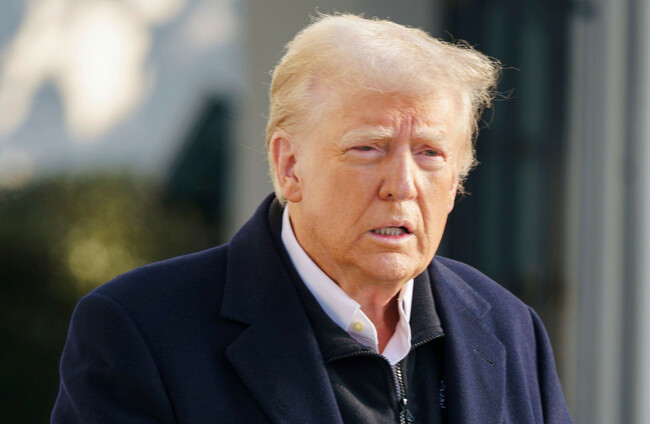
US PRESIDENT DONALD Trump’s tariffs could put the country’s Federal Reserve – its central banking system – in the difficult position of having to choose between tackling inflation and unemployment, its chair has said.
Trump’s stop-start tariffs have unnerved investors and trading partners unsure about the long-term strategy and what it might mean for international trade, as well as posing risks to the US’s domestic economy.
Chair of the US Federal Reserve Jerome Powell has said that although employment and inflation goals are mostly in balance at present, policymakers could find themselves in the “challenging scenario in which our dual-mandate goals are in tension”.
“Tariffs are highly likely to generate at least a temporary rise in inflation,” Powell told the Economic Club of Chicago, warning that the inflationary effects “could also be more persistent”.
“Avoiding that outcome will depend on the size of the effects, on how long it takes for them to pass through fully to prices, and, ultimately, on keeping longer-term inflation expectations well anchored,” he said.
Unlike some other country’s central banks, the US Fed has a dual mandate from Congress to ensure both stable prices and maximum sustainable employment over time.
It keeps those twin objectives in balance by lowering or raising interest rates, which act as to either accelerate or slow down demand in the world’s largest economy.
Most economists have warned that tariffs will push up prices — at least temporarily — while acting as a drag on growth.
The Trump administration has insisted that the levies are just one part of an overall economic agenda including tax cuts and deregulation designed to stimulate supply, boost growth, temper inflation, and return manufacturing jobs to the United States.
Tariffs would be “likely to move us away from our goals,” Powell said, referring to the Fed’s dual mandate.
Futures traders currently see a roughly 85% chance that the Fed will vote to pause again at the next interest rate decision in May, according to data from CME Group.
US financial markets fell following Powell’s remarks, with all three major Wall Street indices ending the day in the red as investors dumped tech stocks.

To embed this post, copy the code below on your site












have your say