Sign in. It’s quick, free and it’s up to you.
An account is an optional way to support the work we do. Find out more.
Sign in. It’s quick, free and it’s up to you.
An account is an optional way to support the work we do. Find out more.
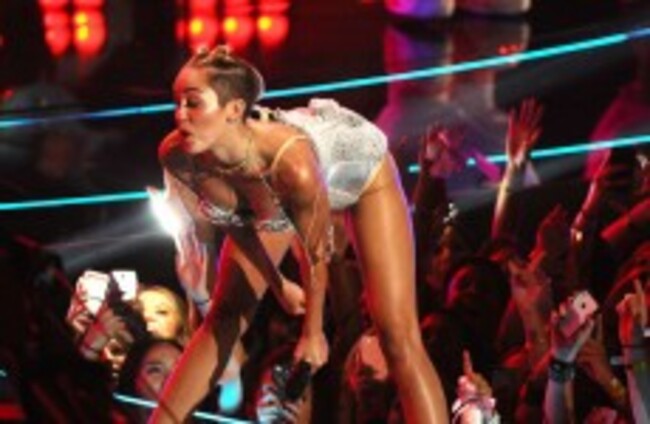
FOR MANY THE word ‘twerk’ can only conjure up indelible images of Miley Cyrus gyrating in front of Robin Thicke at the 2013 MTV Video Music Awards.
But that particularly spectacular performance is just the tip of the iceberg – for it seems twerking, which basically means bending over and waggling your behind if you’re feeling flummoxed, has been around for a long, long time. Almost 200 years in fact.
The latest edition of the Oxford English Dictionary (OED) legitimises 500 new words of which twerk is but one.

While the verb ‘to twerk’ was in use in early 1990s New Orleans, it seems its origins come from much, much further back. 1820s England to be precise.
Back then the word was a noun, spelt ‘twirk’, referring to a jerking movement or twitch. That sounds familiar alright.
‘Really the Germans do allow themselves such twists & twirks of the pen, that it would puzzle any one’ says a letter dated February 1820 by a Charles Clairmont.
“We are confident that it is the same origins as the dance,” said senior editor with OED Fiona McPherson.
There has been constant use up into the present day to mean that same thing.
I think it’s quite spectacular, the early origins for it. We were quite surprised.
As such, ‘to twerk’ (which is now officially defined as ‘to dance to popular music in a sexually provocative manner involving thrusting hip movements and a low-squatting stance’) is joined in its new-found valid state by such (well-known and others not so much) oddities as:
When did speaking English get so complicated…

To embed this post, copy the code below on your site













have your say