Sign in. It’s quick, free and it’s up to you.
An account is an optional way to support the work we do. Find out more.
Sign in. It’s quick, free and it’s up to you.
An account is an optional way to support the work we do. Find out more.
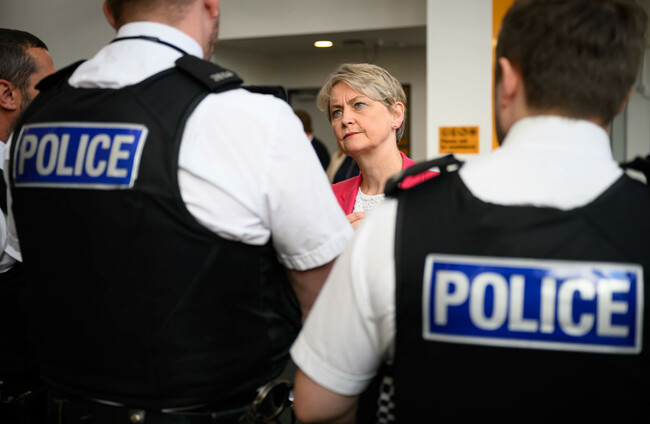
THE IDENTITY OF firearms officers in the UK will be kept secret if they are prosecuted unless they are convicted, British Home Secretary Yvette Cooper announced today in the wake of the Chris Kaba case.
Cooper unveiled a string of reforms as she told British MPs that a review of how police who take fatal shots in the line of duty are held to account found that the system was “not commanding the confidence of either the public or the police” amid wider concerns about disciplinary proceedings.
The move comes days after marksman Martyn Blake was cleared of Kaba’s murder.
The 24-year-old was unarmed when Blake shot him through the windscreen of an Audi Q8 as he tried to ram his way past police cars in Lambeth, south London, in 2022.
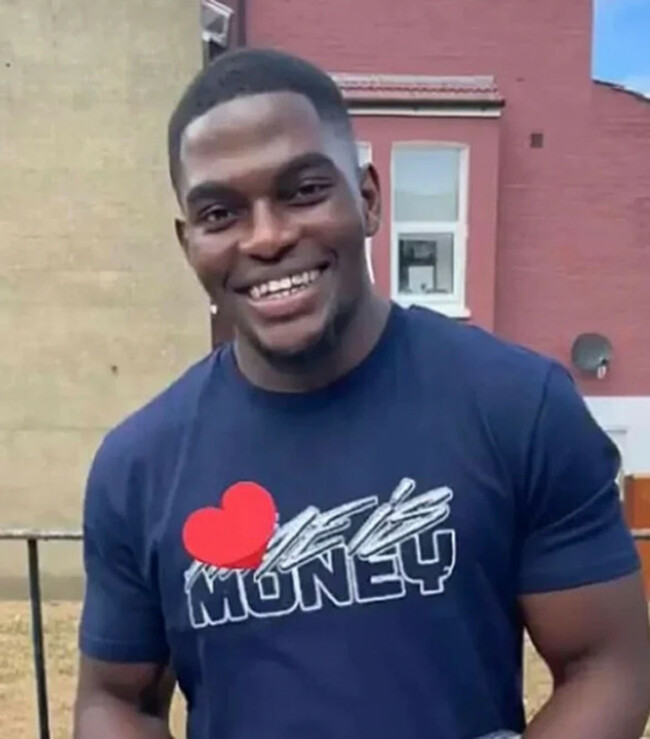
When reporting restrictions were lifted after the case concluded, it emerged Kaba was a “core member” of one of London’s most dangerous criminal gangs and was allegedly directly linked to two shootings in the six days before he was shot dead by police.
The Independent Office for Police Conduct (IOPC) is reviewing whether Blake should still face disciplinary proceedings.
The 40-year-old is reportedly living in hiding, fearing for his life and his family after a £10,000 bounty was offered in revenge for Kaba’s death to anyone prepared to kill him.
Cooper said the case happened “against a backdrop of wider and long-standing concerns about accountability, standards and confidence” and amid “fallen community confidence in policing and the criminal justice system across the country”, particularly among Black communities.
Speaking in the Commons today, Cooper said: “The accountability review found that the current system for holding police officers to account is not commanding the confidence of either the public or the police.
“Accountability and misconduct proceedings are too often plagued by delays stretching for years, which are damaging for complainants, officers and forces alike, and the system has become much more complex, with confusion over multiple thresholds for different investigations, a lack of clarity, especially involving specialist capabilities.
“There are also wider concerns about the misconduct system, because the focus when things go wrong can end up being entirely on the decisions of the individual officer.
“So systems failings like poor training, unmanageable caseloads or wider false practices are not sufficiently considered or followed up, so too little changes.”
As well as introducing a “presumption of anonymity for firearms officers subject to criminal trial following a police shooting in the course of their professional duties, up to the point of conviction”, Cooper vowed to raise the threshold for officers facing court so it matches the measure the Crown Prosecution Service (CPS) uses for making charging decisions about members of the public.
“Currently, that threshold is lower for police officers, and that is not justified,” she said.
Bereaved families will also be given the right to appeal when the IOPC decides not to seek a charge against an officer.
The review began under the previous Conservative government when then home secretary Suella Braverman pledged to review the ways that firearms officers who take fatal shots are held accountable, with the work continuing after Labour won the general election.
Metropolitan Police Commissioner Mark Rowley is among those who previously branded the current accountability system as “broken” and raised concerns it might lead to a loss of morale among firearms officers.
However, Labour MP Diane Abbott told the Commons that “nothing could be more damaging for police community relations” than the idea that the police are above the law.
Abbott said: “I’d like to express my sympathy for Chris Kaba’s family and his mother, because whatever he was or did, he was her son, and she deserves our sympathy and respect.”
The Labour MP for Hackney North and Stoke Newington added: “There’s been a series of deaths at the hands of the Metropolitan Police, they have led to deep unhappiness and even riots.
“One death that comes to mind is that in 1985 of Cynthia Jarrett, who died of a heart attack when four policemen burst into her house. Her death triggered the Broadwater Farm riots.
“So does the Home Secretary accept that nothing could be more damaging for police community relations, than if the idea took hold that in some way the police were above the law?”
Cooper replied: “All these measures have to have the confidence of communities across London and of communities across the country, because if they do not, then that proud British tradition of policing by consent is lost, and that is deeply damaging for police officers and for policing as well as for all of our public safety.”

To embed this post, copy the code below on your site















have your say