Sign in. It’s quick, free and it’s up to you.
An account is an optional way to support the work we do. Find out more.
Sign in. It’s quick, free and it’s up to you.
An account is an optional way to support the work we do. Find out more.
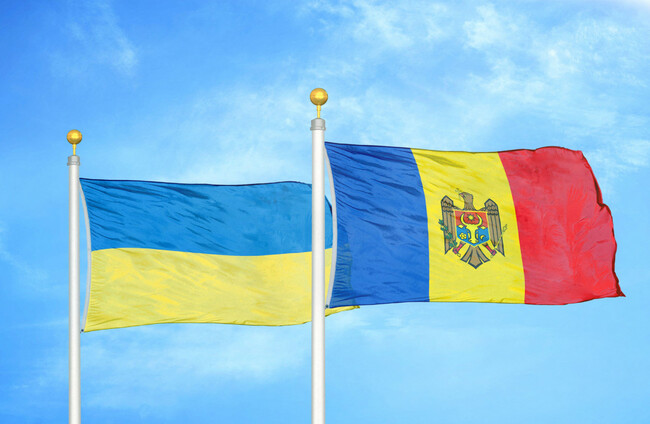
UKRAINE AND MOLDOVA have moved a significant step closer to joining the European Union after Hungary signalled it will no longer block the opening of the next phase of accession negotiations.
The breakthrough comes after Budapest and Kyiv reached an agreement on the rights of Ukraine’s ethnic Hungarian minority, ending a dispute that had stalled progress on Ukraine’s membership bid for almost two years.
EU ambassadors approved the move in Brussels today, paving the way for the opening of the first formal cluster of negotiations, known as the “fundamentals” cluster, which covers issues including the rule of law, human rights and judicial reform.
The decision marks one of the most important developments in Ukraine’s EU application since Russia’s full-scale invasion in February 2022.
Just four days after the invasion, Ukrainian President Volodymyr Zelenskyy formally applied for EU membership, arguing that Ukraine’s future “lay within Europe”.
Ukraine was granted candidate status later that year and formally opened accession negotiations alongside Moldova in June 2024.
However, progress had effectively been frozen by repeated objections from Hungary under former prime minister Viktor Orbán, who argued Ukraine was not ready to begin substantive membership talks.
Hungary’s new prime minister, Péter Magyar, announced on Wednesday in a post on social media that Budapest and Kyiv had reached what he described as a “historic agreement” concerning the linguistic, educational and cultural rights of the approximately 100,000 ethnic Hungarians living in western Ukraine.
“Hungary continues to support the accelerated negotiations to join the EU,” Magyar said.
The agreement prompted Hungary to signal that it would no longer block the opening of the first negotiating cluster.
European Commissioner for Enlargement Marta Kos welcomed the move, saying it would allow member states to advance Ukraine and Moldova’s accession process.
Prime Minister Magyar’s announcement of the agreement between Hungary and Ukraine to advance minority rights, opens the way for progress on the EU accession path of Ukraine.
— Marta Kos (@MartaKosEU) June 3, 2026
This will allow Member States to take forward the work on opening the first negotiation cluster with…
Despite the breakthrough, EU membership remains a long way off.
Joining the bloc requires candidate countries to complete negotiations across 33 separate policy chapters covering everything from agriculture and environmental standards to competition rules and judicial independence.
The process typically takes years and requires unanimous approval from all member states at multiple stages.
Magyar also stressed that Hungary does not support any fast-track route into the EU for Ukraine and said a referendum would be held in Hungary if Ukraine eventually completes all accession chapters.
The news comes shortly before Ireland takes over the rotating presidency of the EU Council next month, with the government having identified EU enlargement as one of its priorities.
Foreign Affairs Minister Helen McEntee welcomed the EU’s decision to launch accession negotiations with Ukraine and Moldova.
“This is a historic milestone and a clear signal that the future of both countries lies within the European Union family,” McEntee said.
“Both countries are engaged in the hard work of reform, in extraordinary circumstances, and deserve the opportunity to join the European Union.”
McEntee added that there is “renewed momentum and unity” in the European Union, and said that Ireland “is ambitious to play its role as a member state that formed part of the first enlargement and as incoming Presidency of the Council”.
Taoiseach Micheál Martin has previously said Ukraine “belongs in the EU”.
The government is expected to oversee further work on Ukraine and Moldova’s accession process during its six-month presidency.
With reporting from AFP

To embed this post, copy the code below on your site














have your say