Sign in. It’s quick, free and it’s up to you.
An account is an optional way to support the work we do. Find out more.
Sign in. It’s quick, free and it’s up to you.
An account is an optional way to support the work we do. Find out more.
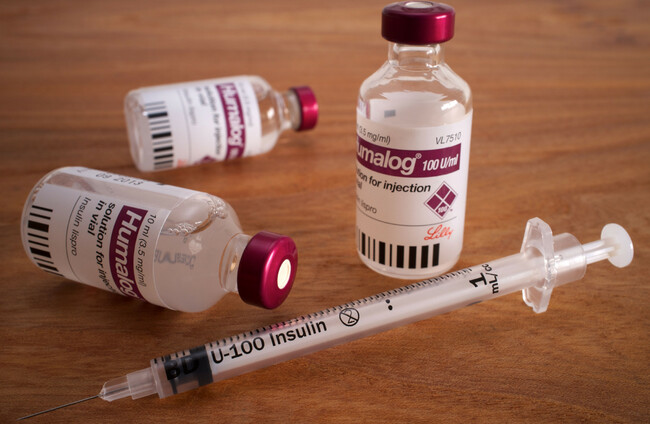
US PHARMACEUTICAL GIANT Eli Lilly announced today it would cut the cost of its insulin by 70%, with President Joe Biden calling on others to follow suit to tackle soaring drug prices.
Manufacturers have ratcheted up insulin prices in recent years, hitting millions of Americans living with diabetes – and drawing sharp political criticism.
“Insulin costs less than $10 to make, but Americans are sometimes forced to pay over $300 for it. It’s flat wrong,” said Biden in a statement. He hailed Eli Lilly’s price cut as “huge news.”
“It’s time for other manufacturers to follow,” Biden added.
Indianapolis-based Lilly announced a series of steps to rein in prices of the life-saving drug, such as capping out-of-pocket costs at $35 per month for people with insurance.
“Lilly is taking these actions to make it easier to access Lilly insulin and help Americans who may have difficulty navigating a complex healthcare system,” the drugmaker said in a statement.
While the $35 cap takes effect immediately, other measures will be implemented in the course of 2023.
A centerpiece is the 70% price drop in Humalog, Lilly’s most commonly prescribed insulin.
The incidence of diabetes in the United States in adults has doubled over the last 20 years, afflicting 37.3 million people, according to the US Centers for Disease Control and Prevention.
Insulin prices have soared in the US, costing over eight times more than in 32 comparable high-income countries, a 2020 Rand Corporation study found.
But much of the bounty from lofty prices do not go to pharma firms. Instead, they are passed on to health insurers in the form of rebates. As a result, the financial hit from Lilly’s decision could fall hardest on insurers.
The unaffordability of insulin – particularly to uninsured Americans – has become a rallying cry for pharmaceutical industry critics.
The cost of a five-pack of Humalog is currently $530.40, (€497) although the out-of-pocket price to a user varies depending on one’s insurance plan. Average monthly use varies by user, Eli Lilly says on its website.
Drug pricing in the United States is affected not only by the cost of producing and distributing the pharmaceutical, but also other players such as insurers and pharmacy benefit management companies.
Critics such as progressive Senator Bernie Sanders have blasted the industry as emblematic of “unacceptable corporate greed.”
“At a time when Eli Lilly made over $7 billion in profits last year, public pressure forced them to reduce the price of insulin by 70%,” Sanders said on Twitter after the price-cut announcement.
“Sanofi and Novo Nordisk must do the same,” he added, referring to two other companies which along with Lilly dominate the insulin market.
In November of last year Lilly’s shares took a battering when a fake Twitter account of the company tweeted “We are excited to announced insulin is free now.”
It was seen by hundreds of thousands of people and dropped more than 6% of Eli Lilly’s stock value, amounting to billions of dollars.
Both Sanofi and Novo Nordisk released statements to AFP pointing to programs to help make insulin more affordable, including to uninsured users. But neither company commented directly on whether they would match the Lilly plan.
A survey by nonprofit T1International showed that one in four respondents living with diabetes reported rationing their insulin because of the financial strain.
The Inflation Reduction Act, signed into law last year by Biden, capped insulin prices for Medicare recipients at $35 per month, but people with private insurance or without insurance were left out.
Biden, in his State of the Union Address, called on lawmakers to rein in “Big Pharma” and “finish the job this time” by instituting a national cap on insulin costs.
In the company’s statement, Eli Lilly Chief Executive David Ricks urged rival producers to join the effort.
“We know that 7 out of 10 Americans don’t use Lilly insulin. We are calling on policymakers, employers and others to join us in making insulin more affordable,” said Ricks.
The HSE offers free prescriptions for diabetes medicine.
The Long term Illness scheme offers everyone with type 2 diabetes a Long term illness (LTI) card.
Also covered on the scheme are:
With additional reporting by Jamie McCarron

To embed this post, copy the code below on your site














have your say