Sign in. It’s quick, free and it’s up to you.
An account is an optional way to support the work we do. Find out more.
Sign in. It’s quick, free and it’s up to you.
An account is an optional way to support the work we do. Find out more.
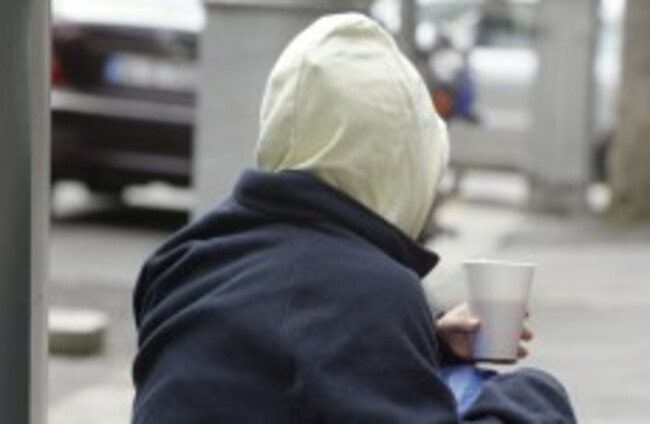
A STUDY OF homeless women in Ireland has shown that many experience abuse in their life and end up homeless due to a mix of economic factors.
The study was undertaken by Trinity College Dublin researchers, Dr Paula Mayock and Sarah Sheridan of the School of Social Work and Social Policy and Children’s Research Centre.
They interviewed 60 homeless women from a range of homeless services in Dublin, Cork and Galway.
According to Dr Paula Mayock:
The findings of this research highlight social exclusion as a defining feature of the women’s life experiences. The vast majority suffered poverty from childhood, a large number left school early and without educational qualifications, and a majority reported low levels of labour market participation.
She said that in addition to housing instability, which many experienced from a young age, a large number reported neglect and abuse during childhood, intimate partner violence, and problems related to drug or alcohol consumption.
These factors in turn seriously impacted their ability to access and sustain housing.
Over half had experienced repeat episodes of homelessness, suggesting that the homelessness of a large number remained unresolved, sometimes over many years.
Dr Mayock also points out that in Ireland homelessness has been generally viewed as a phenomenon that primarily affects men.
She said the findings highlight several dimensions of gendered experience and indicate that the reasons for women’s homelessness differ to those of men. Dr Mayock added that gender perspectives on housing and homelessness are critical if services are to work appropriately and effectively to meet the needs of homeless women.
Of the women who took part in the study (average age 34.8 years):
The study found that poverty and deprivation, along with traumatic experiences, led to vulnerability to housing instability and homelessness.
Two thirds of the women had experienced intimate partner violence, and there was a high prevalence of substance abuse amongst the women interviewed.
The researchers said:
…the culmination of a complex range of experiences… together, resulted in housing instability and subsequent homelessness, very often on several, separate occasions.
When it came to the migrant women, a large number said that intimate partner violence attributed either directly or in part to their homelessness. Their economic difficulties included economic dependence on partners, their immigration status, and their restricted access to welfare payments and affordable housing.
Migrant women were not well informed about homeless or domestic violence services and uncertain about the impact of their status as migrants on their eligibility for these.
Some of the comments from women who participated in the study were:
Leah (22) described her exposure to violence in her home as a child:
There would have been a lot of violence at home, my father, he was always drinking like and I suppose just fighting and stuff like that and he was just always arguing with my mother, they didn’t get on at all like, they were just always arguing. I wouldn’t really sleep that much at night like. I remember I used to wet the bed and stuff.
Isobel (21) described her experience of intimate partner violence:
I fell pregnant when I was 19. I was living in [city in Northern Ireland] at that stage with [partner] for a year. I was in a domestic violence relationship, I couldn’t go outside, I wasn’t allowed wear clothes going to bed. I was thrown into a bath of cold water by him … I was battered black and blue; make-up wouldn’t hide the bruises that I was given. I’m still scarred for life with arm bruises … It was a terrifying experience … How I got out of the situation, I lost my child at six months pregnant.
Tereska (25), a migrant woman, described the impact of intimate partner violence on her life:
I was really weak, like powerless and without my will and anything … So my whole life changed, all the ambitions which I used to have, the art you know, the music, everything, just he [husband] stepped on it … At the moment I am not able to do anything what I want. I am not able to be fully free, you know … I try to remember who I was before [domestic violence] you know, so I think that’s good. This is like a new beginning for me.

To embed this post, copy the code below on your site












have your say